



Page 1
Page 1

Geographic information metadata for spatial data infrastructures : Resources, interoperability and information retrieval
Metadata play a fundamental role in both DLs and SDIs. Commonly defined as "structured data about data" or "data which describe attributes of a resource" or, more simply, "information about data", it is an essential requirement for locating and evaluating available data. Therefore, this book focuses on the study of different metadata aspects, which contribute to a more efficient use of DLs and SDIs. The three main issues addressed are: the management of nested collections of resources, the interoperability between metadata schemas, and the integration of information retrieval techniques to the discovery services of geographic data catalogs (contributing in this way to avoid metadata content heterogeneity).

Digital Soil Mapping with Limited Data
This book focuses on digital soil mapping methodologies and applications for areas where data are limited, and has the following sections (i) introductory papers, (ii) dealing with limited spatial data infrastructures, (iii) methodology development, and (iv) examples of digital soil mapping in various parts of the globe (including USA, Brazil, UK, France, Czech Republic, Honduras, Kenya, Australia). The final chapter summarises priorities for digital soil mapping.
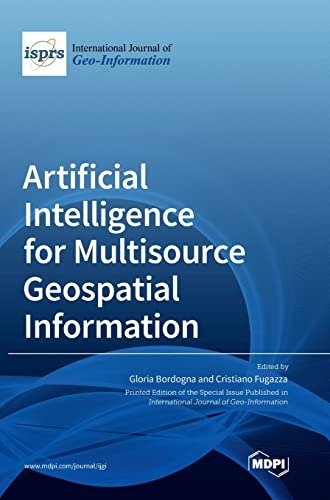
Artificial intelligence for multisource geospatial information
Collects 10 original research contributions published in the Special Issue entitled “Artificial Intelligence for Multisource Geospatial Information” of the ISPRS International Journal of Geo-Information. The focus is on different methods of Geospatial Artificial Intelligence (GeoAI) based on deep learning using different network architectures, clustering, soft computing, and semantic approaches. They are proposed to deal with a variety of Geospatial Big Data (GBD), such as georeferenced texts and photos in social networks, remote sensing images, cartographic maps, multidimensional geo databases, metadata in spatial data infrastructures, and for different tasks, such as for multisource georeferenced text integration and geodata flexible querying, for social sensing by applying sentiment analysis, clustering and geo analysis, for segmentation of roads, clouds and snow, and for detection of small targets and people on the streets.
