



Page 1
Page 1

Rural Retirement Migration
This book examines the migration of older persons to rural retirement destinations in the United States. While the majority of older persons are residentially stable, those who migrate are disproportionately likely to move to a rural community. Moreover, with the aging of the baby boom generation, particular rural communities can expect to continue attracting older in-migrants in the future. The book examines rural retirement migration from the older in-migrants’ perspective and from the vantage point of the destination communities to which they move. This integrated micro-macro approach permits the authors to view older in-migrants as embedded in particular types of environments that facilitate and/or constrain their opportunities for productive living during older age. It also permits the examination of positive and negative effects of older in-migration for destination communities.

Renewing local planning to face climate change in the tropics
This book aims to inspire decision makers and practitioners to change their approach to climate planning in the tropics through the application of modern technologies for characterizing local climate and tracking vulnerability and risk, and using decision-making tools. Drawing on 16 case studies conducted mainly in the Caribbean, Central America, Western and Eastern Africa, and South East Asia it is shown how successful integration of traditional and modern knowledge can enhance disaster risk reduction and adaptation to climate change in the tropics. The case studies encompass both rural and urban settings and cover different scales: rural communities, cities, and regions. In addition, the book looks to the future of planning by addressing topics of major importance, including residual risk integration in local development plans, damage insurance and the potential role of climate vulnerability reduction credits.

Digital Towns : Accelerating and Measuring the Digital Transformation of Rural Societies and Economies
This book explores the digital transformation of small and rural towns, in particular, how to measure the evolution and development of digital towns. In addition to access to resources, competition from urban and global markets, and population trends, rural communities present lesser access and use of digital technologies and have lower digital competencies and skills than their urban counterparts. Consequently, they experience less beneficial outcomes from increased digitalisation than urban areas. This book defines what a digital town is and explores digitalisation from the perspective of the four basic economic sectors in towns - individuals and households, businesses, the public sector, and civil society - and three types of enabling infrastructure - digital connectivity, education, and governance.
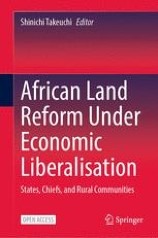
African Land Reform Under Economic Liberalisation: States, Chiefs, and Rural Communities
This book offers unique in-depth, comprehensive, and comparative analyses of the motivations, context, and outcomes of recent land reforms in Africa. Whereas a considerable number of land reforms have been carried out by African governments since the 1990s, no systematic analysis on their meaning has so far been conducted. In the age of land reform, Africa has seen drastic rural changes. Analysing the relationship between those reforms and change, the chapters in this book reveal not only their socio-economic outcomes, such as accelerated marketisation of land, but also their political outcomes, which have often been contrasting.

Affordable housing for smart villages
Initiates a fresh discussion of affordability in rural housing set in the context of the rapidly shifting balance between rural and urban populations. It conceptualises affordability in rural housing along a spectrum that is interlaced with cultural and social values integral to rural livelihoods at both personal and community level. Developed around four intersecting themes: explaining houses and housing in rural settings; exploring affordability in the context of aspirations and vulnerability; rural development agendas involving housing and communities; and construction for resilience in rural communities, the book provides an overview of some of the little understood and sometimes counter-intuitive best practices on rural affordability and affordable housing that have emerged in developing economies over the last thirty years.
