



Page 1
Page 1

Non-Linear Dynamics Near and Far from Equilibrium
This text gives a detailed account of various techniques that are used in the study of dynamics of continuous systems, near as well as far from equilibrium. The analytic methods covered include diagrammatic perturbation theory, various forms of the renormalization group and self-consistent mode coupling.

Modern Hematology : Biology and Clinical Management
The first chapters of this book contain a self-contained introduction to path integrals in Euclidean quantum mechanics and statistical mechanics. The resulting high-dimensional integrals can be estimated with the help of Monte Carlo simulations based on Markov processes. The most commonly used algorithms are presented in detail so as to prepare the reader for the use of high-performance computers as an “experimental” tool for this burgeoning field of theoretical physics. Several chapters are then devoted to an introduction to simple lattice field theories and a variety of spin systems with discrete and continuous spins, where the ubiquitous Ising model serves as an ideal guide for introducing the fascinating area of phase transitions. As an alternative to the lattice formulation of quantum field theories, variants of the flexible renormalization group methods are discussed in detail. Since, according to our present-day knowledge, all fundamental interactions in nature are described by gauge theories, the remaining chapters of the book deal with gauge theories without and with matter.

Imagination and Rigor : Essays on Eduardo R. Caianiello's Scientific Heritage
The aim of this Volume of scientific essays is twofold. From one side, by remembering the scientific figure of Eduardo R. Caianiello, it aims at focusing his outstanding contributions - from theoretical physics to cybernetics - which after so many years still represent occasion of innovative paths to be fruitfully followed. It must be stressed the contribution that his interdisciplinary methodology can still be of great help in affording and solving present day complex problems. On the other side, it aims at pinpointing with the help of the scientists contributing to the Volume - some crucial problems in present day research in the fields of interest of Eduardo Caianiello and which are still among the main lines of investigation of some of the Istitutes founded by Eduardo (Istituto di Cibernetica del CNR, IIAS, etc).

Geometric and Topological Methods for Quantum Field Theory
This volume offers an introduction, in the form of four extensive lectures, to some recent developments in several active topics at the interface between geometry, topology and quantum field theory. The first lecture is by Christine Lescop on knot invariants and configuration spaces, in which a universal finite-type invariant for knots is constructed as a series of integrals over configuration spaces. This is followed by the contribution of Raimar Wulkenhaar on Euclidean quantum field theory from a statistical point of view. The author also discusses possible renormalization techniques on noncommutative spaces. The third lecture is by Anamaria Font and Stefan Theisen on string compactification with unbroken supersymmetry. The authors show that this requirement leads to internal spaces of special holonomy and describe Calabi-Yau manifolds in detail. The last lecture, by Thierry Fack, is devoted to a K-theory proof of the Atiyah-Singer index theorem and discusses some applications of K-theory to noncommutative geometry. These lectures notes, which are aimed in particular at graduate students in physics and mathematics, start with introductory material before presenting more advanced results. Each chapter is self-contained and can be read independently.

Frontiers of Computational Science ; Proceedings of the International Symposium on Frontiers of Computational Science 2005
With the dramatic increase in speed and capacity of modern computers, computational approaches are becoming of crucial importance in various fields of science and engineering. Computational science is the interdisciplinary science, which promotes systematic development of methodologies and framework of computational approaches, basic studies of algorithms and soft-computation technologies and vast areas of applications. This volume is the proceedings of International Symposium on Frontiers of Computational Science 2005, containing papers from 7 plenary and keynote lecturers, 17 invited lecturers and 33 contributed papers. This book discusses the high-level use of computers in a wide variety of areas such as fluid mechanics, material and genome sciences.

Frontiers in Quantum Systems in Chemistry and Physics
The basic theory of matter on the nanoscale is quantum mechanics and the application of quantum mechanics to the study of the many-body problem in molecules and materials is a rapidly developing field of research. Frontiers in Quantum Systems in Chemistry and Physics defines the leading edge; hence it describes the new theoretical developments available to a wider audience and presents theories which provide, for example, new insights into the structure of increasing complex molecular systems or molecules in a variety of environments. New computational techniques and practices are accessed, exploiting the wide range of equipment available to the researcher from “leadership” class supercomputers to distributed workstations and the internet.

Frontiers in Number Theory, Physics, and Geometry II : On Conformal Field Theories, Discrete Groups and Renormalization
The present book collects most of the courses and seminars delivered at the meetingentitled"FrontiersinNumberTheory, PhysicsandGeometry", which took place at the Centrede PhysiquedesHouches in theFrenchAlps, March9- 21,2003. Itisdividedintotwovolumes. VolumeIcontainsthecontributionson three broad topics: Random matrices, Zeta functions and Dynamical systems. The present volume contains sixteen contribution sonthreethemes:Conformal?eld theories for strings and branes, Discrete groups and automorphic forms and?nally, Hopf algebras and renormalization. The relation between Mathematics and Physics has a long history.

Critical Phenomena in Natural Sciences : Chaos, Fractals, Selforganization and Disorder : Concepts and Tools
Concepts, methods and techniques of statistical physics in the study of correlated, as well as uncorrelated, phenomena are being applied ever increasingly in the natural sciences, biology and economics in an attempt to understand and model the large variability and risks of phenomena. This is the first textbook written by a well-known expert that provides a modern up-to-date introduction for workers outside statistical physics. The emphasis of the book is on a clear understanding of concepts and methods, while it also provides the tools that can be of immediate use in applications. Although this book evolved out of a course for graduate students, it will be of great interest to researchers and engineers, as well as to post-docs in geophysics and meteorology.

Computational Many-Particle Physics
Complicated many-particle problems abound in nature and in research alike. Plasma physics, statistical physics and condensed matter physics, as primary examples, are all heavily dependent on efficient methods for solving such problems. Addressing graduate students and young researchers, this book presents an overview and introduction to state-of-the-art numerical methods for studying interacting classical and quantum many-particle systems. A broad range of techniques and algorithms are covered, and emphasis is placed on their implementation on modern high-performance computers.

Mathematica for Theoretical Physics : Electrodynamics, Quantum Mechanics, General Relativity, and Fractals
Mathematica for Theoretical Physics: Electrodynamics, Quantum Mechanics, General Relativity, and Fractals This second edition of Baumann's Mathematica® in Theoretical Physics shows readers how to solve physical problems and deal with their underlying theoretical concepts while using Mathematica® to derive numeric and symbolic solutions. Each example and calculation can be evaluated by the reader, and the reader can change the example calculations and adopt the given code to related or similar problems. The second edition has been completely revised and expanded into two volumes: The first volume covers classical mechanics and nonlinear dynamics. Both topics are the basis of a regular mechanics course. The second volume covers electrodynamics, quantum mechanics, relativity, and fractals and fractional calculus. New examples have been added and the representation has been reworked to provide a more interactive problem-solving presentation. This book can be used as a textbook or as a reference work, by students and researchers alike. A brief glossary of terms and functions is contained in the appendices.
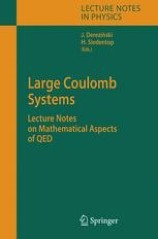
Large Coulomb Systems: Lecture Notes on Mathematical Aspects of QED
A mathematically consistent formulation of relativistic quantum electrodynamics (QED) has still to be found. Nevertheless, there are several simplified effective models that successfully describe many body quantum systems and the interaction of radiation with matter. Large Coulomb Systems explores a selection of mathematical topics inspired by QED. It comprises selected, expanded and edited lectures given by international experts at a topical summer school and is intended as a high-level introduction for graduate students, postdocs and nonspecialists from related fields.
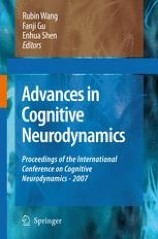
Advances in cognitive neurodynamics ICCN 2007; Proceedings of the International conference on cognitive neurodynamics - 2007
Contains the Proceedings of the 1st International Conference on Cognitive Neurodynamics held in Shanghai, November 17-21, 2007. The participants were treated to an exciting and stimulating conference that left everyone with an enthusiastic vision for the future of the field. The latest important progress was covered by 13 mini-symposia including: Models of Mental Disorders; Cognitive Machines; Dynamics in learning and memory; Central nervous system synchronization; Neuroinformatics; Cognitive Computational Modeling of Human Language Processing; Cognitive Neurodynamics of Attention; Bottom-Up and Top-Down; Brain Networks; From Anatomy to Dynamics; Translational Cognitive Neuroimaging; K-sets; Theory and Applications; Advanced Signal Processing Techniques for Brain Data Analysis; Visual cortex: information processing and dynamics; Dynamics of Firing Patterns and Synchronization in Neuronal Systems.
