



Page 1
Page 1

Nanotechnology-Enabled Sensors
Nanotechnology provides us with tools to create functional materials, devices, and systems by controlling materials at the atomic and molecular scales, and at the same time make use of novel properties and phenomena. Considering that most chemical and biological sensors, as well as many physical sensors, depend on interactions occurring within the nano scale range, the impact that nanotechnology will have on the sensor world is significant. Nanotechnology enabled sensors find applications in several novel fields such as sensing single molecules, bio-hazards, toxic chemicals, gas sensors, process control and diagnostics.
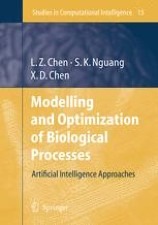
Modelling and Optimization of Biotechnological Processes : Artificial Intelligence Approaches
The book begins with a historical introduction to the field of bioprocess control based on artificial intelligence approaches, followed by two chapters covering the optimization of fed-batch culture using genetic algorithms. Online biomass soft-sensors are constructed in Chapter 4 using recurrent neural networks. The bioprocess is then modelled in Chapter 5 by cascading two soft-sensor neural networks. Optimization and validation of the final product are detailed in Chapters 6 and 7. The general conclusions are drawn in Chapter 8.

Model-based Process Supervision : A Bond Graph Approach
Model-based fault detection and isolation requires a mathematical model of the system behaviour. Modelling is important and can be difficult because of the complexity of the monitored system and its control architecture. The authors use bond-graph modelling, a unified multi-energy domain modelling method, to build dynamic models of process engineering systems by composing hierarchically arranged sub-models of various commonly encountered process engineering devices. The structural and causal properties of bond-graph models are exploited for supervisory systems design.

Mid-Infrared Coherent Sources and Applications
Coherent sources of mid-infrared (mid-IR) radiation are of great interest for a wide range of scienti?c and technological applications from spectroscopy and frequency metrology to information technology, industrial process control, pho- chemistry, photobiology and photomedicine. The mid-IR spectrum, which may be de?ned as wavelengths beyond ?2µm, covers important atmospheric windows, and numerous molecular gases, toxic agents, air, water, and soil pollutants, c- ponents of human breath, and several explosive agents have strong absorption ?ngerprints in this region. The development of practical coherent solid-state sources in the mid-IR can thus provide indispensable tools for a variety of - plications in environmental monitoring and pollution control, detection of water and soil contaminants, food quality control, agriculture and life sciences, and n- invasive disease diagnosis and therapy through breath analysis.

Micrometastasis
Distant metastases are the main cause of cancer-related death. The onset of the metastatic process can now be assessed in cancer patients by the use of immunocytochemical and molecular methods that allow the identification of disseminated carcinoma cells in regional lymph nodes, peripheral blood or distant organs. There is increasing evidence that the detection and characterization of tumor cells present in bone marrow or peripheral blood can provide clinically important information. In this book, leading experts in the area of micrometastasis research provide an overview that summarizes the current state of research on micrometastatic disease in patients with solid tumors. In each chapter, the technical aspect as well as clinical relevance of micrometastasis detection is discussed. The book addresses basic researchers as well as clinicians involved in the treatment of cancer patients.
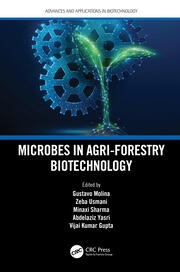
Microbes in agri-forestry biotechnology
Explores recent advances on the use of microbes for agri-forestry biotechnological applications. It provides technical concepts and discussions on the use of microorganisms for processes such as bioprocessing, bioremediation, soil enhancement, aquaponics advances, and plant-host symbiosis. The book provides an overview of the microbial approach to the tools and processes used in agriculture and forestry that make or modify products, improve plants for specific uses, and make use of livestock in agricultural systems. The authors discuss the main process conditions that enhance agri-forestry applications with the use of microbes and introduce the use of genetically modified (GM) microbes in agrobiotechnology. Finally, the authors explore the main technological advances in the production of secondary metabolites with potential applications in agri-forestry.

Introduction to Operating System Design and Implementation : The OSP 2 Approach
This book exposes students to many essential features of operating systems while at the same time isolating them from low-level, machine-dependent concerns. With its accompanying software, the book contains enough projects for up to three semesters.

Introduction to Engineering Statistics and Six Sigma : Statistical Quality Control and Design of Experiments and Systems
Introduction to Engineering Statistics and Six Sigma contains precise descriptions of all of the many related methods and details case studies showing how they have been applied in engineering and business to achieve millions of dollars of savings. Specifically, the methods introduced include many kinds of design of experiments (DOE) and statistical process control (SPC) charting approaches, failure mode and effects analysis (FMEA), formal optimization, genetic algorithms, gauge reproducibility and repeatability (R&R), linear regression, neural nets, simulation, quality function deployment (QFD) and Taguchi methods. A major goal of the book is to help the reader to determine exactly which methods to apply in which situation and to predict how and when the methods might not be effective.

Interior Design : Conceptual Basis
Seven concepts of planning, circulation, 3D, construction, materials, colour and lighting, which covers the entire spectrum of a designer's activity. Analysing design concepts from the view of the range of possibilities that the designer can examine and eventually decide by choice and conclusive belief the appropriate course of action to take in forming that particular concept, the formation and implementation of these concepts is taken in this book to aid the designer in his/her professional task of completing a design proposal to the client. The purpose of this book is to prepare designers to focus on each concept independently as much as possible, whilst acknowledging relative connections without unwarranted influences unfairly dictating a conceptual bias, and is about that part of the design process called conceptual analysis. It is assumed that the site, location, building and orientation, as well as the client's brief of activities and needs have been digested and analysed to provide the data upon which the design process can begin.

Intelligent system algorithms and applications in science and technology
Explores the application of intelligent techniques in various fields of engineering and technology. It addresses diverse topics in such areas as machine learning-based intelligent systems for healthcare, applications of artificial intelligence and the Internet of Things, intelligent data analytics techniques, intelligent network systems and applications, and inequalities and process control systems. The authors explore the full breadth of the field, which encompasses data analysis, image processing, speech processing and recognition, medical science and healthcare monitoring, smart irrigation systems, insurance and banking, robotics and process control, and more.

Intelligent cryptocurrency trading assistant
With blockchain being invented in 2008, cryptocurrencies have grown steadily through the years. Cryptocurrencies continue today to be an extremely interesting phenomenon. Having quickly achieved popularity and becoming very popular, cryptocurrencies continue to be a profitable investment tool, capable of generating huge profits on exchanges and transactions. Being a professional trader is not an easy task to achieve, a professional trader needs to observe and process multiple factors and events that affect the cryptocurrency market to make the right decision. What makes this process challenging is that some of the factors cannot be predicted or calculated but rather, their changes should be observed and comprehended, and an action should be taken in response quickly in order to maximize the profit or minimize the loss.

Integrated Reaction and Separation Operations : Modelling and experimental validation
The book presents the latest developments in simulation of integrated processes as well as new methods of process synthesis and process control. It shows details of experimental approaches for model validation, determining of model parameters and measurement techniques. The combination of sophisticated modelling, optimisation methods and experimental results has not ben published up to now. The book gives deep insights into the overall evaluation of integrated processes as well as development of methods for a systematic design and optimisation of integrated reaction and separation processes. Potentials for process integration and the technical as well as economic limitations have been identified. The book covers several case studies of reactive distillation, reactive extraction, reactive gas-adsorption and chromatographic reactors which have been investigated from the modelling and experimental point of view. Based on validated models process simulation was used to optimize these processes. Following the concept of integrated process design approaches have been developed for model predictive control and process optimisation during production. Another new and very important focus of the book is systematic synthesis of integrated processes.

Innovation, Industrial Dynamics and Structural Transformation : Schumpeterian Legacies
This book provides an account of work in the Schumpeterian and evolutionary tradition of industrial dynamics and the evolution of industries. It is shown that over time industries evolve and change their structure. In this dynamic process change is affected and sometimes constraint by many factors: knowledge and technologies, the capabilities and incentives of actors, new products and processes, and institutions. All these elements and their relations drive innovative activities and affect economic performance in an industry. Investigations into these complex phenomena show a deep interdependence between empirical work delivering a rich account of regularities and stylized facts in the structure of industries and their change, and theoretical analyses ranging from appreciate theorizing to formal modeling.

Information Processing with Evolutionary Algorithms : From Industrial Applications to Academic Speculations
The last decade of the 20th century has witnessed a surge of interest in num- ical, computation-intensive approaches to information processing. The lines that draw the boundaries among statistics, optimization, arti cial intelligence and information processing are disappearing, and it is not uncommon to nd well-founded and sophisticated mathematical approaches in application - mains traditionally associated with ad-hoc programming. Heuristics has - come a branch of optimization and statistics. Clustering is applied to analyze soft data and to provide fast indexing in the World Wide Web. Non-trivial matrix algebra is at the heart of the last advances in computer vision. The breakthrough impulse was, apparently, due to the rise of the interest in arti cial neural networks, after its rediscovery in the late 1980s. Disguised as ANN, numerical and statistical methods made an appearance in the - formation processing scene, and others followed. A key component in many intelligent computational processing is the search for an optimal value of some function. Sometimes, this function is not evident and it must be made explicit in order to formulate the problem as an optimization problem. The search - ten takes place in high-dimensional spaces that can be either discrete, or c- tinuous or mixed. The shape of the high-dimensional surface that corresponds to the optimized function is usually very complex. Evolutionary algorithms are increasingly being applied to information processing applications that require any kind of optimization.
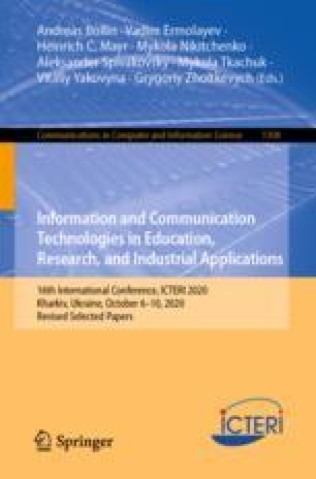
Information and communication technologies in education, research, and industrial applications ; 16th International Conference, ICTERI 2020, Kharkiv, Ukraine, October 6–10, 2020, Revised Selected Papers
This book contains revised and extended versions of the best papers presented at the 16th International Conference on Information and Communication Technologies in Education, Research, and Industrial Applications, ICTERI 2020, held in Kherson, Ukraine, in October 2020. Due to the COVID-19 pandemic the conference was held online. The 8 revised full papers included in this volume were carefully reviewed and selected from 347 initial submissions. The papers are organized in the following topical sections: ICT in education; ICT in research and industry.

Industrial competitiveness : Cost reduction
The objectives of industrial management are: - Implementation of the policy adopted by the owners or the board of directors - Optimum return on investment - Efficient utilization of Men, Machine and Money. In other words, industry must make profit. Manufacturing represents only one aspect of the activities of industrial management. Present-day manufacturing methodology does not consider making profit as their primary objective. The manufacturing process requires the knowledge of many disciplines, such as design, process planning, costing, marketing, sales, customer relations, costing, purchasing, bookkeeping, inventory control, material handling, shipping, and so on.

Handbook of Practical X-Ray Fluorescence Analysis
X-Ray Fluorescence analysis (XRF) is a reliable multi-elemental and nondestructive analytical method widely used in research and industrial applications. This practical handbook provides self-contained modules featuring XRF instrumentation, quantification methods, and most of the current applications. The book gives a survey of the theoretical fundamentals, analytical instrumentation, software for data processing, various excitation regimes including gracing incidents and microfocus measurements, quantitative analysis, applications in routine and micro analysis, mineralogy, biology, medicine, criminal investigations, archeology, metallurgy, abrasion, microelectronics, environmental air and water analysis. It gives the basic knowledge on this technique, information on analytical equipment and guides the reader to the various applications.

Fundamentals of Food Process Engineering
While continuing the tradition of expansive coverage, Fundamentals of Food Process Engineering, Third Edition, has been fully updated and revised. The new edition of this classic text emphasizes problem solving, including technological principles that form the basis for a process so that the process can be better understood and the selection of processing parameters to maximize product quality and safety can be made more effective. In addition, the book contains new, hard-to-find data needed to conduct food process engineering calculations.

Frontiers in Statistical Quality Control 8
The proportion of nonconforming meters in a lot has traditionally defined lot quality for utility meter sampling inspection purposes. However, lot quality is usually measured on the basis of two criteria for such products: the proportion of nonc- forming packages in the lot and the lot mean quantity.

Foundations of software science and computation structures ; Vol. 3921 ; 9th International conference, FOSSACS 2006, Held as part of the joint European conferences on theory and practice of software, ETAPS 2006, Vienna, Austria, March 25-31, 2006, proceedings
This book constitutes the refereed proceedings of the 9th International Conference on Foundations of Software Science and Computation Structures, FOSSACS 2006, held in Vienna, Austria in March 2006 as part of ETAPS. The 28 revised full papers presented together with 1 invited paper were carefully reviewed and selected from 107 submissions. The papers are organized in topical sections on mobile processes, software science, distributed computation, categorical models, real time and hybrid systems, process calculi, automata and logic, domains, lambda calculus, types, and security.
