



Page 1
Page 1

How generations remember : Conflicting histories and shared memories in post-war Bosnia and Herzegovina
Provides a profound insight into post-war Mostar, and the memories of three generations of this Bosnian-Herzegovinian city. Drawing on several years of ethnographic fieldwork, it offers a vivid account of how personal and collective memories are utterly intertwined, and how memories across the generations are reimagined and ‘rewritten’ following great socio-political change. Focusing on both Bosniak-dominated East Mostar and Croat-dominated West Mostar, it demonstrates that, even in this ethno-nationally divided city with its two divergent national historiographies, generation-specific experiences are crucial in how people ascribe meaning to past events.

From War to Peace in the Balkans, the Middle East and Ukraine
This book focuses on the origins, consequences and aftermath of Western military interventions that led to the end of the most recent Balkan wars. . This study highlights lessons that can be applied to the Middle East and Ukraine, where similar conflicts are likewise challenging sovereignty and territorial integrity. It is an accessible treatment of what makes war and how to make peace ideal for all readers interested in how violent international conflicts can be managed, informed by the experience of a practitioner.

Curriculum Reform in the European Schools : Towards a 21st Century Vision
Examines the modern role of the European School system within the European Union, at a time when the global economy demands a new vision for contemporary education. The European schools are currently in a state of crisis: their 60-year-old tradition of bilingual and multilingual education is being strained by rapid EU expansion and the removal of English speaking teachers as a result of Brexit. Their tried and tested model of mathematics and science education has rapidly been overtaken by new developments in pedagogy and assessment research, while recruitment and retention of students and teachers has become increasingly fraught as European member states review what they are, and what they are not, prepared to fund. The authors draw on original and empirical research to assess the European Schools’ place in a new Europe where the entire post-war European Project is potentially at risk. This well-researched volume will be of interest to practitioners working in European schools as well as students and scholars of EU politics and international education.
Asian century … on a knife-edge : A 360 degree analysis of Asia's recent economic development
This book delves into the widely held belief that the 21st century will be the "Asian Century" by examining the Asia's rapid economic development in the post-war era and the challenges it faces in forging ahead of world leaders in the West. The impact of the current turbulent global political climate on Asia is critically analyzed, employing a holistic and multidisciplinary approach, combining economic, social, political and geopolitical perspectives. Written in an accessible style, the book offers students, business, government, and civil society players powerful insights on Asia.
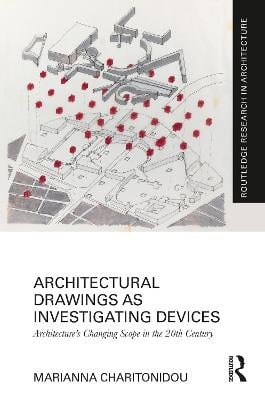
Architectural drawings as investigating devices : Architecture’s changing scope in the 20th century
Explores how the changing modes of representation in architecture and urbanism relate to the transformation of how the addressees of architecture and urbanism are conceived. Diagnoses the dominant epistemological debates in architecture and urbanism during the 20th and 21st centuries. It traces their transformations, paying special attention to Le Corbusier and Ludwig Mies van der Rohe’s preference for perspective representation, to the diagrams of Team 10 architects, to the critiques of functionalism, and the upgrade of the artefactual value of architectural drawings in Aldo Rossi, John Hejduk, Peter Eisenman, and Oswald Mathias Ungers, and, finally, to the reinvention of architectural programme through the event in Bernard Tschumi and the Office for Metropolitan Architecture (OMA). Particular emphasis is placed on the spirit of truth and clarity in modernist architecture, the relationship between the individual and the community in post-war era architecture, the decodification of design process as syntactic analogy and the paradigm of autonomy in the 1970s and 1980s architecture, the concern about the dynamic character of urban conditions and the potentialities hidden in architectural programme in the post-autonomy era.
