



Page 1
Page 1

Occlusal splints for painful craniomandibular dysfunction
Bridges that gap, presenting a practical guide for the treatment of craniomandibular dysfunction (CMD)—a functional disorder that affects the muscles of mastication, temporomandibular joints, and/or occlusion—in patients with related pain. The first half of the book provides detailed but simple clinical instructions and examples of occlusal splint therapy, including splint fabrication and coordinative training for painful CMD, based entirely on a high level of evidence. The second half delves deeper into the etiology, advanced diagnostic techniques, neurobiology, and pathophysiology of painful CMD and splint therapy.

Interceptive orthodontic treatment for general dentist
Interceptive orthodontic treatment is a critical component of early orthodontic care, aimed at identifying and addressing developing dentofacial problems during the mixed dentition phase. This project explores the principles, objectives, and clinical applications of interceptive orthodontics, including the management of space discrepancies, eruption disturbances, harmful oral habits, skeletal imbalances, and functional deviations. Emphasis is placed on diagnostic procedures.

Illustrated Pediatric Dentistry ; Part 1
This textbook is modernized with the latest information and techniques in pediatric dentistry. The chapters cover primary pediatric dentistry, its clinical aspects, preventive dentistry, and information about the latest trends in the specialty. The text will equip readers with the knowledge suited to the changing

Ileo meccanico dell’intestino tenue : Aspetti TC e correlazioni eco-radiografiche = Mechanical ileus of the small intestine : CT aspects and echo-radiographic correlations
Mechanical occlusion of the small intestine is a frequently encountered clinical problem, whose clinical-instrumental management is made difficult by the complexity of the mechanisms responsible for the occlusive picture. The role of the radiologist is to promptly guide the therapeutic process on the basis of a correct interpretation of the iconographic pictures. The purpose of this volume - the only one of its kind - is to relate the pathophysiology of occlusion to imaging. The rich iconography, which ranges from clinical onset to resolution, emphasizes the role of multidetector computed tomography with intravenous contrast, which is the current gold standard. However, the correlations with the echo-radiographic methods are not forgotten, which retain an effective diagnostic role, with a low biological and economic cost. The mechanical ileus of the small intestine is a striking example in support of the dream of many professionals: that, that is, to have a figure of a fine abdominal emergency radiologist, an expert in organ and disease and not only in the machine, as often unfortunately it happens.

Human motion : Understanding, modeling, capture and animation ; 2nd Workshop, HumanMotion 2007, Rio de Janeiro, Brazil, October 20, 2007, Proceedings
This LNCS volume contains the papers presented at the second Workshop on Human Motion Understanding, Modeling, Capture and Animation. The accepted papers re?ect the state of the art in the ?eld and cover various topicsrelatedto humanmotiontrackingandanalysis.Thepapersinthisvolume have been classi?ed into three categories based on the topics they cover: human motion capture and pose estimation, body and limb tracking and segmentation, and activity recognition.

Genetic basis of oral health conditions
This book explains the genetic basis of a wide range of dental disorders, including dental caries, periodontitis, congenital anomalies, malocclusions, orofacial pain, dental implant failure, and cancer. The information provided in this book will assist in the delivery of effective personalized dental care through optimization of preventive strategies.

Functional aesthetic dentistry : How to achieve predictable aesthetic results using principles of a stable occlusion
This book provides all the information needed by the dentist in order to understand functional occlusion and describes a coherent method that, through application of principles of form and function, allows the delivery of predictable, natural, and long-lasting aesthetic results.

Evidence-based Clinical Orthodontics
Takes an unbiased approach to orthodontics by systematically reviewing the relevant clinical literature and analyzing the scientific evidence to help practitioners select the most effective and efficient modes of treatment. Each chapter addresses a specific topic by summarizing the literature, critically reviewing the evidence, and offering impartial recommendations that can be adopted by clinical practitioners.

Esthetics in function : Integrating occlusal principles into smile design
Clearly depicts Dr. Calamita’s mindset and broad-based treatment philosophy that includes strong interpersonal communications skills, a deep sensitivity to patient needs, and the ability to provide the necessary emotional support, all of which are essential but often missing components in achieving overall treatment success.

Dentofacial and occlusal asymmetries
Covers all crucial aspects of dentofacial and occlusal asymmetries. Dentofacial and Occlusal Asymmetries covers all crucial aspects of asymmetries encountered in the stomatognathic region regarding diagnosis, treatment planning, management, and prognosis. Divided into three core sections, the first part focuses on the etiology of asymmetry and whether it is congenital or acquired through disease or trauma. The second and third sections go on to discuss localization and management, providing information on topics such as interception, correction, and camouflage.

Contemporary Management of Temporomandibular Disorders : Non-Surgical Treatment
This book is a comprehensive, state of the art guide to the contemporary non-surgical treatment of temporomandibular disorders (TMDs) that will help to compensate for the frequent lack of experience and inadequate training among health professionals who encounter patients with jaw joint problems.
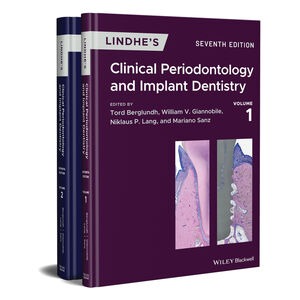
Lindhe's Clinical Periodontology and Implant Dentistry ; 2 Vol. Set ; 7th ed.
Provides an introduction to anatomy, including periodontal tissues, the edentulous ridge, the mucosa at teeth and implants, and osseointegration Discusses the epidemiology of periodontal and peri-implant diseases Explores the microbiology, including dental biofilms and calculus, periodontal infections, peri-implant infections, the pathogenesis of gingivitis and periodontitis, and the genetic susceptibility to periodontal disease Includes the latest perio- and peri-implant disease classifications Contains updated evidence-based preventive and treatment modalities for the treatment of periodontal and peri-implant diseases Features the latest evidence-based therapeutic alternatives on the use of dental implants to rehabilitate the lost dentition

Complex Motion ; 1st International Workshop, IWCM 2004, Günzburg, Germany, October 12-14, 2004, Revised Papers
The world we live in is a dynamic one: we explore it by moving through it, and many of the objects which we are interested in are also moving. Trafic, for instance, is an example of a domain where detecting and processing visual motion is of vital interest, both in a metaphoric as well as in a purely literal sense. Visual communication is another important example of an area of science which is dominated by the need to measure, understand, and represent visual motion in an eficient way. Visual motion is a subject of research which forces the investigator to deal with complexity; complexity in the sense of facing efiects of motion in a very large diversity of forms, starting from analyzing simple motion in a changing envir- ment (illumination, shadows, . . . ), under adverse observation conditions, such as bad signal-to-noiseratio (low illumination, small-scaleprocesses, low-dosex-ray, etc. ), covering also multiple motions of independent objects, occlusions, and - ing as far as dealing with objects which are complex in themselves (articulated objects such as bodies of living beings). The spectrum of problems includes, but does not end at, objects which are not ‘bodies’ at all, e. g. , when anal- ing fiuid motion, cloud motion, and so on. Analyzing the motion of a crowd in a shopping mall or in an airport is a further example that implies the need to struggle against the problems induced by complexity.

Clinical cases in early orthodontic treatment an atlas of when, how, and why to treat
Describes the most common types of malocclusion in children and presents illustrated step-by-step guidance on the procedures employed in their management, with the focus on early intervention. Advice is provided on the challenging decisions of when to start orthodontic treatment and whether to choose a one-phase or a two-phase treatment, taking into account the malocclusion, its severity, and its etiology.

Atlas of orthodontic case reviews
Offers a comprehensive resource to the treatment of orthodontic malocclusions with a case-based approach. Discusses and illustrates the treatment of orthodontic malocclusions using actual clinical casesPresents more than 800 clinical photographs showing the stages of each treatment, to act as a visual referenceIncludes a description of each malocclusion, an explanation of the desired treatment outcomes, an account of the changes, and review questions for each case

Atlas of immediate dental implant loading
Offers an up-to-date and comprehensive overview of the immediate restoration of teeth and immediate functional loading when using different implant systems and surfaces in patients with single tooth loss or partial or complete edentulism.
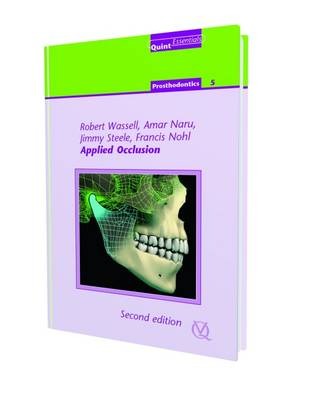
Applied Occlusion : QuintEssentials of Dental Practice ; Vol. 29
Includes many new illustrations, highlighted practical tips, and updates to the text with the most recent advances in the literature. The narrated 3D animations on the accompanying DVD clarify the effects of jaw movement, and comprehensive clinical videos demonstrate the process of investigating and managing real-life occlusal problems. The authors of this practical guide bring occlusal concepts and techniques to life and demystify them for dentists and students alike.
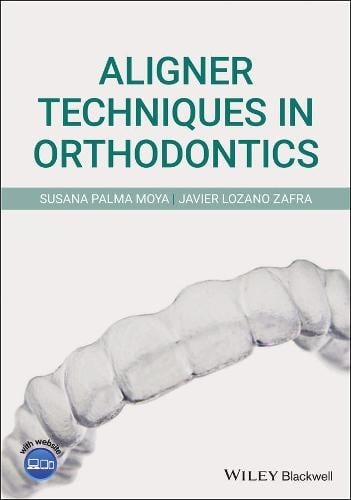
Aligner Techniques in Orthodontics
Filled with the theoretical and practical clinical information on the popular aligner techniques with a focus on Invisalign. Written by practicing orthodontists and noted experts on the topic, the book is designed to help practitioners develop their skills in using aligners in orthodontics. The authors describe in detail the clear and simple methods for treating patients using different aligner techniques, as well as material on treating any given malocclusion.

Aligner systems in invisible orthodontics: basic concepts and clinical management
Describes the processes, techniques and biomechanics involved in providing aligner treatment for different types of malocclusions. It opens with an overview of the material characteristics and the basic concepts of aligner therapy including topics like biocompatibility and intraoral deterioration. The main part of the book is dedicated to the various types of aligners, the methods used in their application and the practical aspects of delivery. It is structured based on the type of malocclusion being managed giving the reader a systematic pattern and a practical way of progressing through the book. The book closes with a discussion of the scientific data available.

Advances in UAV detection, classification and tracking
Explores the latest techniques and advancements in unmanned aerial vehicle (UAV) detection, classification, and tracking. As UAV technology continues to evolve and become more accessible, there is a growing need for effective methods to detect, identify, and track these devices in various scenarios. This reprint provides a thorough overview of the state-of-the-art approaches for UAV detection, classification, and tracking, covering both theoretical and practical aspects.The reprint begins by introducing the basics of UAVs and their various applications, followed by a detailed overview of the challenges associated with UAV detection, classification, and tracking. The authors then present the latest techniques and algorithms used in the field, including machine-learning-based approaches, computer vision techniques, and sensor fusion techniques. The reprint also covers the challenges of real-world applications, such as dealing with occlusions, sensor noise, and environmental factors.
