



Page 1
Page 1

New Materials in Civil Engineering
A valuable guide to the properties, selection criteria, products, applications, lifecycle and recyclability of advanced materials. It presents an A-to-Z approach to all types of materials, highlighting their key performance properties, principal characteristics and applications. Traditional materials covered include concrete, soil, steel, timber, fly ash, geosynthetic, fiber-reinforced concrete, smart materials, carbon fiber and reinforced polymers. In addition, the book covers nanotechnology and biotechnology in the development of new materials.

Nanoinformatics
Brings out the state of the art on how informatics-based tools are used and expected to be used in nanomaterials research. There has been great progress in the area in which “big-data” generated by experiments or computations are fully utilized to accelerate discovery of new materials, key factors, and design rules. Data-intensive approaches play indispensable roles in advanced materials characterization. "Materials informatics" is the central paradigm in the new trend. "Nanoinformatics" is its essential subset, which focuses on nanostructures of materials such as surfaces, interfaces, dopants, and point defects, playing a critical role in determining materials properties. There have been significant advances in experimental and computational techniques to characterize individual atoms in nanostructures and to gain quantitative information. The collaboration of researchers in materials science and information science is growing actively and is creating a new trend in materials science and engineering.

Molecular Materials with Specific Interactions - Modeling and Design
One of the first requirements to initiate the molecular modeling of molecular materials is an accurate and realistic description of the electronic structure, intermolecular interactions and chemical reactions at microscopic and macroscopic scale. Therefore the first four chapters contain an extensive introduction into the latest theories of intermolecular interactions, functional density techniques, microscopic and mezoscopic modeling techniques as well as first-principle molecular dynamics.In the following chapters, techniques bridging microscopic and mezoscopic modeling scales are presented. The authors then illustrate various successful applications of molecular design of new materials, drugs, biocatalysts, etc. before presenting challenging topics in molecular materials design.

Micro- and Macro-Properties of Solids : Thermal, Mechanical and Dielectric Properties
Each of the eight chapters treats an important aspect of solid state physics, comprising a complete review of the particular field. Typically, a chapter starts with basic information about a property of a solid and the related experimental techniques. This is followed by a global overview which brings together all important contributions by different research workers in the field. This overview is comprehensive and covers essential literature over the past 60 years. Each chapter concludes with a detailed discussion of the contributions made by the chapter authors and their associates, in some cases spanning the last 45 years. In addition, Micro- and Macro-Properties of Solids provides data on new materials such as rare-earth metals, semiconductors, ferroelectrics, mixed-valence compounds, superionic conductors, optical and optoelectronic materials and biomaterials.

Metallopolymer Nanocomposites
Highly dispersed nanoscale particles in polymer matrices are currently attracting great interest in many fields of chemistry, physics and materials science. This book presents and analyzes the essential data on nanoscale metal clusters dispersed in, or chemically bonded with polymers. Special attention is paid to the in situ synthesis of the nanocomposites, their chemical interactions, and the size and distribution of the particles in the polymer matrix. Numerous novel nanocomposites are described with regard to their mechanical, electrophysical, optical, magnetic, catalytic and biological properties. Their applications, present and future, are outlined. The book is addressed both to researchers who actively use these materials and to students entering this multidisciplinary field.

Matter and Methods at Low Temperatures
Matter and Methods at Low Temperatures contains a wealth of information essential for successful experiments at low temperatures, which makes it suitable as a reference and textbook. This third edition also describes newly developed low-temperature experimentation techniques and new materials properties; it also contains many additional references and a list of suppliers of cryogenic equipment.

Introduction to materials science for engineers
Provides balanced, current treatment of the full spectrum of engineering materials, covering all the physical properties, applications and relevant properties associated with engineering materials. It explores all of the major categories of materials while also offering detailed examinations of a wide range of new materials with high-tech applications.

Interior Design Illustrated
Introduces complex design concepts in a visually stunning format; from defining the space and using the elements of design, to planning building systems and incorporating sustainable materials, this volume embodies the idea that beauty and function are not separate entities, but two parts of a whole. This new fourth edition has been updated to reflect the latest building codes and design practices, with discussion of new materials related to acoustics, lighting, and sustainable furnishings. Renewed attention to sustainability includes new information on energy conservation, design for longevity and adaptive reuse of existing buildings, as well as an updated discussion on LED lighting, workplace design, use of color, and computer modeling software to provide a well-rounded view of how interior design firms are working today. This classic text brings the elements and principles of design to life, giving students the practical skills they need to transition from idea to concept. Understand the latest building codes and how to integrate them into your design Explore new advances in materials, lighting, and wireless technology Design from a perspective of sustainability, longevity, and energy efficiency Delve into BIM, including software for modeling lighting, acoustics, and more

Integrating Innovation in Architecture : Design, Methods and Technology for Progressive Practice and Research
Covers new materials and design methods, advances in computational design practices, innovations in building technologies and construction techniques, and the integration of research with design. Moreover, it discusses strategies for integrating innovation into design practices, risks and economic impacts. Through numerous case studies, it illustrates how innovations have been implemented on actual architectural projects, and how design and technical innovations are used to improve building performance, as well as design practices in cutting-edge architectural and engineering firms.

High-Pressure Shock Compression of Solids VIII : The Science and Technology of High-Velocity Impact
Research in the field of shock physics and ballistic impact has always been intimately tied to progress in development of facilities for accelerating projectiles to high velocity and instrumentation for recording impact phenomena. The chapters of this book, written by leading US and European experts, cover a broad range of topics and address researchers concerned with questions of material behaviour under impulsive loading and the equations of state of matter, as well as the design of suitable instrumentation such as gas guns and high-speed diagnostics. Applications include high-speed impact dynamics, the inner composition of planets, syntheses of new materials and materials processing. Among the more technologically-oriented applications treated is the testing of the flight characteristics of aeroballistic models and the assessment of impacts in the aerospace industry.

Handbook of advanced magnetic materials : Vol 1 : Nanostructural effects ; Vol 2 : Characterization and simulation ; Vol 3 : Fabrication and processing ; Vol 4 : Properties and applications
The objective of Handbook of Advanced Magnetic Materials is to provide a timely, comprehensive review of recent progress in magnetic materials research. This broad yet detailed reference consists of four volumes: 1.) Nanostructured advanced magnetic materials, 2.) Characterization and simulation of advanced magnetic materials, 3.) Processing of advanced magnetic materials, and 4.) Properties and applications of advanced magnetic materials Emphasis is on the processing, experimental investigation, theoretical understanding, and application of nanostructured magnetic materials. The chapters, authored by worldwide known specialists, provide an introduction into the topics and review the latest advances in magnetic nanostructures and materials. This includes emerging new materials, scientific methods, and experimental techniques. The coverage is very broad and includes nanostructural effects, characterization and simulation, fabrication and processing, and properties and applications of advanced magnetic materials.

Electronic Devices and Circuit Design : Challenges and Applications in the Internet of Things
Offers a broad view of the challenges of electronic devices and circuits for IoT applications. The book presents the basic concepts and fundamentals behind new low power, high-speed efficient devices, circuits, and systems in addition to CMOS. It provides an understanding of new materials to improve device performance with smaller dimensions and lower costs. It also looks at the new methodologies to enhance system performance and provides key parameters for exploring the devices and circuit performance based on smart applications.

Electron Correlation in New Materials and Nanosystems
The articles collected in this book cover a wide range of materials with extraordinary superconducting and magnetic properties. For many of the materials studied, strong electronic correlations provide a link between these two phenomena which were long thought to be highly antagonistic. Both the progress in our understanding of fundamental physical processes and the advances made towards the development of devices are reported here.

Conducting Polymers : A New Era in Electrochemistry
The discovery of polymers with variable conductivity brought forth a paradigmatic change in chemistry and in other branches of science and technology. Electrochemistry has played a central role in the preparation, characterization and application of these new materials. This book is a systematic survey of the knowledge accumulated in this field in the last thirty years. It includes thermodynamic aspects, the theory of the mechanism of charge transport processes, the chemical and physical properties of these compounds, the techniques of characterization, the chemical and electrochemical methods of synthesis as well as the application of these systems. The book contains a compilation of the polymers prepared so far and covers the relevant literature.
Materials for Tomorrow : Theory, Experiments and Modelling
This book contains six chapters on central topics in materials science. Each is written by specialists in the field, and gives a state-of-the-art presentation of the subject for graduate students and scientists not necessarily working in that field. Computer simulations of new materials, theory and experimental work are all extensively discussed. As nanomaterials are of great current interest, most of the topics discussed have a bearing on nanomaterials and nanodevices. In addition to inorganic nanotubes, metallic nanocrystals, electronic nanodevices, spintronics and interfaces on an atomic scale, the text also presents computer simulations on one of the less well understood fields in solid-state physics and materials science: glasses and undercooled fluids.
MARE-WINT : New Materials and Reliability in Offshore Wind Turbine Technology
This book provides a holistic, interdisciplinary overview of offshore wind energy, and is a must-read for advanced researchers. Topics, from the design and analysis of future turbines, to the decommissioning of wind farms, are covered. The scope of the work ranges from analytical, numerical and experimental advancements in structural and fluid mechanics, to novel developments in risk, safety & reliability engineering for offshore wind. The core objective of the current work is to make offshore wind energy more competitive, by improving the reliability, and operations and maintenance (O&M) strategies of wind turbines.
Magnetism : A Synchrotron Radiation Approach
Contains the edited lectures of the fourth Mittelwihr school on "Magnetism and Synchrotron Radiation". This series of events introduces graduate students and nonspecialists from related disciplines to the field of magnetism and magnetic materials with emphasis on synchrotron radiation as an experimental tool of investigation. These lecture notes present in particular the state of the art regarding the analysis of magnetic properties of new materials.
Composite Materials : Properties as Influenced by Phase Geometry
This book deals with the mechanical and physical behavior of composites as influenced by composite geometry. This monograph provides a comprehensive introduction for researchers and students to modern composite materials research with a special emphasis on the influence of geometry to materials properties. Composite Materials enables the reader to a better understanding of the behavior of natural composites, improvement of such materials, and design of new materials with prescribed properties.
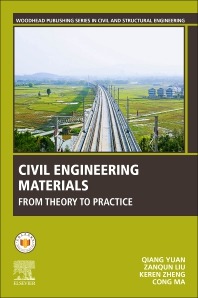
Civil engineering materials : From theory to practice ; 1st ed.
Presents the state-of-the-art in civil engineering materials, including the fundamental theory of materials needed for civil engineering projects and unique insights from decades of large-scale construction in China. The title includes the latest advances in new materials and techniques for civil engineering, showing the relationship between composition, structure and properties, and covering ultra-high-performance concrete and self-compacting concrete developed in China. This book provides comprehensive coverage of the most commonly used, most advanced materials for use in civil engineering. This volume consists of eight chapters covering the fundamentals of materials, inorganic cementing materials, Portland cement concrete, bricks, blocks and building mortar, metal, wood, asphalt and polymers.

Bone augmentation in implant dentistry : A step-by-step guide to predictable alveolar ridge and sinus grafting
Implant dentistry has evolved tremendously over the past three decades and is rapidly progressing as new materials and protocols become available each year. With the number of advancements made in digitally based media and marketing, it is imperative that the clinician is able to separate new trends from evidence-based protocols to make sound and predictable choices for the ultimate benefit of patients. This textbook presents cases from the author's 35-year practice to show the successes and failures of various treatment approaches and protocols. Early chapters discuss the relevant biomaterials and instruments utilized for bone augmentation protocols, including barrier membranes, bone grafting materials, and growth factors. Surgical chapters dedicated to extraction socket management, alveolar ridge augmentation, and sinus grafting follow, each chapter detailing specific indications and patient selection criteria as well as step-by-step surgical procedures, aspects of postoperative treatment, and complications. The final chapter focuses on full-arch reconstruction using fully guided immediate reconstruction protocols. The author's teaching institute is credited with preparing some of the world's best clinicians, and this book will pave the way for countless more.
