



Page 1
Page 1

NPY Family of Peptides in Neurobiology, Cardiovascular and Metabolic Disorders : from Genes to Therapeutics
The NPY-family of peptides encompasses several groups of neurotransmitters and hormones, which exert diverse biological and pathological actions that bear on all major vital systems. This book is a unique compilation of the most recent breakthroughs in NPY/PYY neurobiology, cardiovascular and metabolic disorders. The identification of multiple receptors for the members of the NPY and PYY family of peptides provides new opportunities for discovery of specific NPY antagonists and agonists that have vast clinical potential. The recognition of the role of NPY in stimulation of food intake has already resulted in discovery of potent and selective NPY receptor Y-5 antagonists, which are in clinical development for obesity. NPY Y1 receptor antagonists are targeted for cardiovascular indications. Research into the multiple functions of NPY and its receptors in neurological and affective disorders is also actively pursued. The chapters in this book are written by internationally renowned experts with the objective to synthesize leading concepts and data in support for translational medicine.

Molecular Mechanisms of Neurotransmitter Release
Within the complex neuronal network of the nervous system, neuron-to-neuron communication occurs mainly through chemical synapses, where the presynaptic nerve terminal releases neurotransmitters that control the function of postsynaptic neurons by acting on postsynaptic receptors. Recent decades have brought groundbreaking new developments and a wealth of knowledge to this field. In Molecular Mechanisms of Neurotransmitter Release, leading experts provide concise, up-to-date information on all major molecular mechanisms involved, with complete background information and figures and diagrams to further elucidate key concepts or experiments.Comprehensive and cutting-edge, Molecular Mechanisms of Neurotransmitter Release is sure to provide a learning tool for neuroscience students, a solid reference for neuroscientists, and a source of knowledge for all those who have a general interest in the ever-evolving field of neuroscience.

Hormones and the brain
Peripheral hormones have a major impact on the brain: they are able to interfere with its development, to affect release of neurotransmitters and concentrations of receptors, to trigger growth factors involved in lesion repair. These multiple actions account for their capacity to modulate a number of physiological parameters, from reproductive functions to memory, behaviour and aging. Depending upon intensity and duration of exposure, they can be either neuroprotective or neurotoxic, for instance by affecting production of free radicals. This book, based on contributions of pioneer investigators in the field, outlines the ambiguous actions of gonadal steroids (estradiol, progesterone, testosterone, inhibin and activin) and of neurosteroids, related moieties produced in the brain itself. After summarizing their multiple mechanisms of action, which involve both direct effects on neuronal membranes and activation of genes coding for specific proteins in neurons or glial cells, the book outlines the role of hormones in pathogenic processes such as mental disturbances or neurodegenerative diseases.

Handbook of neurochemistry and molecular neurobiology : Neurotransmitter Systems
The brain is the organ that collects information from the environment, processes and stores the information, and generates behavior as and when needed. In essence, the brain makes us who we are. For this reason, understanding the biology of brain function is a great challenge and a major goal of modern science. The brain is one of the last great frontiers in science, and the unraveling of its mysteries is comparable in complexity to efforts in space exploration. A fundamental goal of neuroscience is to understand how neurons generate behavior and the pathophysiology of different mental and neurological diseases. This requires, among other things, information about where these neurons are located, how they are connected, and how they communicate with each other in various physiological and pathophysiological conditions. Our aim is to describe recent discoveries about the basic operations of the brain and to provide an introduction to the adaptations for specific types of information processing.

Handbook of neurochemistry and molecular neurobiology : Neural Membranes and Transport
The first section of this volume deals with neural membranes and barriers. The second section covers ion pumps and ion transporters in neural membranes. The final section covers neural membranes and transport of neurotransmitters or other solutes.

Exogenous and endogenous factors affecting happiness, happy mind, happy life
Emotions are the language of the soul. Our brain is the emotional center where every emotion is produced including happiness. Happiness underlying factors are considerable from two dimensions: endogenous factors and exogenous factors Therefore, this research aimed to consider biological factors that underlie happiness. The research is divided into several sub-groups (brain, genetics, neurotransmitters, endocrinology, hormones, drugs, diseases, and other exogenous factors). In spite of difficulties in finding special genes, several genes distributed to emotion and mood. Neuroscience studies showed that some part of brain (e.g. amygdala, hipocamp and limbic system) and neurotransmitters (e.g. dopamine, serotonin, norepinefrine and endorphin) play a role in control of happiness. A few studies pointed to the role of cortisol and adrenaline (adrenal gland) and oxitocin (pituitary gland) in controlling happiness.

Dendritic Neurotransmitter Release
This book presents recent developments in the neurophysiology of dendritic release of several chemical classes of transmitters in a number of different areas of the mammalian central nervous system. Once released from a neuron, these substances can act as neurotransmitters and/or neuromodulators, to autoregulate the original neuron, its synaptic inputs, and adjacent cells or, by volume transmission, to affect distant cells.
Communication in Plants : Neuronal Aspects of Plant Life
Plant neurobiology is a newly emerging field of plant sciences. It covers signalling and communication at all levels of biological organization – from molecules up to ecological communities. In this book, plants are presented as intelligent and social organisms with complex forms of communication and information processing. Authors from diverse backgrounds such as molecular and cellular biology, electrophysiology, as well as ecology treat the most important aspects of plant communication, including the plant immune system, abilities of plants to recognize self, signal transduction, receptors, plant neurotransmitters and plant neurophysiology. Further, plants are able to recognize the identity of herbivores and organize the defence responses accordingly. The similarities in animal and plant neuronal/immune systems are discussed too. All these hidden aspects of plant life and behaviour will stimulate further intense investigations in order to understand the communicative plants in their whole complexity.
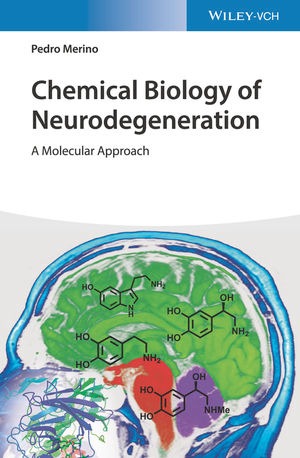
Chemical Biology of Neurodegeneration : A Molecular Approach
This book focuses on the main actors involved in neurodegenerative disorders at a molecular level, and places special emphasis on structural aspects and modes of action. Drawing on recent data on enzyme structure, mode of action, and inhibitor design, it describes?from a biochemical point of view?the six most important neurotransmitter systems and their constituent enzymes and receptors. Misfolding and aggregation of proteins within the brain is also covered.
Basic & Clinical Pharmacology
Covers the important concepts students need to know about the science of pharmacology and its application to clinical practice. This edition has been extensively updated to provide expanded coverage of transporters, pharmacogenomics, and new drugs Delivers the knowledge and insight needed to excel in every facet of pharmacology!. Encompasses all aspects of medical pharmacology, including botanicals and over-the-counter drugs Major revisions of the chapters on immunopharmacology, antiseizure, antipsychotic, antidepressant, antidiabetic, anti-inflammatory, and antiviral drugs, prostaglandins, and central nervous system neurotransmitters New chapter on the increasingly relevant topic of cannabis pharmacology Each chapter opens with a case study, covers drug groups and prototypes, and closes with summary tables and diagrams that encapsulate important information Revised full-color illustrations provide more information about drug mechanisms and effects and help clarify important concepts Trade Name/Generic Name tables are provided at end of each chapter for easy reference when writing a chart order or prescription Includes descriptions of important new drugs released through May 2019 New and updated coverage of general concepts relating to recently discovered receptors, receptor mechanisms, and drug transporters
