



Page 1
Page 1
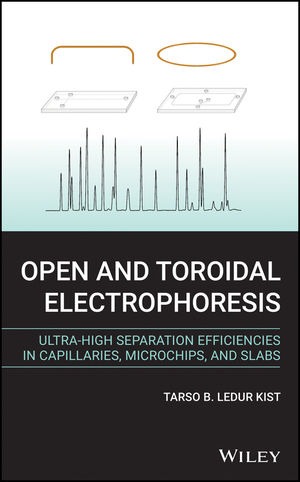
Open and Toroidal Electrophoresis : Ultra-High Separation Efficiencies in Capillaries, Microchips and Slabs
Written by one of the developers of Toroidal Capillary Electrophoresis (TCE), this book is the first to present this novel analytical technique, in detail, to the field of analytical chemistry. The exact expressions of separation efficiency, resolution, peak capacity, and many other performance indicators of the open and toroidal layouts are presented and compared.

Office and SharePoint 2007 User’s Guide : Integrating SharePoint with Excel, Outlook, Access, and Word
Web sites. Collaboration. Document management. Paperless offices. We want it all in business today, but how do you achieve all of these goals? More importantly, if you work for one of the millions of small to medium–sized businesses, how do you find the time and build the expertise necessary to reach these goals? Even the most powerful tool will not allow you to succeed unless you can get the majority of your staff to use it efficiently and effectively. You need a guide that demonstrates a platform small to medium–sized businesses can use to reach these goals.

Oculoplastics and Orbit
Considerable progress has been made in various fields of oculoplastic surgery, e.g. the development of endoscopic transcanalicular as well as endonasal minimal invasive techniques in lacrimal surgery, the use of muscle pedunculated scleral flaps to improve implant motility without pegging. This extraordinary volume enhances your understanding of Graves’ ophthalmopathy and helps you to define situations suitable for radiotherapy and more differentiated surgical strategies such as orbital fat resection, balance bony decompression and lid lengthening procedures. It exemplifies progress in aesthetic surgery such as endoscopic brow lift and soft techniques for mid-face rejuvenation and discusses general risks of infectious disease transmission using allografts as well as current concepts in the management of conjunctival neoplasms.

Nutritional psychiatry : A primer for clinicians
There is increasing evidence that mental health problems such as schizophrenia, depression and anxiety are linked with poor nutrition. At present, very few psychiatrists provide nutritional advice for their patients, despite such advice complimenting drug and psychological therapies. This edited volume is the first book to provide a comprehensive overview of the relationship between nutrition and mental health, for mental health professionals. Featuring contributions from leading authorities in the field, the book examines the link between diet and the microbiome-gut brain axis and how this correlates with a variety of psychiatric disorders. The book explores how enhancing the beneficial bacteria in the gut, through the use of psychobiotics, prebiotics or dietary change can improve mood and reduce anxiety.

Nutritional psychiatry
Provides a comprehensive overview of nutritional psychiatry, elucidating its theoretical foundations, the biological mechanisms linking diet to mental health (including inflammation, oxidative stress, disrupted energy metabolism the gut–brain axis and other implicated pathways), and the current evidence base for dietary impacts on major psychiatric disorders such as depression, anxiety, schizophrenia, bipolar disorder, and ADHD.
Nutrition and dietary interventions in cancer
Presents the most up-to-date information on the effects of nutrition and food on cancer prevention and management. The book will provide clinicians and other healthcare practitioners with an educational source on how to educate cancer patients and their families on nutrition and dietary during cancer treatment. Recent nutritional epidemiology studies have occasionally produced controversial or unexpected results and highlight the need for additional research on diet and cancer risk. Chapters within the book focus among others on the role of natural antioxidants in cancer, the importance of micronutrients in cancer prevention and nutritional genomics and their role in cancer prevention.

Nutrigenomics and nutraceuticals
Provides an authoritative and comprehensive overview of the field of nutraceuticals and genomics—also called nutrigenomics, a rapidly growing field. It discusses both nutrigenomic and nutrigenetic techniques to investigate the nutritional basis of several health disorders because scientists have found that diet can affect gene expression. The book covers the nutrigenomic tools for the prevention of disease conditions such as cancer, viral infection, microbial infection, COVID-19, HIV/AIDS, tuberculosis, hypertension, neurodegenerative disease, obesity, baldness, and anemia. Some nutrigenomic tools that can also be used for brain health, weight loss, human nutrition, skin care, and maintaining health during pregnancy are also explored.

Nutrient Cycling in Terrestrial Ecosystems
The first part of the book presents the fundamentals of nutrient cycling. Topics included are cycling of carbon, nitrogen, phosphorus, sulphur and micronutrients. The second part discusses nutrient cycling at an ecosystem scale, covering cropping systems, pastures, natural grasslands, arid lands, tundras and forests. The final chapter reviews current models of nutrient cycling.

Nutraceuticals in insomnia and sleep problems
Sleep is one of the most important and crucial physiological needs for maintaining a healthy life. However, in today’s day and age, insomnia and other sleep disorders, such as sleep apnea, are increasing rapidly. This new book details the nutraceuticals from foods that help to promote good health and optimum sleep. The authors discuss the importance of sleep, the role of diet in sleep, the role of specific vitamins and minerals, amino acids and opioids as nutraceuticals for sleep, newer technologies for use and delivery of nutraceuticals for treating insomnia, and more. The book not only explores nutraceuticals that promote optimum sleep but also details foods that cause insomnia, such as processed, chemical-rich, and refined foods. Chapters also cover commensal and symbiotic microbes, microbial metabolites, and bacteriocins and their impact on sleep. A chapter on the ethical issues related to addiction to nutraceuticals for sleep induction is also included.

Nutraceuticals in arthritis and psoriasis : Management and prevention of diseases
Explores plant-derived nutraceuticals that can be used as crucial therapeutic tools in the prevention and treatment of arthritis and psoriasis, providing detailed information on the use of plant-derived nutraceuticals, such as microalgae and other marine botanicals, omega polyunsaturated fatty acids, glucosamine and chondroitin sulphate, plant-based gum, vitamins and oils, probiotic supplements, and others in the treatment and management of arthritis and psoriasis. The book relates the recent scientific evidence on the effectiveness of each of these nutraceutical treatments, offering case studies, results of clinical studies, and more.
Nucleic Acids Hybridization : Modern Applications
Several approaches, such as microarray hybridization, have become extremely popular tools for specialists in biochemistry and biomedicine, while the potential of many other advantageous techniques seems to be underestimated. Written by an international team of authors, this book details the current state-of-art in hybridization techniques. Coverage includes experimental protocols along with comprehensive and detailed method descriptions.

Nucleic Acids and Proteins in Soil
With millions of different bacterial species living in soil, the microbial community is extremely complex, varying at very small scales. Microbe-driven functions are essential for most processes in soil. Thus, a better understanding of this microbial diversity will be invaluable for the management of the various soil functions. Nucleic Acids and Proteins in Soil combines traditional approaches in soil microbiology and biochemistry with the latest techniques in molecular microbial ecology. Included are methods to analyse the presence and importance of nucleic acids and proteins both inside and outside microbial cells, the horizontal gene transfer which drives bacterial diversity, as well as soil proteomes. Further chapters describe techniques such as PCR, fingerprinting, the challenging use of gene arrays for structural and functional analysis, stable isotope probing to identify in situ metabolic functions, and the use of marker and reporter genes in soil microbial ecology.

Novel food grade enzymes : Applications in food processing and preservation industries
Covers all the aspects of food-grade enzymes, including their classification, kinetics, microbial production, biosynthetic pathways, commodity-wise industrial applications, and downstream processing strategies. The broad focus of this book is on the application of various classes of enzymes in dairy, fruits and vegetables, cereals and oilseeds, meat and poultry, and brewing and food packaging industries. Certain recent areas such as nanotechnological perspective in enzyme immobilization, infusion strategies as well as its efficient usage in food packaging and preservation are some of the salient highlights of this book. This book also discusses the aspects related to application of enzymes in functional food development and shelf life extension of various commodities food products.

Notions of Convexity
The first two chapters of this book are devoted to convexity in the classical sense, for functions of one and several real variables respectively. This gives a background for the study in the following chapters of related notions which occur in the theory of linear partial differential equations and complex analysis such as (pluri-)subharmonic functions, pseudoconvex sets, and sets which are convex for supports or singular supports with respect to a differential operator. In addition, the convexity conditions which are relevant for local or global existence of holomorphic differential equations are discussed, leading up to Trépreau’s theorem on sufficiency of condition (capital Greek letter Psi) for microlocal solvability in the analytic category.

Notch Signaling in Embryology and Cancer : Notch Signaling in Cancer
This thoroughly revised second edition is an up-to-date overview of the current knowledge of Notch and Notch signaling in embryology and cancer. It discusses this topic from Notch’s role in the development of the embryo to the Notch signaling pathway’s role in the development of a number of cancers, including breast cancer, malignant melanoma, Non-melanoma skin cancer, intestinal cancer and others. In the years since the previous edition, there have been numerous developments and insights within this rapidly moving field, making this new edition urgently needed. This volume also features discussions of current insights on Notch’s role in senescence, the regulation of Notch signaling by microRNAs, Notch’s role in the microbiome, diet and its influence on Notch signaling and more.

Nonlinear H2/H-Infinity Constrained Feedback Control : A Practical Design Approach Using Neural Networks
In this book the authors present algorithms for H2 and H-infinity design for nonlinear systems which, unlike earlier theories, provide solution techniques for the core Hamilton–Jacobi equations that yield control systems which can be implemented in real systems; neural networks are used to solve the nonlinear control design equations.

Nonlinear Dynamics and Heterogeneous Interacting Agents
Economic application of nonlinear dynamics, microscopic agent-based modelling, and the use of artificial intelligence techniques as learning devices of boundedly rational actors are among the most exciting interdisciplinary ventures of economic theory over the past decade. This volume provides us with a most fascinating series of examples on "complexity in action" exemplifying the scope and explanatory power of these innovative approaches.

NMR-MRI, µSR and Mössbauer Spectroscopies in Molecular Magnets and magnetic nanoparticles
In this book an extensive overview on the results obtained during the last decade and on recent achievements in the study of molecular magnets by means of Nuclear Magnetic Resonance, Muon Spin Rotation, Magnetic Resonance Imaging and Mossbauer techniques is presented. The aim is to introduce the reader to these techniques and to give a general background on their application to molecular spin systems.

Nitrogen-fixing Leguminous Symbioses
This book is the self-contained final volume of a comprehensive seven-volume series covering the basic and applied science relating to nitrogen fixation. It addresses the most important nitrogen-fixing symbiosis of all – that between legumes and their root-nodule bacteria – and therefore deals with the properties and behaviour of both macro- and micro-symbiont.

Nitrogen-fixing Actinorhizal Symbioses
This book is the self-contained sixth volume of a comprehensive series on nitrogen fixation. It presents the state-of-the-art in regards to actinorhizal symbioses. Like legumes, actinorhizal plants form root nodules that host nitrogen-fixing soil bacteria. However, because the macrosymbionts are, with one exception, woody plants rather than crop plants, actinorhizal symbioses are less well-known than legume symbioses to which they are phylogenetically related. Actinorhizal plants come from eight different families. This volume includes chapters that deal with all these aspects of the symbiosis and both symbionts plus their ecological role and use. Other chapters tackle the global distribution of different actinorhizal plants and their microsymbionts and how this impacts the question of co-evolution of the micro- and macrosymbionts as well as comparing the actinorhizal and leguminous symbioses.
