



Page 1
Page 1

Modeling of metal forming and machining processes : By finite element and soft computing methods
The physics of metal forming and metal removing is normally expressed using non-linear partial differential equations which can be solved using the finite element method (FEM). However, when the process parameters are uncertain and/or the physics of the process is not well understood, soft computing techniques can be used with FEM or alone to model the process.

Internal friction in metallic materials : A handbook
This book is a unique collection of experimental data in the field of internal friction, anelastic relaxation, and damping properties of metallic materials. It reviews virtually all anelastic relaxation phenomena ever published, and also most of the internal friction effects based on other types of dissipation of mechanical (elastic) energy. Furthermore, the reader is also supplied with explanations of the basic physical mechanisms of internal friction, a summary of typical effects for different groups of metals, and more than 2000 references to original papers.

Ferrous Materials : Steel and Cast Iron
This book closes the gap in the treatment of steel and cast iron. Each chapter takes into account the gradual transitions between the two types of ferrous materials. The authors demonstrate that steel and cast iron are versatile and customisable materials which will continue to play a key role in the future.

Electron crystallography : Novel approaches for structure determination of nanosized materials
During the last decade we have been witness to several exciting achievements in electron crystallography. This includes structural and charge density studies on organic molecules complicated inorganic and metallic materials in the amorphous, nano-, meso- and quasi-crystalline state and also development of new software, tailor-made for the special needs of electron crystallography. This volume comprises the proceedings of the NATO Advanced Study Institute on Electron Crystallography: Novel Approaches for Structure Determination of Nanosized Materials, Erice, Italy, 10 - 24 June 2004

Materials for Springs
“Materials for springs” is basically intended for engineers related to spring materials and technologies who graduated from metallurgical or mechanical engineering courses in technical high school, or in other higher engineering schools, as well as those who are related to the purchase or sales of spring materials. The first chapter introduces into the fundamental selection processes of spring materials including the information sources on materials database. It is followed by the basic mechanisms and theories of spring failures such as fatigue fracture, creep/stress relaxation and stress corrosion cracking of metallic materials.
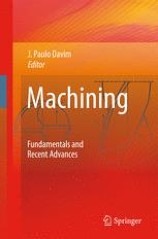
Machining: Fundamentals and Recent Advances
Machining is one of the most important manufacturing processes. Parts manufactured by others processes often require further operations before the product is ready for application. Machining is the broad term used to describe the removal of material from a work-piece. Machining processes can be applied to work metallic and non-metallic materials such as polymers, wood, ceramics and composites.
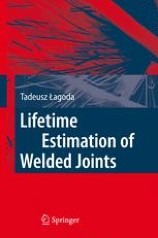
Lifetime Estimation of Welded Joints
In the paper the author attempts to assess the fatigue life of chosen welded joints. It focuses especially on chosen problems that accompany deter- nation of the fatigue life of welded joints, taking into consideration the strain energy density parameter.
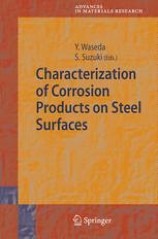
Characterization of Corrosion Products on Steel Surfaces
It is well known that corrosion products, i.e. rust, on iron and steel surfaces cannot be assigned a typical crystallographic structure with long-range order. In fact, the structure of rust is considered to be very complicated, and some forms of rust are assigned to the amorphous state for this reason. Accurate information about the atomic-scale structure of rust is important to shed light on corrosion mechanisms of metallic materials. And, since life of steel structures is often dominated by environmental degradation or corrosion of the surface, the structure of the rust formed on iron and steel surfaces during prolonged exposure to air is of great interest. This book describes the fundamental aspects of materials characterization for the ferric oxyhydroxides formed on steel surfaces.
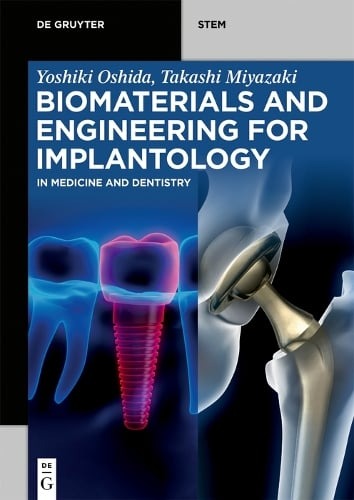
Biomaterials and engineering for implantology: in medicine and dentistry
Biomaterials are composed of metallic materials, ceramics, polymers, composites and hybrid materials. Biomaterials used in human beings require safety regulations, toxicity, allergic reaction, etc. When used as implantable materials their biological compatibility, biomechanical compatibility, and morphological compatibility must be acessed. This book explores the design and requirements of biomaterials for the use in implantology.

Austenitic TRIP/TWIP steels and steel-zirconia composites : Design of tough, transformation-strengthened composites and structures
This book presents a collection of the most up-to-date research results in the field of steel development with a focus on pioneering alloy concepts that result in previously unattainable materials properties.
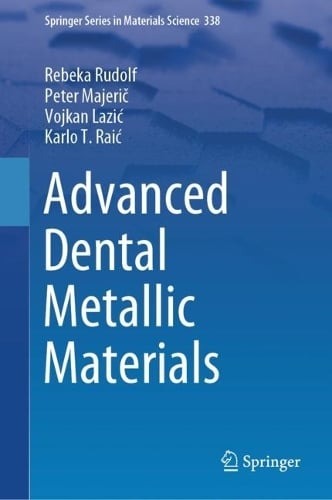
Advanced dental metallic materials
Delivers a broad and concise look at advanced metallic materials used for dental applications. This book aims to bring the readers closer to the specific purpose of dental metallic materials meeting specific criteria and materials properties such as biocompatibility, non-toxicity, resistance to corrosion, long-term durability, appropriate strength and toughness, as well as corresponding values of modulus of elasticity.
