



Page 1
Page 1

Indigenous Life Projects and Extractivism : Ethnographies from South America
Exploring indigenous life projects in encounters with extractivism, the present volume discusses how current turbulences actualise questions of indigeneity, difference and ontological dynamics in the Andes and Amazonia. While studies of extractivism in South America often focus on wider national and international politics, this contribution instead provides ethnographic explorations of indigenous politics, perspectives and worlds, revealing loss and suffering as well as creative strategies to mediate the extralocal. Seeking to avoid conceptual imperialism or the imposition of exogenous categories

Environmental Governance in Latin America
The multiple purposes of nature – livelihood for communities, revenues for states, commodities for companies, and biodiversity for conservationists – have turned environmental governance in Latin America into a highly contested arena. In such a resource-rich region, unequal power relations, conflicting priorities, and trade-offs among multiple goals have led to a myriad of contrasting initiatives that are reshaping social relations and rural territories. This edited collection addresses these tensions by unpacking environmental governance as a complex process of formulating and contesting values, procedures and practices shaping the access, control and use of natural resources. Contributors from various fields address the challenges, limitations, and possibilities for a more sustainable, equal, and fair development. In this book, environmental governance is seen as an overarching concept defining the dynamic and multi-layered repertoire of society-nature interactions, where images of nature and discourses on the use of natural resources are mediated by contextual processes at multiple scales.
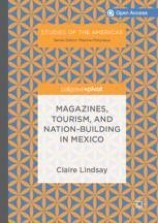
Magazines, Tourism, and Nation-Building in Mexico
This book discusses the relationship between periodicals, tourism, and nation-building in Mexico. It enquires into how magazines, a staple form of the promotional apparatus of tourism since its inception, articulated an imaginative geography of Mexico at a time when that industry became a critical means of economic recovery and political stability after the Revolution. Notwithstanding their vogue, popularity, reach, and close affiliations to commerce and state over several decades, magazines have not received any sustained critical attention in the scholarship on that period.
