



Page 1
Page 1
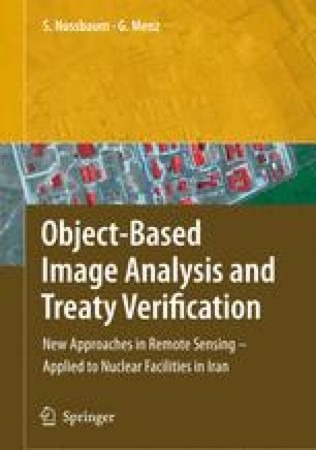
Object-Based Image Analysis and Treaty Verification : New Approaches in Remote Sensing – Applied to Nuclear Facilities in Iran
This book describes recent progress in object-based image interpretation, and also presents many new results in its application to verification of nuclear non-proliferation. A comprehensive workflow and newly developed algorithms for object-based high resolution image (pre-) processing, feature extraction, change detection, classification and interpretation are developed, applied and evaluated. The entire analysis chain is demonstrated with high resolution imagery acquired over Iranian nuclear facilities.

Network and Parallel Computing ; IFIP International Conference, NPC 2005, Beijing, China, November 30 - December 3, 2005, Proceedings
These proceedings contain the papers presented at the 2005 IFIP International Conference on Network and Parallel Computing (NPC 2005), held in Beijing, China, between November 30 and December 3, 2005. The goal of the conference was to establish an international forum for engineers and scientists to present their ideas and experiences in network and parallel computing. A total of 320 submissions were received in response to our Call for Papers. These papers were from the following countries or regions: Australia, Canada, China, France, Germany, Hong Kong, India, Iran, Italy, Japan, Korea, Lux- burg, Nepal, Netherlands, Taiwan, United Arab Emirates, and United States.
Morse Theoretic Methods in Nonlinear Analysis and in Symplectic Topology
It covered an ample spectrum of subjects which are re ected in the present volume: Morse theory and related techniques in in nite dim- sional spaces, Floer theory and its recent extensions and generalizations, Morse and Floer theory in relation to string topology, generating functions, structure of the group of Hamiltonian difieomorphisms and related dynamical problems, applications to robotics and many others. We thank all our main speakers for their stimulating lectures and all p- ticipants for creating a friendly atmosphere

International Symposium on Fundamentals of Software Engineering ; International Symposium, FSEN 2007, Tehran, Iran, April 17-19, 2007, Proceedings
The present volume contains the post-proceedings of the second IPM Inter- tional Symposium on Fundamentals of Software Engineering (FSEN), Tehran, Iran, April 17–19, 2007. Thissymposium brought together researchers and practitioners working on di?erent aspects of formal methods in software engineering.

Internal Diversity : Iranian Germans Between Local Boundaries and Transnational Capital
This book explores the interrelation between diversity in migrants’ internal relations and their experience of inequality in local and global contexts. Taking the case of Hamburg-based Iranians, it traces evaluation processes in ties between professionals – artists and entrepreneurs – since the 1930s, examining migrants’ potential to act upon hierarchical structures

How to Practice Academic Medicine and Publish from Developing Countries? : A Practical Guide
The book provides an overview of the state of research in developing countries – Africa, Latin America, and Asia (especially India) and why research and publications are important in these regions. It is written mainly by senior colleagues who have experienced and recognized the challenges with design, documentation, and publication of health research in the developing world. The book includes short chapters providing insight into planning research at the undergraduate or postgraduate level, issues related to research ethics, and conduct of clinical trials.

Handbook of oral and maxillofacial giant cell lesions
Covers all the oral and maxillofacial lesions which contain giant cells, either as a pathognomonic feature or otherwise. It includes different types of giant cells (i.e. physiological, inflammatory and tumorigenic) followed by four ways of classification. The book provides a detailed description of the lesions along with differential diagnoses for the ease of appropriate diagnosis.

Fuzzy Group Theory
This book presents an up-to-date account of research in important topics of fuzzy group theory. The book concentrates on the theoretical aspects of fuzzy subgroups of a group. It also includes applications to some abstract recognition problems and to coding theory. The book begins with basic properties of fuzzy subgroups. The notions of ascending series and descending series of fuzzy subgroups are used to define nilpotency of a fuzzy subgroup. The material presented in this book makes it a good reference for graduate students and researchers working in fuzzy group theory.

Evolutionary Computer Music
The evolutionary computation approach to music is an exciting new development for composers and musicologists alike. For composers, it provides an innovative and natural means for generating musical ideas from a specifiable set of primitive components and processes. For musicologists, these techniques are used to model the cultural transmission and change of a population's body of musical ideas over time. In both cases, musical evolution can be guided by a variety of constraints and tendencies built into the system, such as realistic psychological factors that influence the way music is expressed, experienced, learned, stored, modified, and passed on among individuals. This book discusses not only the applications of evolutionary computation to music, but also the tools needed to create and study such systems. These tools are drawn in part from research into the origins and evolution of biological organisms, ecologies, and cultural systems on the one hand, and from computer simulation methodologies on the other. They can be combined to create surrogate artificial worlds populated by interacting simulated organisms in which complex musical experiments can be performed that would otherwise be impossible.

Enabling Consumer and Entrepreneurial Literacy in Subsistence Marketplaces
This book describes research on low-literate, poor buyers and sellers in subsistence marketplaces, the consequent development of an innovative marketplace literacy educational program that enables consumer and entrepreneurial literacy, and implications of the research and the educational program for business, education, and a variety of disciplines and functions. There are two important resources that individuals living in subsistence need to function in the economic realm: finances and know-how. The book describes an educational program that focuses on enabling generic skills about the marketplace. This program uses the "know-why" or an understanding of marketplaces as a basis for the know-how of being an informed buyer or seller. This volume discusses implications of the research and the educational program for non-profit organizations, for research and practice in education, for business research and practice, and for academic and applied research.

Embedded computer systems : Architectures, modeling, and simulation ; Vol. 3553 ; 5th International Workshop, SAMOS 2005, Samos, Greece, July 18-20, Proceedings
The SAMOS workshop is an international gathering of highly quali?ed researchers from academia and industry, sharing in a 3-day lively discussion on the quiet and - spiring northern mountainside of the Mediterranean island of Samos. As a tradition, the workshop features workshop presentations in the morning, while after lunch all kinds of informal discussions and nut-cracking gatherings take place. The workshop is unique in the sense that not only solved research problems are presented and discussed but also (partly) unsolved problems and in-depth topical reviews can be unleashed in the sci- ti?c arena. Consequently, the workshop provides the participants with an environment where collaboration rather than competition is fostered. The earlier workshops, SAMOS I–IV (2001–2004), were composed only of invited presentations. Due to increasing expressions of interest in the workshop, the Program Committee of SAMOS V decided to open the workshop for all submissions. As a result the SAMOS workshop gained an immediate popularity; a total of 114 submitted papers were received for evaluation. The papers came from 24 countries and regions: Austria (1), Belgium (2), Brazil (5), Canada (4), China (12), Cyprus (2), Czech Republic (1), Finland (15), France (6), Germany (8), Greece (5), Hong Kong (2), India (2), Iran (1), Korea (24), The Netherlands (7), Pakistan (1), Poland (2), Spain (2), Sweden (2), T- wan (1), Turkey (2), UK (2), and USA (5). We are grateful to all of the authors who submitted papers to the workshop.

Early Islamic Art, 650-1100 : Constructing the Study of Islamic Art ; Vol. I : Variorum Collected Studies
Represent major contributions to the understanding of the formative centuries of Islamic art, focusing on the Umayyad (661-750) and Fatimid (969-1171) dynasties in Greater Syria and in Egypt, and on the Mediterranean or Iranian antecedents of early Islamic art. Historical, cultural, and religious themes, including the role of court ceremonies, the growth of cities, and the importance of the Qur'an, are introduced to help explain how a new art was formed in the central lands of the Near East and how its language can be retrieved from visual or written sources.
Deterministic and statistical methods in Machine Learning ; 1st International Workshop, Sheffield, UK, September 7-10, 2004. Revised Lectures
This book consitutes the refereed proceedings of the First International Workshop on Machine Learning held in Sheffield, UK, in September 2004. The 19 revised full papers presented were carefully reviewed and selected for inclusion in the book. They address all current issues in the rapidly maturing field of machine learning that aims to provide practical methods for data discovery, categorisation and modelling. The particular focus of the workshop was advanced research methods in machine learning and statistical signal processing.

Computing science, communication and security ; 2nd International Conference, COMS2 2021, Gujarat, India, February 6–7, 2021, Revised Selected Papers
This book constitutes revised selected papers of the Second International Conference on Computing Science, Communication and Security, COMS2 2021, held in Gandhinagar, India, in February 2021. Due to the COVID-19 pandemic the conference was held virtually. The 19 full papers were thoroughly reveiwed and selected from 105 submissions. Papers are organised according to the topical sections on artificial intelligence and machine learning; networking and communications.

Computing science, communication and security ; 1st International Conference, COMS2 2020, Gujarat, India, March 26–27, 2020, revised selected papers
Constitutes revised selected papers of the First International Conference on Computing Science, Communication and Security, COMS2 2020, held in March 2020. Due to the COVID-19 pandemic the conference was held virtually. The 26 full papers and 1 short paper were thoroughly reveiwed and selected from 79 submissions. Papers are organised according to the topical sections on artificial intelligence and machine learning; network, communication and security; computing science.

Computer Aided Verification; 31st International Conference, CAV 2019, New York City, NY, USA, July 15-18, 2019, Proceedings, Part II
The volume cover logics, decision procedures; and solvers; numerical programs; verification; distributed systems and networks; verification and invariants; and concurrency.

Computer Aided Verification ; 31st International Conference, CAV 2019, New York City, NY, USA, July 15-18, 2019, Proceedings, Part I
This volume presented automata and timed systems; security and hyperproperties; synthesis; model checking; cyber-physical systems and machine learning; probabilistic systems, runtime techniques; dynamical, hybrid, and reactive systems.
Legal Programming : Designing Legally Compliant RFID and Software Agent Architectures for Retail Processes and Beyond
LEGAL PROGRAMMING: Designing Legally Compliant RFID and Software Agent Architectures for Retail Processes and Beyond provides a process-oriented discussion of the legal concerns presented by agent-based technologies, processes and programming. It offers a general outline of the potential legal difficulties that could arise in relation to them, focusing on the programming of negotiation and contracting processes in a privacy, consumer and commercial context. The authors will elucidate how it is possible to create form of legal framework and design methodology for transaction agents, applicable in any environment and not just in a specific proprietary framework, that provides the right level of compliance and trust. Key elements considered include the design and programming of legally compliant methods, the determination of rights in respect of objects and variables, and ontologies and programming frameworks for agent interactions. Examples are used to illustrate the points made and provide a practical perspective.
Journal on Data Semantics XI
The LNCS Journal on Data Semantics is devoted to the presentation of notable work that, in one way or another, addresses research and development on issues related to data semantics. The scope of the journal ranges from theories supporting the formal definition of semantic content to innovative domain-specific applications of semantic knowledge. The journal addresses researchers and advanced practitioners working on the semantic web, interoperability, mobile information services, data warehousing, knowledge representation and reasoning, conceptual database modeling, ontologies, and artificial intelligence.

Bioactive Heterocycles V
This volume contains 10 chapters. The contributions are from researchers famous in their respective fields and the chapters contain high quality reviews on topics related to the chemo-biological studies of several different heterocyclic groups. The first chapter from Saracoglu reviews the functionalization of indoles and the pyrroles via Michael additions, as these compounds have potential for their biological activities. In second chapter Men ́endez reviews the chemistry of the welwitindolinones. Topcu and Demirkiran, in the third chapter, describe the chemistry and biological studies of lignans from Taxus species, including their biosynthesis and recent strategies for the synthesis of lignans.
