



Page 1
Page 1

ISO Science Legacy : A Compact Review of ISO Major Achievements
This book recounts results obtained via the Infrared Space Observatory (ISO) on comets, in the close environment of pre-main sequence stars, in the interstellar medium, and in the final stages of stellar life, using molecular hydrogen, ubiquitous crystalline silicates, water and ices.

High-Velocity Clouds
On the occasion of the retirement of Ulrich Schwarz, a symposium was held in Groningen in May of 1996, celebrating his contributions to the study of the int- stellar medium, including his work on the high-velocity clouds. The coming together of many specialists in the latter ?eld prompted the idea of compiling a book c- taining their contributions, and summarizing the status of our understanding of the high-velocity cloud phenomenon. This seemed especially worthwhile at the time, since many exciting developments were taking place. After the discovery of some H i clouds with high velocities, about 40 years ago, the subject had been dominated by 21-cm observations of H i emission. Starting in the mid-1980s much progress was being made because of the availability of new instruments, such as large ground-based optical telescopes and UV observatories in space. The connections between the work on high-velocity clouds and other studies of the properties of the (hot) interstellar medium also became clearer.

High Resolution Infrared Spectroscopy in Astronomy ; Proceedings of an ESO Workshop Held at Garching, Germany, 18-21 November 2003
Two specialized new instruments for ESO's VLT, VISIR and CRIRES, spawned the idea for this workshop. CRIRES is a dedicated very high resolution infrared spectrograph; VISIR features a high resolution spectroscopic mode. Together, the instruments combine the sensitivity of an 8m-telescope with the now well-established reliability of VLT-facility instruments. High resolution here means that lines in cool stellar atmospheres and HII-regions can be resolved. The astrophysical topics discussed in this rather specialized workshop range from the inner solar system to active galactic nuclei. There are many possibilities for new discoveries with these instruments, but the unique capability, which becomes available through high-resolution infrared spectroscopy, is the observation of molecular rotational-vibrational transitions in many astrophysical environments. Particularly interesting and surprising in this context, many papers on modeling and laboratory spectroscopy at the workshop appear to indicate that astronomical observations are lagging a bit behind in this field. The papers are an interesting mix of reports from existing high resolution facilities, reports on modeling efforts of synthetic spectra and reports on laboratory spectra. In this sense, a fruitful exchange between molecular physics and astronomy was again accomplished and is documented in this volume.

Groups of Galaxies in the Nearby Universe ; Proceedings of the ESO Workshop held at Santiago de Chile, December 5 - 9, 2005
In the cosmological context, groups trace large-scale structures better than clusters, and the evolution of groups and clusters appears to be related. All these aspects of research on groups of galaxies are summarized in this book.

Galaxies in the Local Vol.
Studies of Nearby Galaxies are currently the focus of many observations and numerical simulations. This book presents an overview of the galaxies within the Local Volume (D < 10 Mpc), including the Local Group (D < 1 Mpc) and our closest neighbours, the Andromeda Galaxy and the Magellanic Clouds. Presented are the latest results from radio, infrared and optical surveys as well as detailed multi-wavelength studies of individual galaxies. Accurate distances are now available for the majority of Local Volume galaxies providing a true 3-dimensional view of their distribution and flow pattern as well as their star formation.

Diffuse matter from star forming regions to active galaxies : A volume honouring John Dyson
In this volume dedicated to him, introductory reviews to a number of the key processes and to the sources themselves are given by leading experts. The mechanisms in which the multi-component natures of media affect their dynamics receive particular attention, but the roles of hydromagnetic effects are also highlighted.
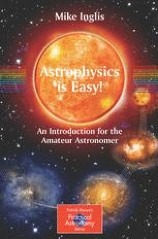
Astrophysics is easy! : An introduction for the amateur astronomer
With some justification, many amateur astronomers believe astrophysics is a very difficult subject, requiring at least degree-level mathematics to understand it properly. This isn’t necessarily the case. Mike Inglis' quantitative approach to the subject explains all aspects of astrophysics in simple terms and cuts through the incomprehensible mathematics with which this fascinating subject is all too often associated. Astrophysics is Easy! begins by looking at the H-R diagram and other basic tools of astrophysics, then ranges across the universe, from a first look at the interstellar medium and nebulae, through the birth, evolution and death of stars, to the physics of galaxies and clusters of galaxies.
