



Page 1
Page 1

On the path to AI : Law’s prophecies and the conceptual foundations of the machine learning age
This book explores machine learning and its impact on how we make sense of the world. It does so by bringing together two ‘revolutions’ in a surprising analogy: the revolution of machine learning, which has placed computing on the path to artificial intelligence, and the revolution in thinking about the law that was spurred by Oliver Wendell Holmes Jr in the last two decades of the 19th century.
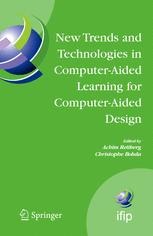
New Trends and Technologies in Computer-Aided Learning for Computer-Aided Design ; IFIP International Working Conference: EduTech 2005, Perth, Australia, October 20-21, 2005
Computation and communication technologies underpin work and development in many different areas. Among them, Computer-Aided Design of electronic systems and E-Learning technologies are two areas which are different but share many concerns. The design of CAD and E-Learning systems already touches on a number of parallels, such as system interoperability, user interfaces, standardization, EML-based formats, reusability aspects (of content or designs), and intellectual property rights. Furthermore, the teaching of Design Automation tools and methods is particularly amenable to a distant or blended learning setting, and implies the interconnection of typical CAD tools, such as simulators or synthesis tools, with e-learning tools. There are many other aspects in which synergy can be found when using E-Learning technology for teaching and learning technology. This workshop, sponsored by IFIP WG 10.5 Design and Engineering of Electronic Systems in cooperation with IFIP WG 3.6 Distance Education, will explore the interrelationship between these two subjects, where Computer-Aided Design meets Computer-Aided Learning. New Trends and Technologies in Computer-Aided Learning for Computer-Aided Design documents recent approaches and results presented at the EduTech 2005 Workshop, which was held in October 2005 in Perth, Australia and sponsored by the International Federation for Information Processing (IFIP). The topics chosen for this working conference are very timely: learning environments, tools and applications for education, education technologies and trends, and teaching in the hardware design area.

Multimedia Encryption and Watermarking
Multimedia Encryption and Watermarking presents a comprehensive survey of contemporary multimedia encryption and watermarking techniques, which enable a secure exchange of multimedia intellectual property. Part I, Digital Rights Management (DRM) for Multimedia, introduces DRM concepts and models for multimedia content protection, and presents the key players. Part II, Multimedia Cryptography, provides an overview of modern cryptography, with the focus on modern image, video, speech, and audio encryption techniques. This book also provides an advanced concept of visual and audio sharing techniques. Part III, Digital Watermarking, introduces the concept of watermarking for multimedia, classifies watermarking applications, and evaluates various multimedia watermarking concepts and techniques, including digital watermarking techniques for binary images. Multimedia Encryption and Watermarking is designed for researchers and practitioners, as well as scientists and engineers who design and develop systems for the protection of digital multimedia content. This volume is also suitable as a textbook for graduate courses on multimedia security.

Multi-dimensional Approaches Towards New Technology : Insights on Innovation, Patents and Competition
This open access edited book captures the complexities and conflicts arising at the interface of intellectual property rights (IPR) and competition law. To do so, it discusses four specific themes: (a) policies governing functioning of standard setting organizations (SSOs), transparency and incentivising future innovation; (b) issue of royalties for standard essential patents (SEPs) and related disputes; (c) due process principles, procedural fairness and best practices in competition law; and (d) coherence of patent policies and consonance with competition law to support innovation in new technologies.

Medicinal compounds in modern healthcare : From tradition to innovation
Reviews the evolution, development, and application of medicinal compounds, beginning with their historical context and advancing to modern innovations. The book describes the therapeutic potential of bioactive compounds from microorganisms, the role of antioxidants and anti-inflammatory agents in managing chronic diseases, and the use of small molecules in pain management and mental healthcare. It further explores immunomodulatory compounds, epigenetic modifiers, and the latest advancements in drug development, including integrative medicine approaches and the applications of nanotechnology in traditional medicine. Additionally, the book addresses the use of immunomodulatory agents like methotrexate and paclitaxel in cancer treatment, regulatory considerations for ensuring safety and efficacy in medicinal compounds, and the growing field of nutraceuticals. Towards the end, the book covers the extraction, profiling, and ADMET evaluation of medicinal compounds, intellectual property challenges, and the significance of traditional medicine in modern healthcare.

Media resistance : Protest, dislike, abstention
his book is about those who dislike, protest, and try to abstain from media, both new and old. It explains why media resistance persists and answers two questions: What is at stake for resisters and how does media resistance inspire organized action? Yet, despite the interest in media scepticism and dislike, there seems to be no book on the market discussing media resistance as a phenomenon in its own right. This book explores resistance across media, historical periods and national borders, from early mass media to current digital media. Drawing on cases and examples from the US, Britain, Scandinavia and other countries, media resistance is discussed as a diverse phenomenon encompassing political, professional, networked and individual arguments and actions.

International Law Today : New Challenges and the Need for Reform?
th Rüdiger Wolfrum celebrated his 65 birthday on 13 December 2006. On this special occasion, current and former members of the large circle of his PhD and post-doctorate students (Doktoranden und Habilit- den) organized a symposium on the subject of “International Law - day: New Challenges and the Need for Reform?” to honour him and his academic work as a teacher and researcher.the subjects covered by the speakers and commentators reflect the wide variety of issues he worked on in his long and impressive academic career. They extend from a cri- cal evaluation of the new responsibility to protect and the role of the UN Security Council in post-conflict management, thoughts on the proliferation of international tribunals with regard to the unity or fragmentation of international law, marine genetic resources in the deep sea and environmental protection in Antarctica to human rights issues relating to intellectual property rights and the protection of minorities.

Intellectual Property Management in R&D Collaborations : The Case of the Service Industry Sector
This book of about two hundred and seventy pages examines the complex and challenging problem of how companies can take an intellectual property lead within research and development (R&D) collaborations. … He compiled a typology for managing intellectual property in R&D collaborations.The findings of the book are based on a series of interviews with companies in a variety of industries and regions, as well as on a detailed examination of the service companies IBM, SAP, Swisscom and SwissRe.

Intellectual Property Management : The Role of Technology-Brands in the Appropriation of Technological Innovation
The book investigates the interplay of brand equity and technological assets at the corporate level. In a grounded theory approach it develops a model of how companies in technology intensive industries can improve the appropriation of the returns of their intangible technological assets with the help of brand equity and thus improve their competitiveness. The theoretical discussions are supported by two extensive case studies on Bayer Aspirin and Cisco Systems as well as an extensive econometric analysis. The developed model points out how the strategic relevance of immaterial technological assets and brand equity develop along the technology-life-cycle and indicates how companies can, by an integrated technology and brand equity management, appropriate the returns of their initial technological advantage in the long-run. The implications of the findings for business companies as well as researchers are clearly revealed.

Intellectual Property in the Global Trading System : EU-China Perspective
Having explored multifaceted issues of IPR enforcement, this book argues that IPR enforcement problem is not an actual outcome of Confucian philosophy and "to steal a book" is not an "elegant offence." This book demonstrates that counterfeiting and piracy are common inevitable consequences of inadequate economic development and a by-product of a unique set of socioeconomic crises deriving from the development of a dysfunctional institutional regime. By examining areas of compatibilities between European and Chinese cultures and analysing painful lessons from the US-China negotiations over IPR protection.

Intellectual Property in the Food Technology Industry : Protecting Your Innovation
Considering the effort and funding devoted to a company's success, understanding Intellectual Property rights patents, trade secrets, trademarks, and licensing is essential. Establishing appropriate internal policies from the outset can prevent companies from learning a costly and painful lesson in the courtroom. With Intellectual Property in the Food Technology Industry, currently the only book of its kind focusing specifically on the food industry, one will learn what to consider throughout the various creative phases of a product's lifespan from initial research and development initiatives through post-production.

Innovation, Economic Development, and Intellectual Property in India and China : Comparing Six Economic Sectors
This book analyses intellectual property and innovation governance in the development of six key industries in India and China. These industries are reflective of the innovation and economic development of the two economies, or of vital importance to them: the IT Industry, the film industry, the pharmaceutical industry, plant varieties and food security, the automobile industry, and the sharing economy. The analysis extends beyond the domain of IP law, and includes economics and policy analysis. The overarching concerns of the book are how the examined industries have developed in the two countries, what role state innovation policy and/or IP policy has played in such development, what the nature of the state innovation policy/IP policy is, whether such policy has been causal, facilitating, crippling, co-relational, or simply irrelevant, and whether there is a possibility of synergy between the two economies. The book also inquires as to why and how one specific industry has developed in one country and not in the other, and what India and China can learn from each other.

Handbook of International Investment Law and Policy
The Handbook will feature more than 80 contributions from leading experts (academics, lawyers, government officials), including Vivienne Bath, M. Sornarajah, Mélida Hodgson, Rahul Donde, Roberto Echandi, Andrew Mitchell, Ernst-Ulrich Petersmann, Christina L. Beharry, Krista Nadakavukaren Schefer, Leon Trakman, Prabhash Ranjan, Emmanuel Jacomy, Mariel Dimsey, Stavros Brekoulakis, Romesh Weeramantry, Nathalie Bernasconi-Osterwalder, David Collins, Damilola S. Olawuyi, Katia Fach Gomez, Jaemin Lee, Alejandro Carballo-Leyda, Patrick W. Pearsall, Mark Feldman, Surya Deva, Luke Nottage, Rafael Leal-Arcas, James Nedumpara, Rodrigo Polanco, etc.

Genome editing in drug discovery
In Genome Editing in Drug Discovery, a team of distinguished biologists delivers a comprehensive exploration of genome editing in the drug discovery process, with coverage of the technology’s history, current issues and techniques, and future perspectives and research directions. The book discusses techniques for disease modeling, target identification with CRISPR, safety studies, therapeutic editing, and intellectual property issues.

Ethnobotany : A phytochemical perspective
Explores the chemistry behind hundreds of plant medicines, dyes, fibers, flavors, poisons, insect repellants, and many other uses of botanicals. Bridging the gap between ethnobotany and chemistry, this book presents an introduction to botany, ethnobotany, and phytochemistry to clearly join these fields of study and highlight their importance in the discovery of botanical uses in modern industry and research. Part I. Ethnobotany, explores the history of plant exploration, current issues such as conservation and intellectual property rights, and a review of plant anatomy. An extensive section on plant taxonomy highlights particularly influential and economically important plants from across the plant kingdom. Part II. Phytochemistry, provides fundamentals of secondary metabolism, includes line drawings of biosynthetic pathways and chemical structures, and describes traditional and modern methods of plant extraction and analysis. The last section is devoted to the history of native plants and people and case studies on plants that changed the course of human history from five geographical regions: Africa, the Americas, Asia, Europe, and Ocean. Throughout the entire book, vivid color photographs bring science to life, capturing the essence of human botanical knowledge and the beauty of the plant kingdom.

Entrepreneurship and innovation : Theory, practice and context, 4th
Provides an overview of the theory, Practice and context of entrepreneurship and innovation at both the industry and firm level. It provides a foundation of ideas and understandings designed to shape the reader’s thinking and behaviour to better appreciate the role of innovation and entrepreneurship in modern economies, And to recognise their own abilities in this regard. The book provides the reader with an overview of these elements and how they combine to create new value in the market.

Digital Signal Processing with Field Programmable Gate Arrays
Field-Programmable Gate Arrays (FPGAs) are revolutionizing digital signal processing as novel FPGA families are replacing ASICs and PDSPs for front-end digital signal processing algorithms. So the efficient implementation of these algorithms is critical and is the main goal of this book. It starts with an overview of today's FPGA technology, devices, and tools for designing state-of-the-art DSP systems. A case study in the first chapter is the basis for more than 40 design examples throughout. The following chapters deal with computer arithmetic concepts, theory and the implementation of FIR and IIR filters, multirate digital signal processing systems, DFT and FFT algorithms, advanced algorithms with high future potential, and adaptive filters. Each chapter contains exercises. The VERILOG source code and a glossary are given in the appendices. This edition has a new chapter on microprocessors, new sections on special functions using MAC calls, intellectual property core design and arbitrary sampling rate converters, and over 100 new exercises.

Digital Media & Intellectual Property : Management of Rights and Consumer Protection in a Comparative Analysis
This book focuses on intellectual property issues and rights in digital - dia, their connection with consumer protection, and the limits on freedom of contracts imposed by technological power. In particular, it analyzes, from a EU and U.S. comparative perspective, the complex issues concerning legal protection, technological measures and new business models associated with the use, distribution, and control of digital media. The book is based on a research project the author started in 2001 as V- iting Scholar at the University of California at Berkeley, Boalt Hall School of Law.

Digital Libraries : International Collaboration and Cross-Fertilization; 7th International Conference on Asian Digital Libraries, ICADL 2004, Shanghai, China, December 13-17, 2004, Proceedings
The International Conference on Asian Digital Libraries (ICADL) is an annual international forum that provides opportunities for librarians, researchers and experts to exchange their research results, innovative ideas, service experiences and state-- the-art developments in the field of digital libraries. Building on the success of the first six ICADL conferences, the 7th ICADL conference hosted by the Shanghai Jiao Tong University and the Shanghai Library in Shanghai, China aimed to further strengthen the academic collaboration and strategic alliance in the Asia- Pacific Region in the development of digital libraries.

Digital Decision Making : Back to the Future
This book aims, through a gentle narrative approach, to stimulate an awareness of the issues and be a readable, challenging and informative introduction, both for university students and the general reader, to processes surrounding developments in technology and law which have important implications for the knowledge society.
