



Page 1
Page 1

Objective information theory
Objective Information Theory (OIT) is proposed to represent and compute the information in a large-scale complex information system with big data in this monograph. To formally analyze, design, develop, and evaluate the information, OIT interprets the information from essential nature, measures the information from mathematical properties, and models the information from concept, logic, and physic. As the exemplified applications, Air Traffic Control System (ATCS) and Smart Court SoSs (System of Systems) are introduced for practical OITs.

Multimodality in architecture : Collaboration, technology and education
Examines multimodality in architecture and its impacts on collaborative, technical and educational processes or systems. Multimodality is becoming increasingly critical in contemporary architectural practice and education. Creative design teams face new challenges when they embrace new modes of communication, technology, and knowledge development processes. From diverse online modes of communication to shared digital environments, generative AI and advanced hardware solutions, new modes of information creation, sharing, and application are changing the ways architects and designers work. The book presents new research which empowers international researchers and designers to work more effectively in a diverse range of digital environments. Whether the readers are architects, teachers, students, or scholars, this book provides critical insights and practical tools for understanding and optimising processes in architecture and design.

Multimedia Database Retrieval : A Human-Centered Approach
Multimedia Database Retrieval: A Human-Centered Approach presents the latest development in user-centered methods and the state-of-the-art in visual media retrieval. It includes discussion on perceptually inspired non-linear paradigm in user-controlled interactive retrieval (UCIR) systems. It also features a coherent approach which focuses on specific topics within content/concept-based retrievals via audio-visual information modeling of multimedia. Highlights include: * Exploring an adaptive machine that can learn from its environment * Optimizing the learning system by incorporating self-organizing adaptation into the retrieval process * Demonstrating state-of-the-art applications within small, medium, and large databases

Modernisation, Mechanisation and Industrialisation of Concrete Structures
Modernisation, Mechanisation and Industrialisation of Concrete Structures discusses the manufacture of high quality prefabricated concrete construction components, and how that can be achieved through the application of developments in concrete technology, information modelling and best practice in design and manufacturing techniques.
Modelling Autonomic Communications Environments ; 3rd IEEE International Workshop, MACE 2008, Samos Island, Greece, September 22-26, 2008. Proceedings
Research and development of autonomics have come a long way, and we are delighted to present the proceedings of the 3rd IEEE International Workshop on Modelling Autonomic Communications Environments (MACE 2008).Asin the last two years, this workshopwasheld aspart of Manweek, the International Week on Management of Networks and Services, which took place on the lovely Island of Samos in Greece .MACE started as anexperimentin2006,andcreatedasmallcommunitythat nowfnds it self attracted backeachyearby afeeling ofexcitement-thatthere is something new going on. Certainly, MACE is not as shiny or practiced as other well-known conferences and workshops, but we consider this a feature of the workshopitself.

Innovative Tools and methods using BIM for an efficient renovation in buildings
This book describes a BIM-based toolkit that has been developed according to the latest research activities on building information modelling and semantic interoperability to optimize the building process. It highlights the impacts of using such new tools to fast renovation activities starting from the decision-making and design stages to the construction site management with the possibility to monitor occupants' and owners’ feedback during the realization process. In this process, a framework has been developed and implemented to allow stakeholders involved in a renovation project to efficiently compile, maintain, and add data about (i) building elements, (ii) building services systems, (iii) tenants, operators, and owners of the building, and (iv) current and predicted performance of the building from the various data sources available. The framework applies and specializes the existing practices in the Semantic Web, Linked Data, and ontology domain to the management of renovation projects. It has been designed to be open so that any system which implements the required functions and uses the specified conventions will be able to achieve semantic interoperability with other framework-compliant systems in the renovation domain. Finally, this book represents the validation process of the toolkit that has been held in three demo sites: a social housing building in Italy and two private residential buildings in Poland and Finland. The outcome shows that the toolkit facilitates the renovation process with relevant reductions of time, costs, and energy consumption and that the inhabitants can take advantage of the increase in building performances, quality, and comfort.
Heritage building conservation : Sustainable and digital modelling
Covers: The technology used to digitally document heritage buildings, including LIDAR, photogrammetry, Heritage Building Information Modelling (HBIM), and Virtual Reality (VR) technologies Introducing a Maintainability Index of Heritage Buildings (MIHB) to support the decision-making and prioritization process for the maintenance of heritage buildings The adaptive reuse of heritage buildings Modelling embodied and operational energy performance Using Chatbot and Blockchain technology to support the management and preservation of heritage buildings Ultimately, this book presents a useful tool for use in heritage management and highlights how the reusability of heritage buildings is critical to the creation and survival of sustainable communities.

Fuzzy Database Modeling of Imprecise and Uncertain Engineering Information
This book presents recent advances for imprecise and uncertain engineering information from the point of view of fuzzy database modeling. The topics include fuzzy conceptual data modeling of engineering information, conversion of the fuzzy conceptual models, and database implementation of the fuzzy conceptual data models. Some major data and database models for engineering information modeling are investigated. The main novel aspect of this book is that the book focuses on imprecise and uncertain industrial information modeling viewed from databases and fuzzy database technologies viewed from industrial applications. This may be useful for people involved in theory research, design implementation, and application development of intelligent engineering databases.

Evolving Connectionist Systems : The Knowledge Engineering Approach
Evolving Connectionist Systems is aimed at all those interested in developing and using intelligent computational models and systems to solve challenging real world problems in computer science, engineering, bioinformatics and neuroinformatics. The book challenges scientists and practitioners with open questions about future creation of new information models inspired by Nature. This edition includes new methods for adaptive, knowledge-based learning, such as online incremental feature selection, spiking neural networks, transductive neuro-fuzzy inference, adaptive data and model integration, cellular automata and artificial life systems, particle swarm optimisation, ensembles of evolving systems, and quantum inspired neural networks. New applications to gene and protein interaction modelling, brain data analysis and brain model creation, computational neuro-genetic modelling, adaptive speech, image and multimodal recognition, language modelling, adaptive robotics, modelling dynamic financial and socio-economic systems, and ecological modelling, are covered. An important new feature of the book is the attempt to connect different structural and functional levels of a complex, intelligent system, looking for inspiration from functional relationships in natural systems, such as the genetic and the brain activity.

Digital transformation of the design, construction and management processes of the built environment
This book focuses on the development of methods, interoperable and integrated ICT tools, and survey techniques for optimal management of the building process.

Developing BIM talent : A guide to the BIM body of knowledge with Metrics, KSAs, and learning outcomes
A systematic Building Information Modeling (BIM) framework features cutting-edge use cases and competencies for students and professionals pursuing BIM careers. Offers: A solid foundation and guidelines for educators and practitioners for starting or enhancing a BIM curriculum or training program Templates, expert interviews, and case studies that provide in-depth knowledge and lessons learned that can facilitate process changes and strategic action plans Strategies for standardizing emerging BIM job tasks, descriptions, and methods for benchmarking performance

Data-driven BIM for Energy Efficient Building Design
Conceptualises the scale and spectrum of Building Information Modelling (BIM) and Artificial Intelligence (AI) approaches in energy efficient building design and to develop its functional solutions with a focus on four crucial aspects of building envelop, building layout, occupant behaviour and heating, ventilation and air-conditioning (HVAC) systems. Drawn from theoretical development on the sustainability, informatics and optimisation paradigms in built environment, the energy efficient building design will be marked through the power of data and BIM-intelligent agents during the design phase.
Construction Project Scheduling and Control
Introduces students to entirely new definitions and theories of the Critical Path Method (CPM), the leading scheduling method, as well as the most up-to-date information on Building Information Modeling (BIM). The new edition will include updated worked problems and scheduling software exercises, as well as revised teaching materials such as lecture slides and an instructor's manua

Computer-Aided Architectural Design Futures (CAADFutures) 2007 ; Proceedings of the 12th International CAADFutures Conference
This volume is the proceedings of the 12th International Conference of CAAD Futures, which took place in Sydney, Australia. The internationally refereed papers in this book present the state of the art in computer-aided architectural design research. The papers in this year's conference theme, Integrating Technologies for Computer-Aided Design, provide the technological foundation for new ways of thinking about using computers in designing and the use of computers in design itself as well as in the education of designers.
Journal on Data Semantics IV
• Semantics in data visualization • Semantic services for mobile users • Supporting tools • Applications of semantic-driven approaches These topics are to be understood as specifically related to semantic issues. Contributions submitted to the journal and dealing with semantics of data will be considered even if they are not within the topics in the list. While the physical appearance of the journal issues is like the books from the we- known Springer LNCS series, the mode of operation is that of a journal. Contributions can be freely submitted by authors and are reviewed by the Editorial Board. Contributions may also be invited, and nevertheless carefully reviewed, as in the case for issues that contain extended versions of the best papers from major conferences addressing data semantics issues. Special issues, focusing on a specific topic, are coordinated by guest editors once the proposal for a special issue is accepted by the Editorial Board. Finally, it is also possible that a journal issue be devoted to a single text.
Buildings for Education: A Multidisciplinary Overview of The Design of School Buildings
This book presents theoretical and practical research relating to the vast, publicly financed program for the construction of new schools and the reorganization of existing educational buildings in Italy.
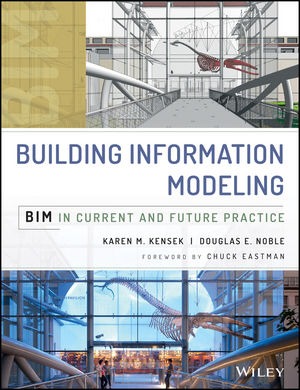
Building information modeling : BIM in current and future practice
"Thought leaders from universities and professional practice composed essays exploring BIM's potential to improve the products and processes of architectural design including the structure and content of the tools themselves. These authors provide insights for assessing the current practice and research directions of BIM and speculate about its future. Design Thinking and BIM / BIM Analytics / Comprehensive BIM / Reasoning with BIM / Professional BIM / BIM Speculations"
Building construction and technology
Highlights various aspects of building construction industry based on data from field studies. It discusses the challenges, methodologies, technological applications in building construction, technology, and management. The book presents new approaches to effective building construction and an understanding of the impact of applications of latest technologies.

Building a collaborative project management system: (Click)
Speaking on construction projects, we can imagine the huge amount of work, effort and time spent to complete any project. Because of the need for tools that facilitate the process of managing and tracking work and managing huge data and information and making it common to all the stockholder involved in the project, this system has been found to meet those needs of engineers, where it can manage employees, materials ,workers and the huge amount of data and enables it to track the progress of work .This system provides the possibility of communication between managers and this The system is considered a tool of the BIM system, which stands for Building Information Modeling.

Biological and medical data analysis ; Vol. 4345 : 7th International Symposium, ISBMDA 2006, Thessaloniki, Greece, December 7-8, 2006. Proceeding
This book constitutes the refereed proceedings of the 7th International Symposium on Biological and Medical Data Analysis, ISBMDA 2006, held in Thessaloniki, Greece, December 2006. Coverage in this volume includes functional genomics, sequence analysis, biomedical models, information modeling, biomedical signal processing, biomedical image analysis, biomedical data analysis, as well as decision support systems and diagnostic tools.
