



Page 1
Page 1

International Actors and the Formation of Laws
This book addresses the discourse that creates, modifies, and reshapes the law, as well as discourse participants. The book focuses on the actors operating in legal regimes and their subtly, bluntly, or even outright aggressive impact on the formation of laws. As the book examines the intersection of domestic, European, international, and even transnational, legal regimes where new law emerges as a product of this discourse, it contributes to the understanding of the mobility of law and contemporary law’s interactive nature. This book provides enlightening examples of diverse legal fields influenced by international, non-domestic actors. It covers a wide range of relevant topics, from financial sanctions to the rights of indigenous peoples, and addresses actors ranging from the European Union and the European Court of Human Rights to disability organizations. By exploring actors, the book stresses their objectives and driving forces behind their efforts to influence law. The book reveals an array of diverging methods used by international actors to influence law. Additionally, the book resonates with Nordic legal tradition and highlights Nordic commitment to rule of law and equality.

Indigenous Peoples and Real Estate Valuation
Covering contemporary practices around the world, this volume features research from an international array of authors, exploring the economic, demographic, political, legal, and cultural dimensions of property ownership—and the conflicts that emerge when systems clash. Including in-depth case studies and policy recommendations, this volume will be a valuable resource for government leaders and economic policymakers, urban planners and property developers, advocates of indigenous people’s rights, lenders, and other industry professionals.

Human Exploitation and Biodiversity Conservation
The sustainable use of biodiversity is one of the three key objectives of the 1992 "Convention on Biological Diversity". To achieve this, sound conservation practice has to be recognized as beneficial and implemented by all who access, or use it – from subsistence farmers to skiers and pharmaceutical bioprospectors. At the same time, indigenous peoples necessarily utilize enormous numbers of plants, fungi, and fish, particularly for foods and medicines. This book gathers together a wide range of contributions addressing diverse aspects of front-line human involvement in biodiversity exploitation and conservation. Its scope is broad, the organisms explored ranging from birds, invertebrates and mammals – both terrestrial and aquatic – to crops and medicinal plants. Meanwhile, the issues addressed include land use changes, the importance of gardens, hedges and green lanes, housing developments, hunting, invasive species, local community involvement, sacred groves, socioeconomic factors and trade.
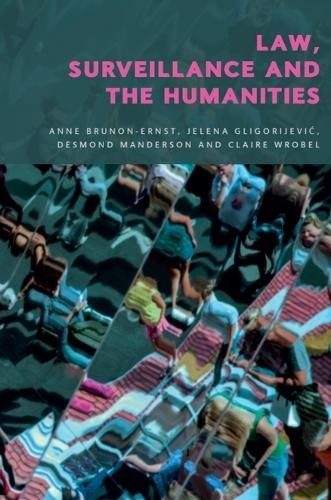
Law, surveillance and the humanities
Explores key issues such as the use and legitimacy of surveillance to address a global health crisis, the role of surveillance in the experience of indigenous peoples in post-colonial societies, how surveillance interacts with gender, race, ethnicity, and social class, and the interaction between technology, surveillance, and changing attitudes to expression. how philosophy and sociology can help to correct biases and law and politics can offer new approaches to the legitimacy, use and implications of surveillance.

A Primal Perspective on the Philosophy of Religion
This book challenges this widespread assumption and demonstrates how primal religions have something significant to offer on virtually every theme discussed in the philosophy of religion. Through this book the primal religous tradition stakes its claim for a place at the table.Despite the absence of written texts, primal religions have an implicit philosophy.This study shows how materials of primal religious experience can be incorporated in the categories of modern philosophy of religion. The book contends that the primal perspective can widen and deepen the horizons of philosophy of religion and enhance the philosophical appreciation of religion as a universal phenomenon.
