



Page 1
Page 1

Nutritional psychiatry : A primer for clinicians
There is increasing evidence that mental health problems such as schizophrenia, depression and anxiety are linked with poor nutrition. At present, very few psychiatrists provide nutritional advice for their patients, despite such advice complimenting drug and psychological therapies. This edited volume is the first book to provide a comprehensive overview of the relationship between nutrition and mental health, for mental health professionals. Featuring contributions from leading authorities in the field, the book examines the link between diet and the microbiome-gut brain axis and how this correlates with a variety of psychiatric disorders. The book explores how enhancing the beneficial bacteria in the gut, through the use of psychobiotics, prebiotics or dietary change can improve mood and reduce anxiety.

Nutritional psychiatry
Provides a comprehensive overview of nutritional psychiatry, elucidating its theoretical foundations, the biological mechanisms linking diet to mental health (including inflammation, oxidative stress, disrupted energy metabolism the gut–brain axis and other implicated pathways), and the current evidence base for dietary impacts on major psychiatric disorders such as depression, anxiety, schizophrenia, bipolar disorder, and ADHD.
Nutraceuticals in respiratory and pulmonary diseases
Explores nutraceuticals that have been found to be effective in managing and treating respiratory and pulmonary diseases. It explains nutritional supplements that function as adjuvants for respiratory health and which may be useful targets for developing innovative nutraceutical-active respiratory products. The book also discusses the role of vitamins, minerals, and functional foods in the prevention and treatment of respiratory illnesses such as asthma, bronchitis, airway constriction, chronic obstructive pulmonary disorder (COPD), etc. It also explores the potential role of various herbs and foods in the treatment of lung illnesses through the Ayurvedic practices. The effectiveness of various natural and dietary supplements as well as plant and animal-based nutritional supplements for respiratory health are also considered.

Nutraceuticals in cardiac health management
Cardiovascular diseases (CVDs) constitute the major cause of death worldwide, claiming nearly 18 million lives each year. Multiple foods and nutraceuticals have been proven to reduce the risk of cardiovascular disease. This new book offers an informative update on the most recent scientific evidence addressing the use of nutraceuticals in the prevention and management of heart disease. It summarizes the functional foods that are involved in preventing the risk of CVDs, the mechanisms of the bioactive components that lower the risk of chronic illnesses, as well as the dietary patterns that are involved in the prevention of CVDs. It also covers specific nutraceuticals, including probiotics, dietary fibers, garlic, green tea, vitamins, tomatoes and other lycopene-rich fruits and vegetables, dietary supplements, bee products, and more. In addition, it focuses on detailing the endothelial effects of marine- and plant-derived omega-3 fatty acids and marine-derived natural flavonoids in hypertension and CVDs.
Nutraceutical fruits : Overview and disease prevention
While nutritional supplements have enormous advantages, food ingredients such as fruits and vegetables can play a significant preventative and therapeutic role in our daily lives. Fruits are found to have anti-inflammatory, antibacterial, antifungal, and chemopreventive properties that can boost health, as well as prevent diseases. This new book explores the use of fruits as nutraceuticals for alternative treatment, as well as for disease prevention. It looks at how nutraceutical fruits can be used to prevent and manage a range of diseases that include mental illness, cancer, respiratory and lung diseases, cardiovascular diseases, liver disease, inflammatory bowel diseases, sleep disorders, etc. The book also looks at the roles of nutraceutical fruits in the metabolic syndrome and provides information regarding the safety and toxicity of neutraceutical fruits.
Molecular Sensors for Cardiovascular Homeostasis
This book reveals state-of-the-science of several newly discovered ion channel families and their role in the pathogenesis of cardiovascular diseases.It offers comprehensive and up-to-date information for a deeper understanding of the relationship between macro- and micro-environments, ion channels, and pathophysiological responses, and for developing novel therapies for treating devastating cardiovascular illnesses.

Microorganisms in Foods 6 : Microbial Ecology of Food Commodities
The second edition of Microorganisms in Foods 6: Microbial Ecology of Food Commodities is intended for those primarily in applied aspects of food microbiology. For 17 commodity areas it describes the initial microbial flora and the prevalence of pathogens, the microbiological consequences of processing, typical spoilage patterns, episodes implicating those commodities with foodborne illness, and measures to control pathogens and limit spoilage. The control measures are presented in a standardized format in line with international developments in risk management. A comprehensive index has also been added.

Micro-, Meso- and Macro-Dynamics of the Brain
This book brings together leading investigators who represent various aspects of brain dynamics with the goal of presenting state-of-the-art current progress and address future developments. The topics cover the most fascinating facets of neuroscience from elementary computation of neurons, mesoscopic network oscillations, internally generated assembly sequences in the service of cognition, large-scale neuronal interactions within and across systems, the impact of sleep on cognition, memory and mental illness, brain controlled robots, motor-sensory integration, spatial navigation, large-scale computation and consciousness. Overall, this volume offers an integrated view of the challenges and opportunities in deciphering brain circuits in health and disease.

Mental Health, Social Mirror
The essays in this volume reassert the centrality of research in mental health to sociology. First, they articulate the contributions that mental health research has made and can make to resolving key theoretical and empirical debates in important areas of sociological study. Second, they draw from mainstream theories and concepts to reconsider the potential of sociology to provide answers to critical questions regarding the social origins of and social responses to mental illness. As reflected in the title, the sociological study of mental health provides a reflection of the central processes that characterize our society.

Mental health disorders in pregnancy and the early postpartum
Mental health disorders are common in pregnancy and after childbirth with over 10% of women manifesting some form of mental illness during this time. Maternity services will encounter women with symptoms that vary in severity from mild self-limiting to potentially life-threatening. These conditions carry risks for both the woman and the fetus/newborn. Detecting women with, or at risk of, a serious mental health disorder and enabling them to access appropriate care in a timely fashion is a shared responsibility. However, given the frequency of contact they have with women through this period, maternity services have a pivotal role. From a mental health perspective, high-risk pregnancies are those primarily associated with serious mental illness (psychotic illnesses, bipolar disorder and severe depressive episodes). Healthcare professionals caring for pregnant women should have the appropriate skills to detect serious mental illness and identify women at risk and how to access specialist mental health care.

Mechanisms of Sepsis-Induced Organ Dysfunction and Recovery
There have been tremendous advances in understanding the cellular mechanisms involved in sepsis and contributing to the development of multiple organ dysfunction and mortality in this setting. The chapters in this book provide up-to-date insights into important pathways that are initiated by sepsis.
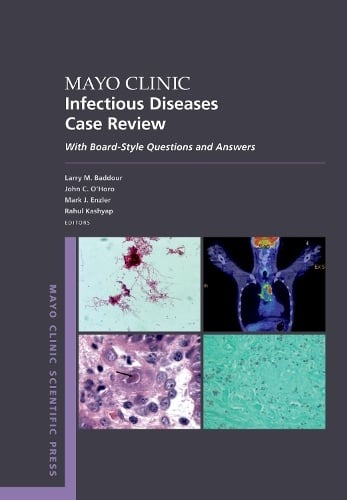
Mayo clinic infectious disease case review : With board-style questions and answers
Addresses many of the current-day illnesses seen by primary care clinicians and infectious diseases specialists. A case presentation format is used for all 54 chapters, and this framework serves as a wonderful educational tool that mirrors, in many respects, the objectives of a “case conference” format. The dozens of authors from different areas of our specialty have ensured that a robust clinical examination of specific infection syndromes has been included. In addition, the Question and Answer section solidifies the educational benefits for all levels and types of clinicians who seek an understanding of disease diagnosis, management, and prevention. A well-recognized characteristic of infectious diseases specialists is our focus on epidemiology, and this trait has served us well in developing successful clinical careers.

Improving Psychiatric Care for Older People : Barbara Robb’s Campaign 1965-1975
This book tells the story of Barbara Robb and her pressure group, Aid for the Elderly in Government Institutions (AEGIS). In 1965, Barbara visited 73-year-old Amy Gibbs in a dilapidated and overcrowded National Health Service psychiatric hospital back-ward. She was so appalled by the low standards that she set out to make improvements. Barbara’s book Sans Everything: A case to answer was publicly discredited by a complacent and self-righteous Ministry of Health. However, inspired by her work, staff in other hospitals ‘whistle-blew’ about events they witnessed, which corroborated her allegations. Barbara influenced government policy, to improve psychiatric care and health service complaints procedures, and to establish a hospitals' inspectorate and ombudsman.

Human genetics : concepts and applications
Human genetics is about variation more than about illnesses, and increasingly about the common rather than about the rare. Once an obscure science or an occasional explanation for an odd collection of symptoms, human genetics is now part of everyday conversation. This book shows students how and why that is true.

Healthy Minds in the Twentieth Century : In and Beyond the Asylum
This book contributes a new dimension to the study of mental health and psychiatry in the twentieth century. It takes the present literature beyond the ‘asylum and after’ paradigm to explore the multitude of spaces that have been permeated by concerns about mental well-being and illness.

Handbook of Life Course Health Development
Synthesizes and analyzes the growing knowledge base on life course health development (LCHD) from the prenatal period through emerging adulthood, with implications for clinical practice and public health. It presents LCHD as an innovative field with a sound theoretical framework for understanding wellness and disease from a lifespan perspective, replacing previous medical, biopsychosocial, and early genomic models of health. Interdisciplinary chapters discuss major health concerns (diabetes, obesity), important less-studied conditions (hearing, kidney health), and large-scale issues (nutrition, adversity) from a lifespan viewpoint. In addition, chapters address methodological approaches and challenges by analyzing existing measures, studies, and surveys. The book concludes with the editors’ research agenda that proposes priorities for future LCHD research and its application to health care practice and health policy.

Gene delivery systems development and applications
Covers the development of gene therapy today, the technology involved, clinical applications of siRNA, non-viral vector-based mRNA delivery using nanotechnology, and RNA based vaccines for treating the infectious diseases. It also presents the current application of the CRISPR/Cas9 gene-editing technique which has revolutionized genome editing and which was awarded the 2020 Nobel Prize in Chemistry. Several new drug delivery systems are explored for the applications of gene therapy. These are found to be useful in treating chronic illnesses, including cancer and infectious diseases.

Functional Hemodynamic Monitoring
Hemodynamic monitoring is one of the major diagnostic tools available in the acute care setting to diagnose cardiovascular insufficiency and monitor changes over time in response to interventions. However, the rationale and efficacy of hemodynamic monitoring to affect outcome has come into question. We now have increasing evidence that outcome from critical illness can be improved by focused resuscitation based on existing hemodynamic monitoring, whereas non-specific aggressive resuscitation impairs survival. Thus, this book frames hemodynamic monitoring into a functional perspective wherein hemodynamic variables and physiology interact to derive performance and physiological reserve estimates that themselves drive treatment. This philosophy, as well as the limitations and applications of common and evolving hemodynamic measures and their focused use in the care of critically ill patients are discussed, relevant to one underlying truth: No monitoring device, no matter how simple or sophisticated, will improve patient-centered outcomes useless coupled to a treatment which, itself, improves outcome.

From Melancholia to Depression : Disordered Mood in Nineteenth-Century Psychiatry
This book maps a crucial but neglected chapter in the history of psychiatry: how was melancholia transformed in the nineteenth century from traditional melancholy madness into a modern biomedical mood disorder

Foodborne Diseases
In Foodborne Diseases, leading authorities present a broad overview of the microbial pathogens and toxins associated with foodborne illness while discussing pathogenicity, clinical epidemiology, diagnosis, and treatment. The chapters of this volume cover a wide variety of bacterial pathogens, viruses, protozoans, and parasites, as well as microbial toxins, and also address alternatives to antibiotics, risk assessment, irradiation and other sanitation procedures, and molecular techniques for detecting foodborne pathogens. Additionally, the acclaimed authors discuss pathogen control strategies and look toward future innovations in food safety technology. Covering essential foodborne pathogens, assessment and treatment, Foodborne Diseases is an essential reference for infectious disease specialists, microbiologists, and industrial and research-based scientists in food safety.
