



Page 1
Page 1

New Narratives in Eighteenth-Century Chemistry : Contributions from the 1st Francis Bacon Workshop, 21-23 April 2005, California Institute of Technology, Pasadena, California
The eighteenth century has long been considered critical for the development of modern chemistry, yet many crucial features of the period remain largely unknown or unexplored, for general accounts--often built around Lavoisier--have remained quite selective. This volume presents new approaches and topics in an attempt to build a richer, fuller, more complex view of chemical work during the period. Themes include "late-phase" alchemy, professionalization, chemical education, and the links and relations between chemistry and pharmacy, medicine, agriculture, and geology.

Model and Mathematics : From the 19th to the 21st Century
This book collects the historical and medial perspectives of a systematic and epistemological analysis of the complicated, multifaceted relationship between model and mathematics, ranging from, for example, the physical mathematical models of the 19th century to the simulation and digital modelling of the 21st century. The aim of this anthology is to showcase the status of the mathematical model between abstraction and realization, presentation and representation, what is modeled and what models.

Melting Hadrons, Boiling Quarks - From Hagedorn Temperature to Ultra-Relativistic Heavy-Ion Collisions at CERN : With a Tribute to Rolf Hagedorn
Shows how the study of multi-hadron production phenomena in the years after the founding of CERN culminated in Hagedorn's pioneering idea of limiting temperature, leading on to the discovery of the quark-gluon plasma -- announced, in February 2000 at CERN.

Investigating the Body in the Victorian Asylum : Doctors, Patients, and Practices
This book explores how the body was investigated in the late nineteenth-century asylum in Britain. As more and more Victorian asylum doctors looked to the bodily fabric to reveal the ‘truth’ of mental disease, a whole host of techniques and technologies were brought to bear upon the patient's body. These practices encompassed the clinical and the pathological, from testing the patient's reflexes to dissecting the brain.

Interdisciplinary Perspectives on Mortality and its Timings : When is Death?
This volume provides a series of illuminating perspectives on the timings of death, through in-depth studies of Shakespearean tragedy, criminal execution, embalming practices, fears of premature burial, rumours of Adolf Hitler’s survival, and the legal concept of brain death. In doing so, it explores a number of questions, including: how do we know if someone is dead or not? What do people experience at the moment when they die? Is death simply a biological event that comes about in temporal stages of decomposition, or is it a social event defined through cultures, practices, and commemorations? In other words, when exactly is death? Taken together, these contributions explore how death emerges in a series of stages that are uncertain, paradoxical, and socially contested.

In Search of Dark Matter
The dark matter problem is one of the most fundamental and profoundly difficult to solve problems in the history of science. Not knowing what makes up most of the known universe goes to the heart of our understanding of the Universe and our place in it. In Search of Dark Matter is the story of the emergence of the dark matter problem, from the initial erroneous ‘discovery’ of dark matter by Jan Oort to contemporary explanations for the nature of dark matter and its role in the origin and evolution of the Universe. Written for the educated non-scientist and scientist alike, it spans a variety of scientific disciplines, from observational astronomy to particle physics. Concepts that the reader will encounter along the way are at the cutting edge of scientific research. However the themes are explained in such a way that no prior understanding of science beyond a high school education is necessary.

History of Science, History of Text
This book explores the hypothesis that the types of inscription or text used by a given community of practitioners are designed in the very same process as the one producing concepts and results. The book sets out to show how, in exactly the same way as for the other outcomes of scientific activity, all kinds of factors, cognitive as well as cultural, technological, social or institutional, conjoin in shaping the various types of writings and texts used by the practitioners of the sciences. To make this point, the book opts for a genuinely multicultural approach to the texts produced in the context of practices of knowledge

Geometry and monadology : Leibniz’s Analysis Situs and philosophy of space
Reconstructs, from both historical and theoretical points of view, Leibniz’s geometrical studies, focusing in particular on the research Leibniz carried out in the last years of his life. It is indeed the first ever comprehensive historical reconstruction of Leibniz’s geometry that meets the interests of both mathematicians and philosophers. The main purpose of the work is to offer a better understanding of the Leibnizean philosophy of space and mature metaphysics, through a pressing confrontation with the problems of geometric foundations. Regarding the scope of these problems, the book also deals in depth with Leibniz’s theory of sensibility, thus favouring the comparison and contrast between Leibniz’s philosophy and Kant’s transcendentalist solution. The Appendix references to a number of previously unpublished manuscripts on geometry from the Leibniz Archiv in Hannover, which disclose new theories, points of view and technicalities of Leibniz’s thought.

Gaithers Dictionary of Scientific Quotations
Finding words of wisdom about science is now easy with Gaither's Dictionary of Scientific Quotations. Organized thematically and indexed alphabetically by author, this work makes readily available an unprecedented collection of approximately 18,000 quotations related to a broad range of scientific topics, including astronomy, biology, chemistry, engineering, and physics. The thematic organization allows you to effortlessly find a pertinent quotation from a variety of sources and perspectives.

Framing global mathematics : The international mathematical union between theorems and politics
This book is about the shaping of international relations in mathematics over the last two hundred years. It focusses on institutions and organizations that were created to frame the international dimension of mathematical research. Today, striking evidence of globalized mathematics is provided by countless international meetings and the worldwide repository ArXiv. The text follows the sinuous path that was taken to reach this state, from the long nineteenth century, through the two wars, to the present day. International cooperation in mathematics was well established by 1900, centered in Europe. The first International Mathematical Union, IMU, founded in 1920 and disbanded in 1932, reflected above all the trauma of WW I. Since 1950 the current IMU has played an increasing role in defining mathematical excellence, as is shown both in the historical narrative and by analyzing data about the International Congresses of Mathematicians. For each of the three periods discussed, interactions are explored between world politics, the advancement of scientific infrastructures, and the inner evolution of mathematics. Readers will thus take a new look at the place of mathematics in world culture, and how international organizations can make a difference. Aimed at mathematicians, historians of science, scientists, and the scientifically inclined general public.

Feyerabend’s Epistemological Anarchism : How Science Works and its Importance for Science Education
argues that the traditional image of Feyerabend is erroneous and that, contrary to common belief, he was a great admirer of science. It shows how Feyerabend presented a vision of science that represented how science really works. Besides giving a theoretical framework based on Feyerabend´s philosophy of science, offers criteria that can help readers to evaluate and understand research reported in important international science education journals, with respect to Feyerabend’s epistemological anarchism. includes an evaluation of general chemistry and physics textbooks.

Expounding the Mathematical Seed ; Vol.2 : The Supplements : A Translation of Bhāskara I on the Mathematical Chapter of the Āryabhatīya
Subjects treated in Bhaskara’s commentary range from computing the volume of an equilateral tetrahedron to the interest on a loaned capital, from computations on series to an elaborate process to solve a Diophantine equation.This volume contains explanations for each verse commentary translated in Volume 1. These supplements discuss the linguistic and mathematical matters exposed by the commentator. Particularly helpful for readers are an appendix on Indian astronomy, elaborate glossaries, and an extensive bibliography.

Expounding the Mathematical Seed ; Vol.1 : The Translation : A Translation of Bhāskara I on the Mathematical Chapter of the Āryabhatīya
Subjects treated in Bhaskara’s commentary range from computing the volume of an equilateral tetrahedron to the interest on a loaned capital, from computations on series to an elaborate process to solve a Diophantine equation.This volume contains an introduction and the literal translation.The introduction aims at providing a general background for the translation and is divided in three sections: the first locates Bhaskara’s text, the second looks at its mathematical contents and the third section analyzes the relations of the commentary and the treatise.

Exploring the Moon : The Apollo Exped.s
the book develops the scientific theme of lunar geology, and therefore will be of use as background reading for undergraduate students of planetary sciences. In addition, with the prospect of a resumption of human missions, it will help journalists understand what Apollo achieved after the 'flags and footprints' of the Apollo 11 landing in July1969 and will commemorate the fortieth anniversary of that momentous event.

Executing magic in the modern era : Criminal bodies and the Gallows in popular medicine
This book explores the magical and medical history of executions from the eighteenth to the early twentieth century by looking at the afterlife potency of criminal corpses, the healing activities of the executioner, and the magic of the gallows site. The use of corpses in medicine and magic has been recorded back into antiquity. The lacerated bodies of Roman gladiators were used as a source of curative blood, for instance. In early modern Europe, a great trade opened up in ancient Egyptian mummies and the fat of executed criminals, plundered as medicinal cure-alls. However, this is the first book to consider the demand for the blood of the executed, the desire for human fat, the resort to the hanged man’s hand, and the trade in hanging rope in the modern era. It ends by look at the spiritual afterlife of dead criminals.
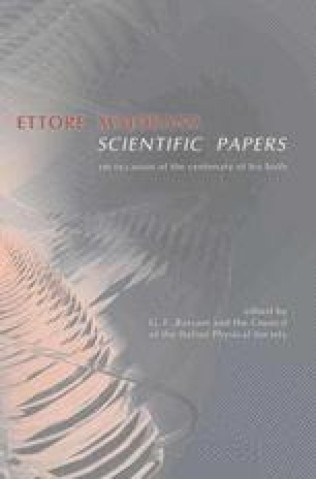
Ettore Majorana : Scientific Papers
A un secolo dalla sua nascita Ettore Majorana suscita sentimenti profondi in chi hastudiato la sua opera scientifica e in chi si `e avvicinato al suo modo di essere e ne haapprezzato la sensibilit`a e l’umanit`a.In questa occasione la Societ`a Italiana di Fisica presenta un volume con tutti i suoilavori nella lingua originale enella maggior parte dei casi per la prima volta nellatraduzione in inglese. Ogni lavoro `e commentato da un esperto del settore specifico Majorana, che si colloca a buon diritto tra i grandi fisici della prima met`a del ventesimo secolo. Le note scientifiche sono presentate in ordine cronologico rispettando le numerazioni,This volume will be of interest to the specialists of the History of Science and to the physicists concerned with problems related to Majorana's contributions.

Encyclopaedia of the History of Science, Technology, and Medicine in Non-Western Cultures
The second edition of this landmark encyclopaedia will contain approximately 1000 entries dealing in depth with the history of the scientific, technological and medical accomplishments of cultures outside of the United States and Europe. The entries consist of fully updated articles together with hundreds of entirely new topics.This unique reference work includes: Intercultural articles on broad topics such as Mathematics and Astronomy Philosophical articles on concepts and ideas related to the study of non-Western Science, such as Rationality, Objectivity, and Method, Religion and Science, East and West, and Magic and Science Articles on topics such as Native American Mathematics, Polynesian Navigation, Korean Maps, and African Metallurgy Biographical articles for those cultures where individual scientists are known to us, such as China and the Islamic world.

Einsteins Enigma or Black Holes in My Bubble Bath
Einstein's Enigma or Black Holes in My Bubble Bath tells the story of gravitation theory from the early historic origins to the latest developments in astrophysics, focusing on Albert Einstein's theory of general relativity and black-hole physics. Through engaging conversations and napkin-scribbled diagrams come tumbling the rudiments of relativity, spacetime and much of modern physics, narrated with high didactic and literary talent, and each embedded in casual lessons given by a worldly astrophysicist to his friend Alfie, a freelance organiser of proposals. Join the intellectual fun and exalt in the frothy ideas while vicariously taking relaxing baths in this magical bathtub.

Distinguished Figures in Mechanism and Machine Science
This is the first volume of a series of edited books whose aim is to collect contributed papers in a framework that can serve as a dictionary of names of individuals who have made contributions to the discipline of MMS (Me- anism and Machine Science). This dictionary project has the peculiarity that, through descriptions of the ideas and work of these individuals, the papers will illustrate mainly technical developments in the historical evolution of the individual fields that today de?ne the scope of MMS. Thus the core of each contribution will be a survey of biographical notes describing the efforts and experiences of these people. Finding appropriate technical experts as authors for such papers and - couraging them to write them has been a challenge; it is a demanding and time-consuming effort to produce such in-depth articles that delve deeply into the historical background of their topics of expertise.

Dissecting the Criminal Corpse : Staging Post-Execution Punishment in Early Modern England
Those convicted of homicide were hanged on the public gallows before being dissected under the Murder Act in Georgian England. Yet, from 1752, whether criminals actually died on the hanging tree or in the dissection room remained a medical mystery in early modern society. Dissecting the Criminal Corpse takes issue with the historical cliché of corpses dangling from the hangman’s rope in crime studies. Some convicted murderers did survive execution in early modern England. Establishing medical death in the heart-lungs-brain was a physical enigma. Criminals had large bullnecks, strong willpowers, and hearty survival instincts. Extreme hypothermia often disguised coma in a prisoner hanged in the winter cold. The youngest and fittest were capable of reviving on the dissection table. Many died under the lancet. Capital legislation disguised a complex medical choreography that surgeons staged. They broke the Hippocratic Oath by executing the Dangerous Dead across England from 1752 until 1832.
