



Page 1
Page 1

Indigenous pathways, transitions and participation in higher education : From policy to practice
This book brings together contributions by researchers, scholars, policy-makers, practitioners, professionals and citizens who have an interest in or experience of Indigenous pathways and transitions into higher education. University is not for everyone, but a university should be for everyone. To a certain extent, the choice not to participate in higher education should be respected given that there are other avenues and reasons to participate in education and employment that are culturally, socially and/or economically important for society. Those who choose to pursue higher education should do so knowing that there are multiple pathways into higher education and, once there, appropriate support is provided for a successful transition.

Equity policies in global higher Education : Reducing inequality and increasing participation and attainment
This book discusses and analyses global policies and practices aimed at promoting equity in higher education participation and attainment. Although the massification of higher education systems has facilitated the participation of students from deprived backgrounds, socioeconomic inequalities persist in access to the most prestigious institutions and programmes. Privileged students benefit from a number of advantages in the competition for selective and scarce places: access to information, lower aversion to debt, higher expectations, better previous schooling and higher academic achievement.

Cultural Competence and the Higher Education Sector : Australian Perspectives, Policies and Practice
This book explores cultural competence in the higher education sector from multi-disciplinary and inter-disciplinary perspectives. It addresses cultural competence in terms of leadership and the role of the higher education sector in cultural competence policy and practice.
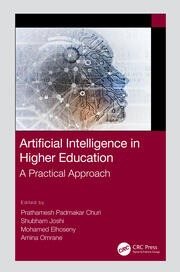
Artificial intelligence in higher education : A practical approach
Highlights the broad field of artificial intelligence applications in education, regarding any type of artificial intelligence that is correlated with education. It discusses learning methodologies, intelligent tutoring systems, intelligent student guidance and assessments, intelligent education chatbots, and artificial tutors and presents the practicality and applicability implications of AI in education. The book offers new and current research along with case studies showing the latest techniques and educational activities. Will find interest with academicians which includes teachers, students of various disciplines, higher education policymakers who believe in transforming the education industry, research scholars who are pursuing their Ph.D. or Post Doc. in the field of Education Technology, Education, and Learning, etc. and those working in the area of Education Technology and Artificial Intelligence such as industry professionals in education management and e-learning companies
Applied Pedagogies for Higher Education : Real World Learning and Innovation across the Curriculum
This book critiques real world learning across both the curriculum and extracurricular activities. Drawing on disciplines as diverse as business, health, fashion, sociology and geography, the editors and authors employ a cross-disciplinary approach to examine how this concept is being applied in higher education.
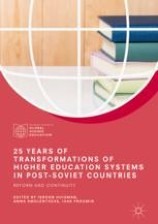
25 Years of Transformations of Higher Education Systems in Post-Soviet Countries : Reform and Continuity
A result of the first ever study of the transformations of the higher education institutional landscape in fifteen former USSR countries after the dissolution of the Soviet Union in 1991. It explores how the single Soviet model that developed across the vast and diverse territory of the Soviet Union over several decades has evolved into fifteen unique national systems, systems that have responded to national and global developments while still bearing some traces of the past. The book is distinctive as it presents a comprehensive analysis of the reforms and transformations in the region in the last 25 years; and it focuses on institutional landscape through the evolution of the institutional types established and developed in Pre-Soviet, Soviet and Post-Soviet time. It also embraces all fifteen countries of the former USSR, and provides a comparative analysis of transformations of institutional landscape across Post-Soviet systems.
