



Page 1
Page 1

Non-Linear Dynamics Near and Far from Equilibrium
This text gives a detailed account of various techniques that are used in the study of dynamics of continuous systems, near as well as far from equilibrium. The analytic methods covered include diagrammatic perturbation theory, various forms of the renormalization group and self-consistent mode coupling.

Modelling, Analysis and Optimization of Biosystems
Mathematical models in biology and medicine cannot be based on natural laws as it is the case with physics and chemistry. This is due to the fact that biological and medical processes are concerned with living organisms. Mathematical models, however, can be used as a language by which certain aspects of biological or medical processes can be expressed. In general, several mathematical models can be designed in order to describe a biological or medical process and there is no unique criterion which model gives the best description. This book presents several of these models and shows applications of them to different biological and medical problems. The book shows that operations research expertise is necessary in respect to modeling, analysis and optimization of biosystems.

Modelling Regional Scenarios for the Enlarged Europe : European Competitiveness and Global Strategies
The aim of this book is to tackle the question of what the European territory will look like over the next fifteen years by providing quali-quantitative territorial scenarios for the enlarged Europe, under different assumptions on future globalisation strategies of BRIC (Brazil, Russia, India and China) and East and West European countries. The approach is as neutral as possible vis-à-vis the results, leaving to a new forecasting model, the MASST model, built by the authors, to produce the tendencies and behavioural paths of regional GDP and population growth in each individual European region under alternative assumptions on the competitiveness strategies of different blocks of countries. The results are accompanied by strong policy messages intended to encourage long-term strategic thinking among a wide range of actors, scientists and policy makers in response to the risks and opportunities that the European territory will face.

International trade theory : Capital, knowledge, economic structure, money, and prices over time
The development of international trade theory has created a wide array of different theories, concepts and results. Economic students are trained to understand international interactions by severally incompatible theories one by one in the same course. In order to overcome incoherence among multiple theories, we need a general theoretical framework which enables us to account for the phenomena explained by the current theories in a unified manner to draw together all of the disparate branches of trade theory into a single organized system of knowledge. This book provides a powerful – but easy to operate - engine of analysis that sheds light not only on trade theory per se, but on many other dimensions that interact with trade, including inequality, saving propensities, education, research policy, and knowledge. The book starts with the traditional static trade theories. Then, it develops dynamic models with capital and knowledge under perfect competition and/or monopolistic competition.

Innovations in Macroeconomics ; 2nd ed.
Modern macroeconomics suffers from an unclear link between short-term Keynesian analysis and long-term growth modelling. Moreover, product and process innovations have been only partially integrated. The analysis suggests new approaches to innovations in open economies in many ways, including the Schumpeterian Mundell-Fleming model and new monetary growth models. A specific focus is on the role of innovations for output, employment and exchange rate developments. A new link between monetary analysis and growth modelling in open economies is presented. Structural change, innovations and growth are considered from a new perspective. This important new book sets a new direction for macroeconomics. By linking several strands of fundamental economic thinking into a coherent, integrated framework it provides a pathbreaking understanding into the fundamental forces shaping macroeconomic performance.
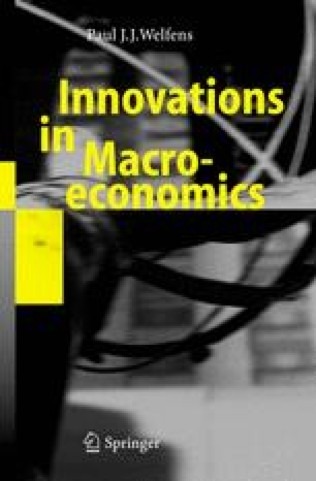
Innovations in Macroeconomics ; 1st ed.
Modern macroeconomics suffers from an unclear link between short-term Keynesian analysis and long-term growth modelling. Moreover, product and process innovations have been only partially integrated. The analysis suggests new approaches to innovations in open economies in many ways, including the Schumpeterian Mundell-Fleming model and new monetary growth models. A specific focus is on the role of innovations for output, employment and exchange rate developments. This book presents a new link between monetary analysis and growth modelling in open economies. Structural change, innovations and growth are considered from a new perspective. With respect to economic policy - in particular innovation policy - the analysis implies major changes, concerning both EU countries and other leading OECD economies.

Handbook on Optimal Growth 1 : Discrete Time
The Handbook on Optimal Growth provides surveys of significant results of the theory of optimal growth, as well as the techniques of dynamic optimization theory on which they are based. Armed with the results and methods of this theory, a researcher will be in an advantageous position to apply these versatile methods of analysis to new issues in the area of dynamic economics.

Evolution of Thin Film Morphology : Modeling and Simulations
Thin film deposition is the most ubiquitous and critical of the processes used to manufacture high tech devices. Morphology and microstructure of thin films directly controls their optical, magnetic, and electrical properties. This book focuses on modeling and simulations used in research on the morphological evolution during film growth. The authors emphasize the detailed mathematical formulation of the problem both through numerical calculations based on Langevin continuum equations, and through Monte Carlo simulations based on discrete surface growth models when an analytical formulism is not convenient. Evolution of Thin-Film Morphology will be of benefit to university researchers and industrial scientists working in the areas of semiconductor processing, optical coating, plasma etching, patterning, micro-machining, polishing, tribology, and any discipline that requires an understanding of thin film growth processes.

Economic Geology of Natural Gas Hydrate
This is the first book that attempts to broadly integrate the most recent knowledge in the fields of hydrate nucleation and growth in permafrost regions and marine sediments. Gas hydrate reactant supply, growth models, and implications for pore fill by natural gas hydrate are discussed for both seawater precursors in marine sediments and for permafrost hydrate. These models for forming hydrate concentrations that will constitute targets for exploration are discussed, along with exploration methods. Thermodynamic models for the controlled conversion of hydrate to natural gas, which can be recovered using conventional industry practices, suggest that a number of different types of hydrate occurrence are likely to be practical sources of hydrate natural gas. Current progress in the various aspects of commercial development of hydrate gas deposits are discussed, along with the principal extractive issues that have yet to be resolved.

Dynamic General Equilibrium Modelling : Computational Methods and Applications
Modern business cycle theory and growth theory uses stochastic dynamic general equilibrium models. Many mathematical tools are needed to solve these models. The book presents various methods for computing the dynamics of general equilibrium models. In part I, the representative-agent stochastic growth model is solved with the help of value function iteration, linear and linear quadratic approximation methods, parameterised expectations and projection methods. In order to apply these methods, fundamentals from numerical analysis are reviewed in detail. Part II discusses methods for solving heterogeneous-agent economies. In such economies, the distribution of the individual state variables is endogenous. This part of the book also serves as an introduction to the modern theory of distribution economics. Applications include the dynamics of the income distribution over the business cycle or the overlapping-generations model.

Cellular automata ; 7th International conference on cellular automata for research and industry, ACRI 2006, Perpignan, France, September 20-23, 2006, Proceedings
This book constitutes the refereed proceedings of the 7th International Conference on Cellular Automata for Research and Industry, ACRI 2006. The book presents 53 revised full papers and 19 revised poster papers together with 6 invited lectures. Topical sections include CA theory and implementation, computational theory, population dynamics, physical modeling, urban, environmental and social modeling, traffic and boolean networks, multi-agents and robotics, as well as crowds and cellular automata, and more.
Asian economy and finance : A post-crisis perspective
Topicality of Asian economy has refused to fade for almost four decades; if anything it has been levitating. The Asian economy has changed markedly since the economic and financial crisis of 1997-1998 and is continuing to evolve. As a scholarly subject matter, Asian economy has not stopped attracting academicians, policy mandarins, decision makers in the arena of business and students of Asian economy. The Asian crisis was a cataclysmic event for the region and brought to the surface several systemic limitations, like those in the financial sector, corporate governance, regulatory oversight, legal framework, and exchange rate management. Managers of Asian economy need to get to the bottom of these acutely problematical systemic issues. Additionally, Asian economies need to change with the demands of time and devise their post-crisis development strategy. Asia’s growth model, that served it so well for four decades, is overdue for renewal so that it can re-strengthen its bonds with the ever-evolving regional and global economic reality. The old growth model is likely to be less relevant and effective in the post-crisis future of the Asian economies. It is sure to run into the wall of diminishing returns.
Applications of random matrices in physics
Random matrices are widely and successfully used in physics for almost 60-70 years, beginning with the works of Dyson and Wigner. Although it is an old subject, it is constantly developing into new areas of physics and mathematics. It constitutes now a part of the general culture of a theoretical physicist. Mathematical methods inspired by random matrix theory become more powerful, sophisticated and enjoy rapidly growing applications in physics. Recent examples include the calculation of universal correlations in the mesoscopic system, new applications in disordered and quantum chaotic systems, in combinatorial and growth models, as well as the recent breakthrough, due to the matrix models, in two dimensional gravity and string theory and the non-abelian gauge theories. The book consists of the lectures of the leading specialists and covers rather systematically many of these topics.
