



Page 1
Page 1

Nucleic Acids and Proteins in Soil
With millions of different bacterial species living in soil, the microbial community is extremely complex, varying at very small scales. Microbe-driven functions are essential for most processes in soil. Thus, a better understanding of this microbial diversity will be invaluable for the management of the various soil functions. Nucleic Acids and Proteins in Soil combines traditional approaches in soil microbiology and biochemistry with the latest techniques in molecular microbial ecology. Included are methods to analyse the presence and importance of nucleic acids and proteins both inside and outside microbial cells, the horizontal gene transfer which drives bacterial diversity, as well as soil proteomes. Further chapters describe techniques such as PCR, fingerprinting, the challenging use of gene arrays for structural and functional analysis, stable isotope probing to identify in situ metabolic functions, and the use of marker and reporter genes in soil microbial ecology.
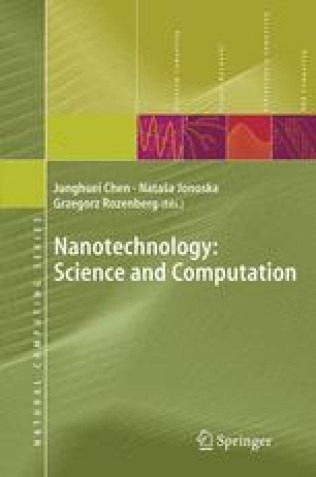
Nanotechnology : Science and Computation
This book offers a unique and authoritative perspective on current research in nanoscale science, engineering and computing. Leading researchers cover the topics of DNA self-assembly in two-dimensional arrays and three-dimensional structures, molecular motors, DNA word design, molecular electronics, gene assembly, surface layer protein assembly, and membrane computing.
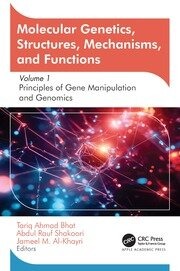
Molecular genetics, structures, mechanisms, and functions : Principles of gene manipulation and genomics ; Vol.1
Provides an overview of the future of genetic engineering and delves into the role of biotechnology and its applications in genetic engineering. It discusses the tools of recombinant technology, which have brought about revolution in our understanding of various complex biological phenomena. Chapters cover mutagenesis, construction, and sequencing of DNA libraries along with applications of genetic engineering for improving health, preventing genetic diseases, enhancing food resources, managing environmental bioremediation, and more. Topics include genetic engineering tools for restriction enzymes and vectors, gene and cell division, mutation detection and screening in plants, population genetics, sexuality in bacteria, and more. Several chapters focus on the tools of recombinant technology, such as restriction enzymes, vectors, etc., that have paved the way for creating organisms of choice and opened new horizons in the field of medicine, agriculture, and industry for human welfare.

Hox Gene Expression
The study of Hox genes is crucial not only in exploring the enigma of homeosis but also in understanding normal development at the fundamental molecular level. "Hox Gene Expression" starts with the amazing discovery of the homeobox twenty-three years ago and follows the exciting path thereafter of a series of breakthroughs in Genetics, Development and Evolution. It deals with homeotic genes- their evolution, structure, normal and abnormal function. Researchers and graduate students in Biology and Medicine will benefit from this integrated overview of Hox gene activities.

Growth Dynamics of Conifer Tree Rings : Images of Past and Future Environments
Each tree ring contains an image of the time when the ring formed, projected onto the ring's size, structure, and composition. Tree rings thus are natural archives of past environments, and contain records of past climate. While dendrochronologists have investigated the impact of climate on tree-ring growth by empirical–statistical methods, this volume presents a process-based model complementing previous approaches. Basic ideas concerning the biology of tree-ring growth and its control by environmental factors are treated, especially for conifers. The use of the model is illustrated by means of several examples from widely differing environments, and possible future directions for model development and application are discussed. The volume provides an improved mechanistic basis for the interpretation of tree rings as records of past climate. It advances process understanding of the large-scale environmental control of wood growth. As forests are the main carbon sink on land, the results are of great importance for all global change studies.

Gene Therapy for Cancer
The possibility of treating cancer, a disease defined by genetic defects, by introducing genes targeting these very alterations has led to an immense interest in gene therapy for cancer. Although incremental successes have been realized, enthusiasm for gene therapy has declined due to an increasing number of obstacles. These obstacles include vector systems that do not reach systemic metastases, therapeutic genes with redundant mec- nisms allowing for cellular resistance, and toxicities in clinical trials leading to premature closure of these studies. Different tactics to overcome or circumvent these obstacles have catalyzed the development of a wide range of gene therapy approaches. Thus far, almost two-thirds of gene therapy trials have focused on cancer. This reflects the concept that gene therapy approaches for the treatment of cancer do not necessarily require long-term expression of the gene as is necessary for the treatment of primary genetic defects like hemophilia or juvenile diabetes.

Formal Modeling and Analysis of Timed Systems ; Vol.4202 ; 4th International Conference, FORMATS 2006, Paris, France, September 25-27, 2006, Proceedings
The aim of FORMATS is to promote the study of fundamental and practical aspects of timed systems, and to bring together researchers from di?erent d- ciplines that share interests in modelling and analysis of timed systems. In this volume, there are articles on: – Foundations and Semantics: contributions to the theoretical foundations of timed systems and timed formal languages as well as comparison between di?erentmodelsusedbydi?erentcommunities(timedautomata,timedPetri nets, timed MSCs, hybrid automata, timed process algebra, timed temporal logics, timed abstract state machines, as well as probabilistic models). – Methods and Tools: techniques, algorithms, data structures, and software toolsforanalyzingtimedsystemsandresolvingtemporalconstraints(mod- checking, simulation, robustness analysis, scheduling, etc).

Exercise-induced acute renal failure : Acute renal failure with severe loin pain and Patchy renal Ischemia after anaerobic exercise
Acute renal failure induced by rhabdomyolysis after strenuous, prolonged exercise such as marathon running or mountain climbing is a well-known medical phenomenon, but exercise-induced acute renal failure after short-term anaerobic exercise - for instance, short-distance track races - has been recognized only recently. This monograph provides in-depth information on exercise-induced acute renal failure after short-term anaerobic exercise, which causes severe pain in the loin and patchy renal ischemia with no sign of rhabdomyolysis. Half of the patients suffering from this condition experience renal hypouricemia, for which approximately 20% are treated with dialysis. This book includes characteristics of the disease, diagnosis, treatment and prognosis, and corresponding preventive measures. Important information on gene analysis and etiology is also included, creating a valuable resource for nephrologists as well as for emergency physicians and those in the field of sports medicine.

Evolving Connectionist Systems : The Knowledge Engineering Approach
Evolving Connectionist Systems is aimed at all those interested in developing and using intelligent computational models and systems to solve challenging real world problems in computer science, engineering, bioinformatics and neuroinformatics. The book challenges scientists and practitioners with open questions about future creation of new information models inspired by Nature. This edition includes new methods for adaptive, knowledge-based learning, such as online incremental feature selection, spiking neural networks, transductive neuro-fuzzy inference, adaptive data and model integration, cellular automata and artificial life systems, particle swarm optimisation, ensembles of evolving systems, and quantum inspired neural networks. New applications to gene and protein interaction modelling, brain data analysis and brain model creation, computational neuro-genetic modelling, adaptive speech, image and multimodal recognition, language modelling, adaptive robotics, modelling dynamic financial and socio-economic systems, and ecological modelling, are covered. An important new feature of the book is the attempt to connect different structural and functional levels of a complex, intelligent system, looking for inspiration from functional relationships in natural systems, such as the genetic and the brain activity.

DNA Computing ; Vol. 4287 ; 12th International Meeting on DNA Computing, DNA12, Seoul, Korea, June 5-9, 2006, Revised Selected Papers
This book constitutes the thoroughly refereed postproceedings of the 12th International Meeting on DNA Computing, DNA12, held in Seoul, Korea in June 2006. The 34 revised full papers presented are organized in topical sections on molecular and membrane computing models, complexity analysis, sequence and tile designs and their properties, DNA tile self-assembly models, simulator and software for DNA computing, DNA computing algorithms and new applications, novel experimental approaches, and experimental solutions.

Ctenophores : Methods and protocols
Explores emerging approaches and methods inspired by recent research using ctenophores or placozoans, facilitating the study of these enigmatic species and ancient animal lineages. Practical protocols are integrated with introductory chapters about general biology, summarizing the diversity, evolution, genomics, development, and neurobiology of these organisms. Special chapters outline strategies and applications for culturing, microscopy, physiology, electrical synapses, and bioluminescence, molecular and single-cell biology, transcription factors, as well as gene and protein expression analyses. The book also contains bioinformatics and computational chapters covering peptidomics and epigenomics. Written for the highly successful Methods in Molecular Biology series, chapters include detailed implementation advice that leads to dependable results in the laboratory.

Cell Engineering : Apoptosis
A reference on the development of cellular systems for the production of recombinant glycoproteins, gene and cell therapies, drug screening and tissue engineering. It intends to review the in-depth assessments of this type of programmed cell death. It is suitable for biotechnologists and researchers in apoptosis, cell biology, and cell culture.

Breaking ocean waves : Geometry, structure and remote sensing
This book represents the most comprehensive description of the physical findings of an investigation into the spatio-temporal characteristics of the gravity of breaking waves and the foam activity in open sea by methods and instruments of optical and microwave remote sensing. Much emphasis is placed on the physical aspects of breaking processes necessary to measure the possibilities and limitations of remote sensing methods in specific observation cases of an oceanic surface. Numerous practical applications and illustrations are provided from air-borne, ship-borne and laboratory up-to-date experiments.

Art in Focus
The premier art history text! This integrated, chronological approach to the study of art demonstrates the interrelationships of aesthetics, art criticism, art history, and studio art.
Algorithms in Bioinformatics ; Vol. 3692 ; 5th international workshop, WABI 2005, Mallorca, Spain, October 3-6, 2005, Proceedings
this book present the proceedings of the 5th Workshop on Algorithmsin Bioinformatics (WABI 2005) which took place in Spain, 2005. The Workshop on Algorithms in Bioinformatics highlights research workspecifically developed to address algorithmic problems in biosequence analysis. The emphasis is therefore on statistical and probabilistic algorithms that addressimportant problems in the field of molecular and structural biology. the workshop aims to present recent research results, includingsignificant work in progress, and to identify and explore directions of futureresearch.Original research papers (including significant work in progress) or state-of-the-art surveys were solicited on all aspects of algorithms in bioinformatics,including, but not limited to: exact and approximate algorithms for genomics,genetics, sequence analysis, gene and signal recognition, alignment, molecularevolution, phylogenetics, structure determination or prediction, gene expressionand gene networks, proteomics, functional genomics, and drug design.
