



Page 1
Page 1
International Handbook of Research in Arts Education
Providing a distillation of knowledge in the various disciplines of arts education (dance, drama, music, literature and poetry and visual arts), the Handbook synthesizes existing research literature, helps define the past, and contributes to shaping the substantive and methodological future of the respective and integrated disciplines of arts education. While research can at times seem distant from practice, the Handbook aims to maintain connection with the lived practice of art and of education, capturing the vibrancy and best thinking in the field of theory and practice. The Handbook is organized into 13 sections, each centering on a major area or issue in arts education research. These areas include: History of arts education, curriculum, evaluation, cultural centers, appreciation, composition, informal learning, child culture, creativity, the body, spirituality, and technology. The individual chapters address cross-cultural research related to the central theme of the section from the perspectives of the particular arts discipline. Interludes provide reflective thoughts on the theme.

Drawing imagining building : Embodiment in architectural design practices
Drawing Imagining Building focuses on the history of hand-drawing practices to capture some of the most crucial and overlooked parts of the process. Using 80 black and white images to illustrate the examples, it examines architectural drawing practices to elucidate the ways drawing advances the architect’s imagination.
Logos of phenomenology and phenomenology of the logos ; Book Five : The creative logos. aesthetic ciphering in fine arts, literature and aesthetics
Having established in the ontopoiesis/phenomenology of life the creative function of the human being as the fulcrum of our beingness-in-becoming, let us now turn to investigate the creative logos.In this collection, the momentum of a gathering "creative brainstorm" leads to the vertiginous imaginative transformability of the creative logos as it ciphers through the aesthetic sense, the elements of experience – sensing, feeling, emotions, forming – in works of art, thus lifting human experience into spirit and culture.
Architecture and the novel under the Italian fascist regime
The book is divided into seven chapters, which in turn analyze the interconnections between the novel and architecture in theory and in practice. The first six chapters cover debates on State art, on the novel and on architecture, as well as their historical development and their unfolding in key journals of the period. The last chapter offers a detailed analysis of some important novels and buildings, which have in practice realized some of the key principles articulated in the theoretical disputes.
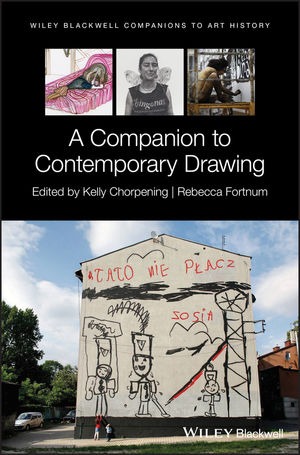
A Companion to Contemporary Drawing
Textbook on the power, condition, and expanse of contemporary fine art drawing. his textbook: Demonstrates ways contemporary issues and concerns are addressed through drawing / Reveals how drawing is used to make powerful social and political statements / Situates works by contemporary practitioners within the context of their historical moment / Explores how contemporary art practices utilize drawing as both process and finished artifact / Shows how concepts of observation, representation, and audience have changed dramatically in the digital era / Establishes drawing as a mode of thought
