



Page 1
Page 1

Environmental Bioremediation Technologies
Environmental contamination from both natural and anthropogenic sources is, today, a major environmental concern due to pervasiveness and persistence of many toxicants. It is considered as an inevitable evil of our progress and modernization. To decontaminate the soils, sediments and waters, polluted by anthropogenic activities, the scientists and technologists have evolved different technologies over the years. Although we have to pay high cost for physical and chemical environmental technologies, but they are not eco-friendly and safe. Hence, it was deeply realized to develop viable technologies employing microbes and plants to remediate not only metallic residues and radionuclides, but also the xenobiotic compounds like PCBs, PAHs, PCPs, petroleum sludge and the military wastes. No doubt, the scientists have also got some success in this endeavour and as the result, many companies are in place today to promote the sale of plant or microbe-based technologies to deal with specific environmental contamination challenges. Besides, these technologies are se- driven and do not disturb the sites in cleaning process.

Ecological risks associated with the destruction of chemical weapons ; Proceedings of the NATO ARW on ecological risks associated with the destruction of chemical weapons, Lüneburg, Germany, from 22-26 October 2003
Chemical Weapons Convention after the First Review Conference -- Implementation of Russia’s Obligation to Destroy chemical Weapons in the Udmurt Republic -- The CWC after the Review Conference . Prof. Dr. Vladimir Mikhailovitsh Kolodkin , Prof. Dr.-Ing. Wolfgang Ruck 1 Institute of Natural and Technogenic Disasters, Udmurt State University, Izhevsk (Russia), 2 Institute of Ecology and Environmental Chemistry, University Lüneburg (Germany) During the Cold War a whole arsenal of deadly chemical weapons was allowed to build up on both sides of the ideological divide. Happily, today the problems are reversed. Expertise is now required in the field of safe and environment-friendly disposal of chemical weapons and cleaning up of contaminated sites all around the world, but not least in the ex-Soviet-led countries. In all, there were 57 participants, of which 11 dispatched from the TACIS project “The development of the chemical weapons” facility at the detached plant No 4 of OAO Khimprom, Novocheboksarsk.

Ecological Risk Assessment for Chlorpyrifos in Terrestrial and Aquatic Systems in the United States
Reviews of Environmental Contamination and Toxicology attempts to provide concise, critical reviews of timely advances, philosophy and significant areas of accomplished or needed endeavor in the total field of xenobiotics, in any segment of the environment, as well as toxicological implications.

Contaminated soils, sediments and water ; Vol.10 : Successes and challenges
Contaminated Soils, Sediments and Water: Successes and Challenges, Volume 10 contains a valuable collection of success stories (and challenges) in the areas of environmental fate, heavy metals, modeling, MTBE and oxygenates, regulatory, remediation, risk assessment, site assessment and sampling methodology. It demonstrates the progress that has been made in working together toward the optimization of established approaches, as well as embracing departures from traditional regulatory models in order to address the threats to our natural resources. The book is divided into eight sections: Part I: Environmental Fate; Part II: Heavy Metals; Part III: Modeling; Part IV: MTBE and Oxygenates; Part V: Radionuclides; Part VI: Regulatory; Part VII: Remediation; Part VIII: Risk Assessment and Remedial Approaches Towards Restoration and Management of Contaminated Rivers.
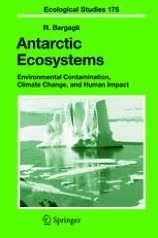
Antarctic ecosystems : Environmental contamination, climate change, and human impact
This volume provides an overview of climate change data, its effects on the structure and functioning of Antarctic ecosystems, and the occurrence and cycling of persistent contaminants. It discusses the unique physico-chemical characteristics of the Antarctic environment, ecophysiological adaptations of terrestrial and marine organisms, the transfer of contaminants in pelagic and neritic food chains and the possible consequences for animals at higher trophic levels.
