



Page 1
Page 1

Fundamentals of building performance simulation
Pares the theory and practice of a multi-disciplinary field to the essentials for classroom learning and real-world applications. Authored by a veteran educator and researcher, this textbook equips graduate students and emerging and established professionals in engineering and architecture to predict and optimize buildings’ energy use. It employs an innovative pedagogical approach, introducing new concepts and skills through previously mastered ones and deepening understanding of familiar themes by means of new material. Covering topics from indoor airflow to the effects of the weather, the book’s 19 chapters empower learners to: Understand the models and assumptions underlying popular BPS tools ; Compare models, simulations, and modelling tools and make appropriate selections ; Recognize the effects of modelling choices and input data on simulation predictions

E-Voting and Identity ; 1st International Conference, VOTE-ID 2007, Bochum, Germany, October 4-5, 2007, Revised Selected Papers
Voting and identity have a very delicate relationship. Only a few processes - pendso much on an identity management respecting the fine line between reliable identification and reliable non-identifiability each at its part during the process. And only a few processes may change their outer appearance so much with the advent of new IT as voting and identity management do. So it was no surprise in FIDIS, the interdisciplinary Network of Excellence working on the Future of Identity in the Information Society

Evolvable Hardware
The contributions in this book provide the basics of reconfigurable devices so that readers will be fully prepared to understand what EHW is, why it is necessary and how it is designed. The book also discusses the leading research in digital, analog and mechanical EHW. Selections from leading international researchers offer examples of cutting-edge research and applications, placing particular emphasis on their practical usefulness.

Designing Democracy : Ideas for Better Rules
While liberal democracies are the best systems of self-governance for societies, they rarely invoke great enthusiasm. On the one hand, democracies have been known to fail in achieving efficient or fair allocations. On the other hand, many citizens take the democratic system for granted as they have yet to experience an alternative. In this book the vision we propose is that the potential of democ racies has not yet been exhausted, and that optimal democracies are both the Utopia for societies and the aim that scientists should be committed to. We present a number of ideas for drawing up new rules to im prove the functioning of democracies. The book falls into two parts. The first part examines ways of combining incentive contracts with democratic elections. We suggest that a judicious combina tion of these two elements as a dual mechanism can alleviate a wide range of political failures, while at the same time adhering to the founding principles of democracies. The second part presents new rules for decision-making and agenda setting. Together with modern communication devices, these rules can sometimes transcend the limitations of liberal VI Preface democracies in achieving desirable outcomes. Examples of such rules include the flexible majority rule where the size of the ma jority required depends on the proposal, or the rule that only those belonging to the winning majority can be taxed.

Debating European Citizenship
This book raises crucial questions about the citizenship of the European Union. Is it a new citizenship beyond the nation-state although it is derived from Member State nationality? Who should get it? What rights and duties does it entail? Should EU citizens living in other Member States be able to vote there in national elections? If there are tensions between free movement and social rights, which should take priority? And should the European Court of Justice determine what European citizenship is about or the legislative institutions of the EU or national parliaments? This book collects a wide range of answers to these questions from legal scholars, political scientists, and political practitioners. It is structured as a series of three conversations in which authors respond to each other. This exchange of arguments provides unique depth to the debate

Linear Selection Indices in Modern Plant Breeding
This open access book focuses on the linear selection index (LSI) theory and its statistical properties. It addresses the single-stage LSI theory by assuming that economic weights are fixed and known - or fixed, but unknown - to predict the net genetic merit in the phenotypic, marker and genomic context. Further, it shows how to combine the LSI theory with the independent culling method to develop the multistage selection index theory. The final two chapters present simulation results and SAS and R codes, respectively, to estimate the parameters and make selections using some of the LSIs described. It is essential reading for plant quantitative geneticists, but is also a valuable resource for animal breeders.
Civil Engineering Materials for Transportation Infrastructure
Includes the fundamental mechanical and physical properties of materials; properties, tests, and gradation designs of aggregates; production, composition, hydration, properties, and tests of lime and cement; composition, tests, and design of cement concrete; mechanisms, properties, and design of inorganic binder stabilized material; properties, tests, and grading of asphalt; composition, properties, tests, and designs of asphalt mixture; and properties, treatments, tests, and selections of steel.
Approval Voting
The book proposes a compelling way to elect some 500,000 officials in public elections. After a generation of discussion and debate on the subject, the authors remain convinced that Approval Voting is as relevant today.
Adobe Illustrator Classroom in a Book
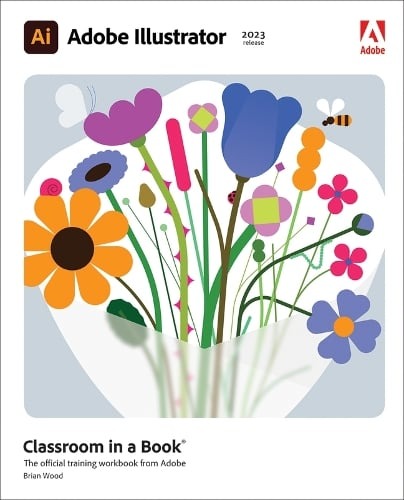
Adobe Illustrator Classroom in a Book (2023 release) uses real-world, project-based learning to cover the basics and beyond, providing countless tips and techniques to help you become more productive with the program. For beginners and experienced users alike, you can follow the book from start to finish or choose only those lessons that interest you. Learn to create artwork, from precise drawings to stylistic paintings. Make logos, illustrations, posters, podcast covers, flyers, and more. Explore selections, shapes, and color, progress to freeform gradients and layers. Work with dynamic symbols, artistic brushes, and creative effects.
