



Page 1
Page 1

New Business Models for the Reuse of Secondary Resources from WEEEs : The FENIX Project
This book summarizes research being pursued within the FENIX project, funded by the EU community under the H2020 programme, the goal of which is to design a new product service paradigm able to promote innovative business models, to open added value to the vessels and to create new market segments. It experiments and validates its approach on three new concepts of added-value specialized vessels able to run requested services for several maritime sectors in the most effective, efficient, economic valuable and eco-friendly way. The three vessels share the same lean design methodology, IoT tools and HPC simulation strategy: a lean fact-based design model approach, which combines real operative data at sea with lean methodology, to support the development and implementation of the vessel concepts; IT customized tools to enable the acquisition, processing and usage of on board and local weather data, through an IoT platform, to provide business services to different stakeholders; HPC simulation, providing a virtual towing tank environment, for early vessel design improvement and testing. The book demonstrates that an integrated LCC analysis and LCC strategy to guarantee sustainability to vessels concepts and the proper environmental attention inside the maritime industry.

Handbook of Biodegradable Materials
Discusses the recent advances in biodegradation technologies and highlights emerging sustainable materials, including environmentally friendly nano-based materials for replacing plastics. It is useful to scientists, engineers, biologists, medical doctors and provides alternative eco-friendly materials to replace the currently used ones with harmful impact on the environment and life. The chapters present different types of alternative materials in diverse areas, such as food packaging materials, materials for construction and agricultural materials. The principles and types of biodegration technologies are described in depth.

Environmentally-Friendly Product Development: Methods and Tools
Presents a survey of eco-friendly product design. This work is aimed at researchers and academics in design engineering and practitioners and managers in the industry

Environmental Bioremediation Technologies
Environmental contamination from both natural and anthropogenic sources is, today, a major environmental concern due to pervasiveness and persistence of many toxicants. It is considered as an inevitable evil of our progress and modernization. To decontaminate the soils, sediments and waters, polluted by anthropogenic activities, the scientists and technologists have evolved different technologies over the years. Although we have to pay high cost for physical and chemical environmental technologies, but they are not eco-friendly and safe. Hence, it was deeply realized to develop viable technologies employing microbes and plants to remediate not only metallic residues and radionuclides, but also the xenobiotic compounds like PCBs, PAHs, PCPs, petroleum sludge and the military wastes. No doubt, the scientists have also got some success in this endeavour and as the result, many companies are in place today to promote the sale of plant or microbe-based technologies to deal with specific environmental contamination challenges. Besides, these technologies are se- driven and do not disturb the sites in cleaning process.

Ecological and Health Effects of Building Materials
Deals with the present adverse effects of using precarious building materials on the ecology and human health. Also, the detailed discussions on the novel and greener construction materials and their utilization as an alternative to the conventional harmful existing methods and materials are also presented in the subsequent chapters. This book helps to fill the research gaps in the existing prior-art knowledge in the field of sustainable construction and green building materials and methods giving due importance to ecology and health, specifically to the fields of sustainable structural engineering, sustainable geotechnical engineering, sustainable road engineering, etc.
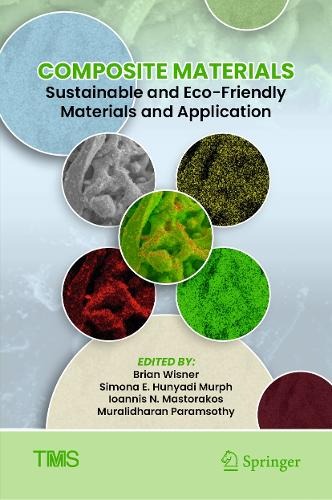
Composite materials : sustainable and eco-friendly materials and application
Covers innovations in the field of composite materials with a specific focus on eco-friendly and environmentally sustainable systems. All composite fields are explored, including polymer, metal, and ceramic matrix composites with an emphasis on sourcing raw materials in a sustainable way as well as the development of composite materials for environmental sustainability.

150 Best New Eco Home Ideas
Features nearly 500 pages of full-color photographs and dozens of inventive and decorative profiles. Architects, designers, and homeowners today looking for comfortable, beautiful dwellings with a minimal carbon footprint will find a cornucopia of ideas in this handsome compendium. A fabulous review of the most forward-thinking eco-friendly house designs being created today, 150 Best New Eco Home Ideas showcases the work of internationally renowned architects and designers who have achieved practical, innovative, and stunning solutions around the globe. From solar paneling and wind energy systems to environmentally-friendly heating and cooling solutions and thermal glazing to trombe walls, 150 Best New Eco Home Ideas covers the latest trends and breakthroughs in eco homes. Inspiring and inventive, this lush sourcebook is essential for architects, designers, interior decorators, and all conscientious homeowners interested in creating warm and inviting homes with only a fraction of the environmental impact of those using conventional methods
