



Page 1
Page 1

Introduction to Mathematical Systems Theory : Linear Systems, Identification and Control
This book provides an introduction to the theory of linear systems and control for students in business mathematics, econometrics, computer science, and engineering. The focus is on discrete time systems, which are the most relevant in business applications, as opposed to continuous time systems, requiring less mathematical preliminaries. The subjects treated are among the central topics of deterministic linear system theory: controllability, observability, realization theory, stability and stabilization by feedback, LQ-optimal control theory. Kalman filtering and LQC-control of stochastic systems are also discussed, as are modeling, time series analysis and model specification, along with model validation.

Implementing Models in Quantitative Finance : Methods and Cases
This book puts numerical methods into action for the purpose of solving concrete problems arising in quantitative finance. Part one develops a comprehensive toolkit including Monte Carlo simulation, numerical schemes for partial differential equations, stochastic optimization in discrete time, copula functions, transform-based methods and quadrature techniques. The content originates from class notes written for courses on numerical methods for finance and exotic derivative pricing held by the authors at Bocconi University since the year 2000. Part two proposes eighteen self-contained cases covering model simulation, derivative valuation, dynamic hedging, portfolio selection, risk management, statistical estimation and model calibration. It encompasses a wide variety of problems arising in markets for equity, interest rates, credit risk, energy and exotic derivatives.

Handbook on Optimal Growth 1 : Discrete Time
The Handbook on Optimal Growth provides surveys of significant results of the theory of optimal growth, as well as the techniques of dynamic optimization theory on which they are based. Armed with the results and methods of this theory, a researcher will be in an advantageous position to apply these versatile methods of analysis to new issues in the area of dynamic economics.

Finite Zeros in discrete time control systems
The book starts with definition of invariant zeros and goes as far as a general characterization of output-zeroing inputs and the corresponding solutions, explicit formulas for maximal output-nulling invariant subspaces and for the zero dynamics. The objective of this book is to render the reader familiar with a certain method of analysis of multivariable zeros (which goes beyond the classical approach) and related problems. The minimal mathematical background that is required from the reader is a working knowledge of linear algebra and difference equations.

Experimenting with Dynamic Macromodels : Growth and Cycles
This book presents a macroeconomic dynamic model à la Solow-Swan, including the market for labour, in a discrete time structure. Labour supply is modelled as a reversed S curve (derived in the appendix). The models are expanded to include expenditure on R&D (thus endogenous technical progress), and public expenditure on infrastructures. For each of the three models, numerical simulations are implemented in MAPLE, and the results are shown in time series figures, which make it easy to detect that even small changes in the parameters produce responses in the time behaviour of the main variables: from steady growth, to regular cycles, to chaotic-like time paths. The simulations show that cycles do not promote material welfare, as measured by total undiscounted consumption along the time horizon, and that the comparative action of R&D versus public expenditure is strictly linked to the values assigned to the parameters.

Discrete-Time High Order Neural Control : Trained with Kaiman Filtering
The objective of this work is to present recent advances in the theory of neural control for discrete-time nonlinear systems with multiple inputs and multiple outputs. The book presents solutions for the output trajectory tracking problem of unknown nonlinear systems based on four schemes.
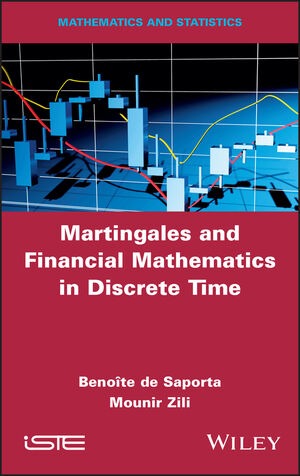
Martingales and financial mathematics in discrete time
This book is entirely devoted to discrete time and provides a detailed introduction to the construction of the rigorous mathematical tools required for the evaluation of options in financial markets. Both theoretical and practical aspects are explored through multiple examples and exercises, for which complete solutions are provided. Particular attention is paid to the Cox, Ross and Rubinstein model in discrete time.
