



Page 1
Page 1

Online hate speech in the European Union : A discourse-analytic perspective
open access under a CC BY 4.0 license and reports on research carried out as part of the European Union co-funded C.O.N.T.A.C.T. project which targeted hate speech and hate crime across a number of EU member states. It showcases the bearing that discourse analytic research can have on our understanding of this phenomenon that is a growing global cause for concern.

Non-Native Language Teachers : Perceptions, Challenges and Contributions to the Profession
Now that non-natives are increasingly found teaching languages, and particularly English, both in ESL and EFL contexts, the identification of their specific contributions and their main strengths has become more relevant than ever.As a result, there has recently been a surge of interest in the role of non-native teachers but little empirical research has been published so far. This volume is particularly rich in providing different approaches to the study of non-native teachers: NNS teachers as seen by students, teachers, graduate supervisors, and by themselves. It also contributes little explored perspectives, like classroom discourse analysis, or a social-psychological framework to discuss conceptions of NNS teachers.

Minimal English for a Global World : Improved Communication Using Fewer Words
This book introduces a new tool for improving communication and promoting clearer thinking in a world where the use of Global English can create numerous comprehension and communication issues. Based on research findings from cross-linguistic semantics, it contains essays and studies by leading experts exploring the value and application of ‘Minimal English’ in various fields, including ethics, health, human rights discourse, education and international relations.

Educational Perspectives on Mediality and Subjectivation : Discourse, Power and Analysis
This book examines the complex relationship between education, media and power. Exploring the entanglement of education media and power structures, the contributions use various examples and case studies to demonstrate how subjectivation processes and digital structures interact with one another. The book asks which modes of subjectivation can be identified with current media cultures, how subjects deal with the challenges and potential of digitality, and how coping and empowerment strategies are developed.

Discourse : A Concept for Information and Communication Sciences
This book examines discourse, an object of analysis and criticism, from a wide range of perspectives. Among the concepts explored are the contributions of rhetoric in the art of discourse, the evolution of multiple approaches and the main methods of discourse analysis conducted by a variety of researchers. The book deepens our knowledge and understanding of discourse, a concept on which any research related to information and communication can be based.
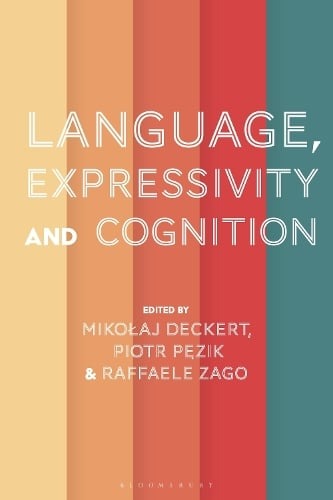
Language, Expressivity and Cognition
The book presents how language shapes communicative and cognitive processes but at the same time is also shaped by those processes. The chapters put forward a number of disciplinary and methodological perspectives encompassing insights from cognitive and social psychology, (critical) discourse analysis, cognitive linguistics, corpus linguistics and sociolinguistics. Both intralingual as well as contrastive, each chapter also engages with qualitative and quantitative methods.

Artificial intelligence for customer relationship management : Solving customer problems
This book describes a number of applications of Artificial Intelligence in the field of Customer Relationship Management with the focus of solving customer problems. We design a system that tries to understand the customer complaint, his mood, and what can be done to resolve an issue with the product or service. To solve a customer problem efficiently, we maintain a dialogue with the customer so that the problem can be clarified and multiple ways to fix it can be sought. We introduce dialogue management based on discourse analysis: a systematic linguistic way to handle the thought process of the author of the content to be delivered. We analyze user sentiments and personal traits to tailor dialogue management to individual customers. We also design a number of dialogue scenarios for CRM with replies following certain patterns and propose virtual and social dialogues for various modalities of communication with a customer.
