



Page 1
Page 1

Migration and Social Protection in Europe and Beyond ; Vol.2 : Comparing Consular Services and Diaspora Policies
This second book in a series of three volumes examines the repertoire of policies and programmes led by EU Member States to engage with their nationals residing abroad.

Internal Diversity : Iranian Germans Between Local Boundaries and Transnational Capital
This book explores the interrelation between diversity in migrants’ internal relations and their experience of inequality in local and global contexts. Taking the case of Hamburg-based Iranians, it traces evaluation processes in ties between professionals – artists and entrepreneurs – since the 1930s, examining migrants’ potential to act upon hierarchical structures

Home
Develops the conceptual and methodological underpinnings of a critical geography of home, drawing on key feminist, postcolonial, and housing thinkers as well as contemporary methodological currents in non-representational thinking and performance. The book’s chapters consider the making and unmaking of home across the domestic scale – house-as-home; the urban – city-as-home; national – nation-as-home; and homemaking in relation to transnational migration and diaspora. Each chapter includes illustrative examples from diverse geographical contexts and historical time periods. Chapters also address some of the key cross-cutting dimensions of home across these scales, including digital connectivity, art and performance, more-than-human constructions of home, and violence and dispossession.
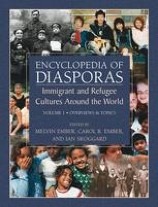
Encyclopedia of diasporas : Immigrant and refugee cultures around the world ; Vol. I : Overviews and Topics ; Vol. II : Diaspora communities
The encyclopedia consists of two volumes covering three main sections: Diaspora Overviews covers over 20 ethnic groups that have experienced voluntary or forced immigration. These essays discuss the history behind the social, economic, and political reasons for leaving the original countries, and the cultures in the new places; Topics discusses the impact and assimilation that the immigrant cultures experience in their adopted cultures, including the arts they bring, the struggles they face, and some of the cities that are in the forefront of receiving immigrant cultures; Diaspora Communities include over 60 portraits of specific diaspora communities. Each portrait follows a standard outline to facilitate comparisons. The Encyclopedia of Diasporas can be used both to gain a general understanding of immigration and immigrants, and to find out about particular cultures, topics and communities. It will prove of great value to researchers and students, curriculum developers, teachers, and government officials. It brings together the disciplines of anthropology, social studies, political studies, international studies, and immigrant and immigration studies

Atlas of dermatological conditions in populations of African Ancestry
This book presents the nuances of dermatology from the African diaspora and the tropics. It not only addresses the dark pigmentation of the patient’s skin and the occurrence of tropical infections, but also the socioeconomic conditions which lead to unique features and the development of skin diseases. Chapters present numerous dermatological cases, with clear/relevant pictures, to serve as illustration of how skin conditions present in African/dark skin. Of these specific conditions, the book includes chapters on eczema, bullous diseases, hair disorders, acne, and papulosquamous disorders.
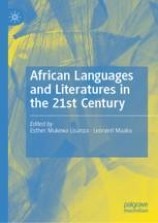
African Languages and Literatures in the 21st Century
Examines the crucial role still played by African languages in pedagogy and literatures in the 21st century, generating insights into how they effectively serve cultural needs across the African continent and beyond. Boldly positioning African languages as key resources in the 21st century, chapters focus on themes such as language revolt by marginalized groups at grassroots level, the experience of American students learning African languages, female empowerment through the use of African languages in music, film and literary works, and immigration issues. The contributions are written by scholars of language, literature, education and linguistics, and will be of interest to students and scholars in these and related areas.
