



Page 1
Page 1

Treatment Planning in Restorative Dentistry and Implant Prosthodontics
Treatment planning is commonly considered one of the most important phases of any dental treatment and vital for achieving successful long-term results. However, most dental schools do not offer courses exclusively designed for comprehensive planning, and comprehensive planning is rarely discussed at scientific meetings because it is considered a basic topic that practitioners should already understand. This knowledge gap leaves practicing clinicians with few options beyond using their own intuition to solve problems, which is highly unpredictable. Therefore, this book presents clinical guidelines for planning treatments in restorative dentistry and outlines a clear, objective, and simple thinking process that can be easily applied in daily practice, essentially providing the reader with a roadmap to be used as a reference from the very initial procedures until final restorative treatment.

Tooth preparations : Science and art
Details the basic principles and sequencing of cavity preparation and outlines the different preparation designs indicated for a variety of clinical situations. With a focus on biologic care, preservation of tooth structure, and precision, the author provides special guidance on incorporating these principles into daily practice, and the sections on instrumentation underscore how to improve clinical dexterity and concentration

Textbook of conservative and restorative dentistry
Presents an updated version of the current concepts of conservative and restorative dentistry. Recent concepts have been highlighted, especially the chapters on dentin hybridization (bonding), composites, lasers, diagnosis and diagnostic aids, and minimal invasive dentistry, keeping in mind their clinical significance in day-to-day practice. Written in a lucid language, the text is replete with self-explanatory photographs and diagrams, well reinforced with clinical photographs for easy understanding of the subject. The keynotes are presented in box format for quick access and easy understanding.

Successful local anesthesia for restorative dentistry and endodontics
Helps you successfully anesthetize your patients using the newest technology and drugs available. It presents the rationale, advantages, and limitations of the various anesthetic agents and routes of administration. Special emphasis is placed on supplemental anesthetic techniques that are essential to the practice of dentistry. This second edition brings the literature up to date and includes an expanded chapter on pulpal anesthesia.

Sturdevant’s art and science of operative dentistry
Helps you master the fundamentals and procedures of restorative and preventive dentistry and learn to make informed decisions to solve patient needs. Drawing from both theory and practice and supported by extensive clinical and laboratory research, this new full-color edition features four new chapters and updated information in the areas of color and shade matching, light curing, periodontology, digital dentistry and more. It’s the practicing dentist’s complete guide to all aspects of operative dentistry.

Preservation and restoration of tooth structure
Introduces minimally invasive dentistry as a model to control dental disease and then restore the mouth to optimal form, function, and aestheticsContains several student-friendly features, including a new layout, line drawings and clinical photographs to illustrate key conceptsCovers fundamental topics, including the evolutionary biology of the human oral environment; caries management and risk assessment; remineralization; principles of cavity design; lifestyle factors; choices between restorative materials and restoration management. Includes a companion website with self-assessment exercises for students and a downloadable image bank for instructors

Pickard's Guide to Minimally Invasive Operative Dentistry
An ideal introduction to the theory and practical aspects of conservative dentistry, the tenth edition of Pickards' Guide to Minimally Invasive Operative Dentistry is a must-have text for all dental students, new graduates and oral healthcare professionals alike. Written in an easy to understand and concise style, the authors introduce the essentials of dental disease before outlining how to collect patient information clinically in order to detect, diagnose, plan and deliver care. Exploring key topics such as disease prevention and control, the principles of minimally invasive operative dentistry, contemporary restorative materials and procedures, this completely up-to-date revised edition integrates a thorough academic grounding for degree examination with an essential preparation for clinical practice for the whole oral healthcare team. Illustrated with step-by-step colour photos, common clinical procedures are clearly set out and labelled for beginners to learn. The tenth edition has been updated to reflect the latest evidence based guidelines for preventitative management and there is a focus on maintaining existing restorations and follow up/long term care.

Oral and maxillofacial surgery, medicine, and pathology for the clinician
Brings together surgery, medicine, and pathology to provide relevant clinical information Oral and Maxillofacial Surgery, Medicine, and Pathology for the Clinician presents key clinical information on oral surgery, medicine, and pathology in a single, easy-to-use resource, covering procedures performed in the dental clinic in a clear but concise manner and putting key details at the clinician’s fingertips. Clinical scenarios are clearly described with treatment flow paths, and to enable seamless reader comprehension, charts and algorithms also support the text. The text focuses on essential office-related topics that are not esoteric but rather common in occurrence.

Modern Operative Dentistry : Principles for Clinical Practice
Provides the theoretical knowledge required by students when learning how to diagnose oral diseases, plan treatment, and perform various types of dental restoration. It is also useful for clinicians wishing to update their treatment skills and broaden their understanding operative dentistry. Adopting an evidence-based approach, and in accordance with the philosophy of minimally invasive dentistry, it explains in detail the use of both classic and new restorative materials in various clinical situations. It also discusses the principles of smile analysis, as well the technique for esthetic composite restorations on posterior and anterior teeth, including direct and indirect veneers.

Global Diagnosis : A New Vision of Dental Diagnosis and Treatment Planning
The emphasis in the Global Diagnosis system is to determine the etiology of the aberrant gingival positions prior to treatment. The power of the system is that the diagnosis leads to the treatment plan. This book explains the Global Diagnosis system and shows how to diagnose and treat patients based on five CORE questions. Subsequent chapters outline treatment options.

Fundamentals of operative dentistry : A contemporary approach
Updated with full-color illustrations throughout and substantial revisions in every chapter to incorporate the latest scientific developments and current research findings. In addition, new chapters on color study and shade matching address new areas of focus in the preclinical curriculum. A valuable resource for understanding the scientific basis for current treatment options in dentistry.

Extra-coronal restorations : Concepts and clinical application
A clinical guide to contemporary materials and techniques for the restoration of individual teeth and implants. It fully reflects the important developments in the field over the past 15 years, including in particular the shift away from wholesale use of crowns towards adhesive dentistry and less invasive extra-coronal restorations. The book opens by considering the principles and evidence base relating to the longevity of restorations of teeth and implants. Importantly, it explains how to ensure "a healthy start" and manage future risks. Material choice and aesthetic issues are then discussed, before all aspects of the planning and provision of extra-coronal restorations are examined in depth. The coverage also includes the adaptation of crowns to existing partial dentures. In line with modern dental education, each chapter begins with clinically relevant learning objectives, and helpful clinical tips are highlighted.

Esthetic & restorative dentistry : Material selection & technique
Provides the most up-to-date information on enhanced developments, materials, and techniques that have emerged since the publication of the second edition, offering the reader a completely updated, revised, and newly illustrated overview of modern esthetic and restorative dentistry complete with tutorial videos. New topics include web-based communication with the laboratory, indirect composite chairside CAD/CAM restorations, a comparison of digital and conventional techniques, the resin composite injection technique, as well as updated information on composites and ceramic systems, including esthetic zirconia. New cases illustrate the maintenance of esthetic restorative materials, esthetic contouring, immediate dentin sealing, and novel surgical techniques such as lip repositioning, connective tissue grafting, and ridge preservation with collagen membranes.

Dental Composite Materials for Direct Restorations
Covers both basic scientific and clinically relevant aspects of dental composite materials with a view to meeting the needs of researchers and practitioners. Following an introduction on their development, the composition of contemporary composites is analyzed. A chapter on polymerization explains the setting reactions and light sources available for light-cured composites. The quality of monomer-to-polymer conversion is a key factor for material properties. Polymerization shrinkage along with the associated stress remains among the most challenging issues regarding composite restorations. A new classification of dental composites is proposed to offer more clinically relevant ways of differentiating between commercially available materials.
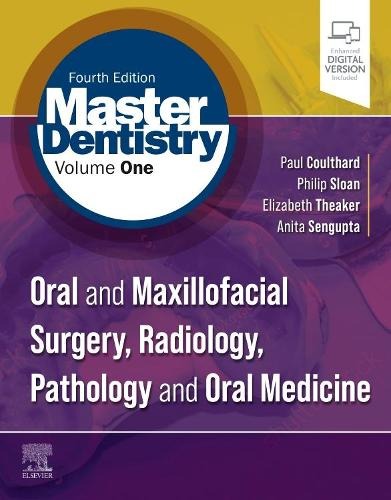
Master Dentistry ; Vol.1 : Oral and Maxillofacial Surgery, Radiology, Pathology and Oral Medicine
Provides a comprehensive overview of the oral and maxillofacial subjects in dentistry that students will need in order to pass their final exams. This invaluable adjunct to exam preparation provides a practical synthesis of core information, reflecting real-life case scenarios. Information is structured to enhance understanding and clinical decision making, and a variety of self-assessment methods prepare students for success. Comprehensively updated, the book covers a range of essential topics in the field of contemporary oral and maxillofacial subjects, including surgical flap design, state-of-the-art surgical techniques, zygomatic implants, molecular pathology, current imaging applications and pain management. The text is integrated and evidence based throughout. Covers oral and maxillofacial surgery, radiology, pathology and oral medicine subjects Brand new chapter on facial skin broadens diagnostic ability Range of self-assessment tasks to support learning Aligns to dental school curricula globally Concise and easy to follow Designed to support recall for examination purposes Practical guidance on examination preparation and skills Perfect for BDS exam preparation and candidates taking the MFDS, MJDF, ORE or other post-graduate exams

ITI treatment guide ; Vol.12 : Peri-implant soft-tissue integration and management
Highlights the integration and management of peri-implant soft tissues. It discusses soft-tissue management before and during implant placement and during supportive peri-implant therapy and addresses the techniques and materials used for peri-implant soft-tissue augmentation and replacement and for the treatment of peri-implant soft-tissue dehiscences.
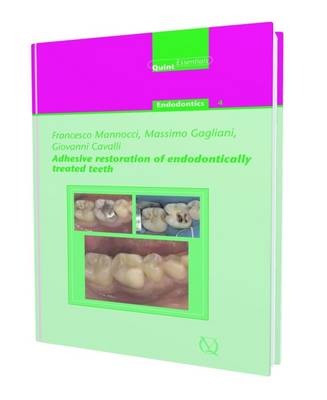
Adhesive restoration of endodontically treated teeth
Dentine bonding systems, composite resins and fibre posts have widely replaced cast posts and amalgam as core materials; all-ceramic and composite crowns have also replaced metal ceramic crowns in many aesthetic cases. The aim of this book is to provide the general practitioner with some principles and techniques for the adhesive restoration of root filled teeth.
