



Page 1
Page 1

National Constitutions in European and Global Governance : Democracy, Rights, the Rule of Law: National Reports
It offers important insights into three areas. First, it explores how constitutions reflect the transfer of powers from domestic to European and global institutions. Secondly, it revisits substantive constitutional values, such as the protection of constitutional rights, the rule of law, democratic participation and constitutional review, along with constitutional court judgments that tackle the protection of these rights and values in the transnational context, e.g. with regard to the Data Retention Directive, the European Arrest Warrant, the ESM Treaty, and EU and IMF austerity measures. The responsiveness of the ECJ regarding the above rights and values, along with the standard of protection, is also assessed. Thirdly, challenges in the context of global governance in relation to judicial review, democratic control and accountability are examined. On a broader level, the contributors were also invited to reflect on what has increasingly been described as the erosion or ‘twilight’ of constitutionalism, or a shift to a thin version of the rule of law, democracy and judicial review in the context of Europeanisation and globalisation processes.
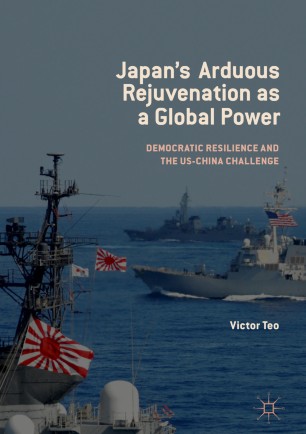
Japan’s Arduous Rejuvenation as a Global Power : Democratic Resilience and the US-China Challenge
This book assesses the profound impact of Japan’s aspirations to become a great power on Japanese security, democracy and foreign relations. Rather than viewing the process of normalization and rejuvenation as two decades of remilitarization in face of rapidly changing strategic environment and domestic political circumstances, this volume contextualizes Japan’s contemporary international relations against the longer grain of Japanese historical interactions.It also submits that an improvement in Japan-China relations would enhance rather than detract Japan-US relations and that Tokyo will find that her new found automony in the US-Japan alliance would not only accord her more political respect and strategic latitude, but also allow her to ameliorate the excesses of American foreign policy adventurism, paving for her to become a truly normal great power.
