



Page 1
Page 1

Neuroblastoma
Neuroblastoma is a medical enigma. As a childhood neoplasm arising from neural crest cells, it is characterized by diverse clinical behaviors ranging from spontaneous remission to rapid tumor progression and death. Although clinical outcome can be predicted to a large extent by the stage of disease and the age at diagnosis, an in-depth understanding of its clinico-pathological behavior, now greatly aided by sophisticated molecular genetic profiling, will improve diagnostic precision and refine risk-based therapies. Comprehensive international efforts have advanced our understanding of tumor biology and improved the clinical management of children with neuroblastoma. This book reviews our current understanding of the genes and biological pathways that contribute to neuroblastoma pathogenesis, modern risk-based treatment approaches for these patients, and recent advances in biologically based therapy. It provides a concise up-to-date reference for practitioners, students, and researchers.

Nanoparticle-Based Drug Delivery in Cancer Treatment
Discusses nanotechnological developments of interfering RNA-based nanoparticles, delivery vehicles, and validated therapeutic RNAi–molecular target interactions and explains the results of clinical and preclinical trials. The book also gives strategies for universal methods of constructing hybrid organic–inorganic nanomaterials that can be widely applied in the biomedical field. Focuses on : Recent advances of nanoparticle-mediated siRNA delivery systems and their application in clinical trials for cancer therapy Material platforms that establish NPs and both localized and controlled gene silencing The most promising systems for clinical application Surveys progress in nanoparticle-based nanomedicine in cancer treatment The most advanced of the nonviral nanocarriers for delivery of oligonucleotides to malignant blood cancer cells

Nanomedicine : Innovations, applications, and breakthroughs in the quest for health and medicine's future
Revolutionizing healthcare, by providing innovative solutions to some of the most challenging issues in medicine. This book provides an in-depth overview of nanoscale materials and devices that are advancing diagnostics, therapeutics, and personalized care in medical field. It focuses on nanomedicine’s impact on vaccine efficacy as well as innovative diagnosis and therapy for various type of cancer while addressing concerns about safety and toxicity. It examines how nanotechnology is enhancing drug delivery by precisely targeting medicines to specific cells or tissues, thereby increasing treatment efficacy with reduced side effects. Explores how nanoparticles are advancing medical imaging for earlier and more accurate disease detection, and how nanosensors allow real-time biomarker monitoring for faster and more reliable diagnoses. Additionally, it explores nanomedicine's role in managing cardiovascular diseases, improving bone health through nano-extracellular vesicles, and regenerative medicine, including ongoing clinical trials and ethical considerations.

Molecular Markers of Brain Tumor Cells : Implications for Diagnosis, Prognosis and Anti-Neoplastic Biological Therapy
Childhood brain tumors are a diverse group of diseases characterized by the abnormal growth of tissue contained within the skull. Other than leukemia and lymphoma, brain tumors are the most common type of neoplasms that occur in children. The leading cause of death from childhood neoplasms among persons up to 19 years is brain tumors. As such, this book is a review of the most recent molecular biological research concerning brain tumors with references and comparisons to a variety of neoplastic disorders. The book then uses this information to foreshadow the direction that future anti-neoplastic therapies will take. Because of the wide spectrum of the objectives of the book, any individual involved in cancer research will greatly benefit from the work. Histopathologists, neuropathologists, clinical and research oncologists, and medical students will find this book to be an invaluable resource as a reference guide. Patients and their families will also find the book useful as it offers a comprehensive update on new, non-classical therapeutic modality options and contains a detailed description and analysis of brain tumors. Such an endeavor has yet to be undertaken by any other book and may prove to be the most comprehensive book on brain tumors thus far.

Modern medicine : biomedical devices, medical gases, radiopharmaceuticals, new drug discovery, Vol.2
Discusses the procedures of drug approval and regulatory requirements that must be met according to the United States Food and Drug Administration (FDA), the European Medical Agency (EMA), and the Central Drug Standard Control Organization (CDSCO). In the rapidly evolving landscape of modern medicine, groundbreaking innovations have emerged that are reshaping the way we approach healthcare. Modern Medicine delves into the cutting-edge realms of medical devices, medical gases, radiopharmaceuticals, and new drug discovery, offering a comprehensive exploration of these transformative fields that are revolutionizing patient care and medical practices.
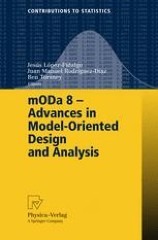
mODa 8 - Advances in Model-Oriented Design and Analysis ; Proceedings of the 8th International Workshop in Model-Oriented Design and Analysis held in Almagro, Spain, June 4–8, 2007
The volume contains the proceedings of the 8th Workshop on Model-Oriented Design and Analysis. This book offers leading and pioneering work on optimal experimental designs, both from a mathematical/statistical point of view and with regard to real applications. Scientists from all over the world, from Eastern and Western Europe, the USA, Latin-America, Asia and Africa, have contributed to this volume. Primary topics are designs for nonlinear models and applications to experimental medicine.

Medicinal plants of the world ; Vol.3 : Chemical constituents, traditional and modern medicinal uses
The author's exhaustive summary of available scientific data for each plant provides detailed information on how the plant is used in different countries, describing its traditional therapeutic applications and what is known from its use in clinical trials. Additional material presented includes a botanical description with a color photo of each plant for identification, the common names used for the plant throughout the world, and a listing of the plant's known chemical constituents. A comprehensive bibliography cites the literature available from a wide range of disciplines. Medicinal Plants of the World: Chemical Constituents, Traditional and Modern Medicinal Uses, Volume 3, offers a unique collection of vital scientific information for pharmacologists, herbal medicine practitioners, drug developers, phytochemists, medicinal chemists, phytologists, toxicologists, and researchers who want to explore the many uses of plant materials for medicinal and related purposes. Its wealth of significant information will reveal little-known facts about these plants and open new horizons of application for the many novel drugs and drug candidates found in them.

Mechanisms of Angiogenesis
Is it advisable to go back from bedside to the bench? During the last decade, few topics encountered such a broad interest in bio- gy and medicine as angiogenesis. The amazing ability of the body to restore blood flow by induction of blood vessel growth as part of an adaptive process has alarmed physicians dealing with diseases in which angiogenesis is either exaggerated (as in tumors) or too slow (as in ischemic diseases of heart and brain). Not surprisingly, pro- and antiangiogenic strategies have found their way into clinical trials. For instance, for the USA, the NIH website in early 2004 displayed 38 clinical studies involving either pro- or antiangiogenic th- apies. Given the expected overwhelming wealth of clinical data, the question may be asked whether further exploration of biological mechanisms is required or whether results from the bedside are instructive enough to proceed. This question depends also on the progress of pro- and antiangiogenic clinical trials. In the following, I give a short overview about some of the progress that has been made in this field. Since Judah Folkman proposed antiangiogenic tumor therapy thirty years ago, it has become increasingly evident that agents which interfere with blood vessel formation also block tumor progression. Accordingly, antiangiogenic therapy has gained much attention as a potential adjunct to conventional c- cer therapy.

Mechanical Ventilation
This book represents a state-of-the-art review by the leading experts in this field and covers a number of important topics including epidemiology, underlying physiological concepts, and approaches to monitoring. The pros and cons of various modes of ventilation are reviewed, as are novel forms of ventilation that may play a role in the future management of patients with respiratory failure. The importance of patient-ventilator synchrony and ventilator-induced lung injury are reviewed, with a focus on recent clinical trials and the challenges of implementing the results into clinical practice.

Investigative Electrocardiography in Epidemiological Studies and Clinical Trials
It reviews the prevalence and incidence and emphasizes the prognostic implications of common ECG abnormalities in contrasting populations. It provides a comprehensive, penetrating and critical analysis of topics such as QT prolongation in clinical drug trials, left ventricular hypertrophy, myocardial ischemia/infarction and epidemiological consideration of relative risks associated with ECG abnormalities. As such it is an essential tool in epidemiological or clinical research using ECGs and in investigations of possible adverse responses of new pharmacological agents.

Intraperitoneal Cancer Therapy
The volume details major clinical trails to date, including immunotherapy, hyperthermic treatment of colo-rectal and ovarian cancers. Authors also examine regional approaches to therapy, systemic therapy, and the use of carboplatin and paclitaxel as the standard treatment for women with stages III and IV ovarian cancer. Other chapters also investigate techniques and procedures in treatment, as well as the future direction of both normothermic and hyperthermic intraperitoneal chemotherapy.

Innovations in healthcare and outcome measurement : New approaches for a healthy lifestyle
Aims to bring up-to-date new ideas, opinions, development, and critical issues in healthcare and personalized medicine. We are interested in relevant articles covering a broad range of topics, such as: Advances in medical devices, Digitalization and data-driven technologies, AI and algorithm-based drug development (molecule building, enhancement, clinical trials), Diagnostic imaging, Personalized medicine, Nutrition, Oral health care, Healthcare management in certain diseases and population groups, Regulatory developments, Data management, Digital healthcare.

Inference for change point and post change means after a CUSUM test
This monograph is the first to systematically study the bias of estimators and construction of corrected confidence intervals for change-point and post-change parameters after a change is detected by using a CUSUM procedure. Researchers in change-point problems and sequential analysis, time series and dynamic systems, and statistical quality control will find that the methods and techniques are mostly new and can be extended to more general dynamic models where the structural and distributional parameters are monitored. Practitioners, who are interested in applications to quality control, dynamic systems, financial markets, clinical trials and other areas, will benefit from case studies based on data sets from river flow, accident interval, stock prices, and global warming. Readers with an elementary probability and statistics background and some knowledge of CUSUM procedures will be able to understand most results as the material is relatively self-contained.The exponential family distribution is used as the basic model that includes changes in mean, variance, and hazard rate as special cases. There are fundamental differences between the sequential sampling plan and fixed sample size. Although the results are given under the CUSUM procedure, the methods and techniques discussed provide new approaches to deal with inference problems after sequential change-point detection, and they also contribute to the theoretical aspects of sequential analysis. Many results are of independent interests and can be used to study random walk related stochastic models.

Imaging in Drug Discovery and Early Clinical Trials
Efficient tools for the selection and validation of drug targets both at the preclinical and clinical level are required. Non-invasive imaging and in particular molecular imaging methods are becoming essential technologies to support drug discovery and dvelopment. Imaging provides structural, functional, metabolic and molecular readouts that are being applied to characterize a disease phenotype (diagnosis), to elucidate molecular mechanisms involved, to evaluate drug efficacy and safety, and to identify potential biomarkers of the drug's mechanism-of-action, efficacy and safety. Non-invasive imaging techniques constitute a bridge between preclinical and clinical drug evaluation. In this monograph the contribution of imaging modalities to the various stages of drug discovery and development, from early target validation to their use in clinical development programs, is described. Chapters are devoted to the description of the drug discovery process as such, to the various imaging modalities being used both preclinically and clinically, to applications of imaging during the optimization of a lead compound (addressing issues such as bioavailability and efficacy) and during the drug safety evaluation.

How to Practice Academic Medicine and Publish from Developing Countries? : A Practical Guide
The book provides an overview of the state of research in developing countries – Africa, Latin America, and Asia (especially India) and why research and publications are important in these regions. It is written mainly by senior colleagues who have experienced and recognized the challenges with design, documentation, and publication of health research in the developing world. The book includes short chapters providing insight into planning research at the undergraduate or postgraduate level, issues related to research ethics, and conduct of clinical trials.

High-Grade Gliomas : Diagnosis and Treatment
This is truly an exciting time in the field of neuro-oncology, particularly in the area of hi- grade gliomas. The management of patients with high-grade gliomas has historically been one of the most challenging and disheartening fields in medicine, where failure is the rule and longevity is the exception. The jaded often state that despite purported advances in surgical and radiotherapeutic techniques and a myriad of clinical trials of medical therapies, the s- vival statistics for glioblastoma have not changed in the last three decades. The nihilism associated with these tumors is such that some practitioners still advise against treatment or even biopsy, recommending palliative care with the diagnosis based only on history and an MRI scan. If the current state-of-the-art in the diagnosis and management of high-grade gliomas was truly so bleak, there would be no reason to compile and publish a monograph on the subject. The fact is that we have recently entered an era where real progress is being made in our understanding and treatment of high-grade gliomas that is directly benefiting some patients. We are slowly but surely chipping away at this problem. One approach has exploited correlations between particular molecular markers and therapeutic response.

Hematologic Malignancies : Acute Leukemias
Several chapters in this volume describe current knowledge of acute leukemia biology and discuss new classification systems that have arisen consequent to emerging insights into pathogenesis. Treatment has also improved for particular types of acute leukemia.

Handbook on Hyperbaric Medicine
It is now ten years since the first Handbook on Hyperbaric Medicine was published. During this time there have been many major advances: our understanding of the actions of hyperbaric oxygenation, and the pathophysiological processes it engages, have been elucidated by several studies; clinical practice is becoming more scientific with the application of evidence-based medicine (EBM) principles and the appearance of a number of randomised clinical trials; various consensus-derived organisational and operational recommendations and guidelines have become normative and are now widely accepted.

Hand transplantation
This book presents the global experimental and clinical experience on hand transplantation and all types of other composite tissue allografts so far performed. A complete review of all aspects of these innovative and ground-breaking procedures is clearly presented in 15 different sections. They include the experimental basis of hand transplantation, strategies for selecting ideal candidates and preparing successful hand transplantation programmes, surgical techniques, most effective immunosuppressive drug regimes, analysis of the unique immunological behaviour of these transplants and rehabilitation protocols to achieve optimal sensory and motor recovery. Each section is dedicated to a special issue, such as psychological and medicolegal implications, brain remodelling after hand transplantation and introduction of a new scoring system for overall comprehensive outcome evaluation. A complete list of composite tissues allografts currently carried out around the world is reported in detail, including the face, abdominal wall, uterus, larynx and knee joint.

Genetic Engineering of Mesenchymal Stem Cells
MSC (mesenchymal stem cells) have been reported to initiate revascularization after injury, to facilitate engraftment of blood-forming stem cells, and to reduce the incidence of graft-vs. host disease through their immune-suppressive qualities. Finally, bone marrow-derived MSC have been reported to home to areas of solid tumor revascularization, and thus may be used as delivery vehicles to target ablative agents into dividing tumor cells. Recently the characteristics of human MSC from adipose (fat) tissue have also been identified. The possibility of repairing tissues, speeding stem cell engraftment, and targeting solid tumors for specific killing, using MSC easily harvested from bone marrow, or better yet, from unwanted fat tissue, holds broad appeal, and is an intriguing possibility that could have dramatic effect on health care. This book has information on how to isolate, grow, and characterize MSC from marrow and fat, and gives important insight into how these cells may be used for gene delivery and cellular therapies in the future. Updates on emerging clinical trials are given.
