



Page 1
Page 1

Ultraviolet Radiation in the Solar System
The Sun is our main source of UV radiation and its description occupies the first two chapters of the book. The Earth is the only known location where life exists in a planetary system and therefore where the interaction of living organism with UV radiation can be tested through different epochs and on distinct species. The development of the human technology has affected the natural shield of ozone that protects complex lifeforms against damaging UV irradiation. The formation of the ozone hole and its consequences are described, together with the possible contribution of UV radiation to recent climate changes. Finally, we will discuss the potential role of ultraviolet light in the development of life on bodies such as Mars, Europa and Titan.

The Asian Monsoon
This is a comprehensive interdisciplinary text book summarizing new knowledge of Asian monsoon climate variability, dynamics, modeling, and prediction from intraseasonal to geological time scales, and human influence and its links to environmetal/economic issues.

Regional Climate Variability and its Impacts in The Mediterranean Area
Global change due to natural processes and anthropogenic activity as well as the natural variability of the climate system will impact all areas of the globe. However, the impact will not be uniform and different impacts of differing magnitude and nature will be felt in various regions of the globe. The Mediterranean region, like other regions of the world, will face some unique and different impacts. This NATO workshop was set up to discuss these issues in general, and the influence of chemical emissions and transformation in particular. This workshop was "special" because it involved a very large number of scientists (>75%) from the region, either from North Africa or the Mediterranean Europe. Many key issues, some of which are specific to this region, were identified. Details of the finding and suggestions are presented in the articles in this volume.

Increasing climate variability and change : Reducing the vulnerability of agriculture and forestry
One of the major challenges facing humankind is to provide an equitable standard of living for this and future generations: adequate food, water and energy, safe shelter and a healthy environment. Human-induced climate change, and increasing climate variability, as well as other global environmental issues such as land degradation and loss of biological diversity, threaten our ability to meet these basic human needs. It is undisputed that the last two decades have been the warmest this century, and likely to be the warmest for the last 1000 years, sea level is rising, rain and snowfall patterns are changing.
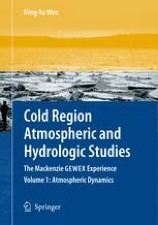
Cold Region Atmospheric and Hydrologic Studies. The Mackenzie GEWEX Experience: Vol.2: Hydrologic Processes
This book presents decade-long advances in atmospheric research in the Mackenzie River Basin in northern Canada, which encompasses environments representative of most cold areas on Earth. Collaborative efforts by a team of about 100 scientists and engineers have yielded knowledge entirely transferable to other high latitude regions in America, Europe and Asia. Emphases are placed on the investigation of processes (including storm genesis, precipitation, moisture and energy fluxes and frost), and the improvement and application of a suite of models and remote sensing to enhance the assessment of climate variability and water resources.
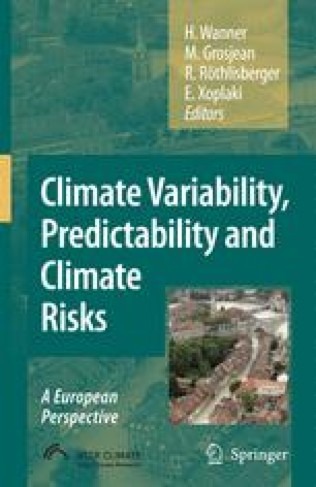
Climate Variability, Predictability and Climate Risks : A European Perspective
This book provides an integrated assessment of issues related to climate variability and change, predictability and risks. It details both the technical aspects of variability and abrupt climate change and the agricultural and economical impacts and consequences.
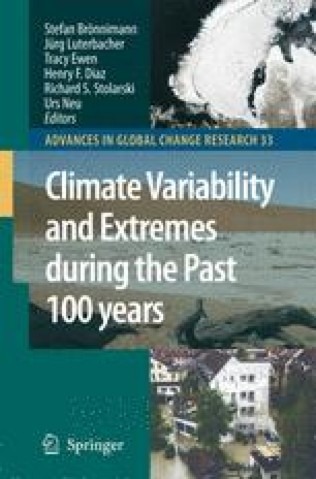
Climate Variability and Extremes during the Past 100 Years
This volume provides an up to date overview of climate variability during the 20th century in the context of natural and anthropogenic variability. It compiles a number of contributions to a workshop held in Gwatt, Switzerland, in July 2006 dealing with different aspects of climate change, variability, and extremes during the past 100 years.
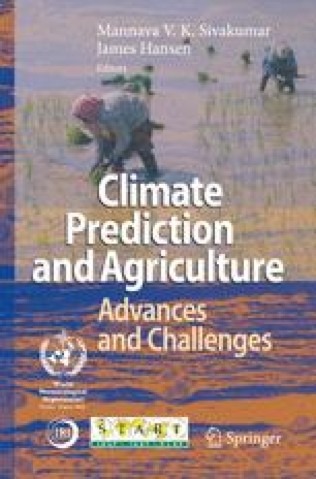
Climate prediction and agriculture : Advances and challenges
Improved adaptation of food production, particularly in areas where climate variability is large, holds the key to improving food security for human populations. Increasing climate knowledge and improved prediction capabilities facilitate the development of relevant climate information and prediction products for applications in agriculture to reduce the negative impacts due to climate variations and to enhance planning activities based on the developing capacity of climate science. This book, based on an International Workshop held in Geneva in 2005, reviews the advances made so far in seasonal climate predictions and their applications for management and decision-making in agriculture and identifies the challenges to be addressed in the next 5 to 10 years to further enhance operational applications of climate predictions in agriculture, especially in the developing countries.
