



Page 1
Page 1

Nonparametric Functional Data Analysis : Theory and Practice
Modern apparatuses allow us to collect samples of functional data, mainly curves but also images. On the other hand, nonparametric statistics produces useful tools for standard data exploration. This book links these two fields of modern statistics by explaining how functional data can be studied through parameter-free statistical ideas. This book starts from theoretical foundations including functional nonparametric modeling, description of the mathematical framework, construction of the statistical methods, and statements of their asymptotic behaviors. It proceeds to computational issues including R and S-PLUS routines. Several functional datasets in chemometrics, econometrics, and pattern recognition are used to emphasize the wide scope of nonparametric functional data analysis in applied sciences. The companion Web site includes R and S-PLUS routines, command lines for reproducing examples presented in the book, and the functional datasets. Rather than set application against theory, this book is really an interface of these two features of statistics. A special effort has been made in writing this book to accommodate several levels of reading.
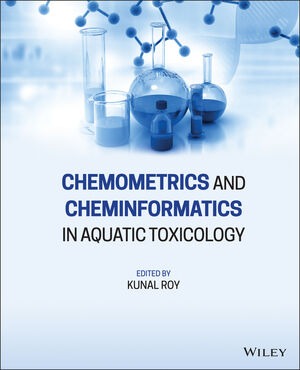
Chemometrics and Cheminformatics in Aquatic Toxicology
Chemometrics and Cheminformatics in Aquatic Toxicology delivers an exploration of the existing and emerging problems of contamination of the aquatic environment through various metal and organic pollutants, including industrial chemicals, pharmaceuticals, cosmetics, biocides, nanomaterials, pesticides, surfactants, dyes, and more. The book discusses different chemometric and cheminformatic tools for non-experts and their application to the analysis and modeling of toxicity data of chemicals to various aquatic organisms.
Analytical Chemistry : Theoretical and Metrological Fundamentals
Fundamentals of Analytical Chemistry are usually presented as a sum of chemical and physical foundations, laws, axioms and equations for analytical methods and procedures. In contrast, this book delivers a practice-oriented, general guiding theory valid for all methods and techniques. Starting with a closer look to analytical signals and their dependencies, all the important figures of merit characterizing the power of analytical procedures and the reliability of analytical results are discussed and quantified, such as sensitivity, precision, accuracy and ruggedness. Elements of signal theory, information theory, statistics and fundamentals of calibration are also presented for this aim.
