



Page 1
Page 1

Omega 3 and Omega 6 and its relationship to obesity
This research summarizes information about omega-3 and omega-6. In recent times, there has been growing recognition of the key role of foods and beverages in disease prevention and treatment. Thus, the production and consumption of functional foods has gained much importance as they provide a health benefit beyond the basic nutritional functions. At present, PUFA (poly unsaturated fatty acids) as Omega-3 [(n-3)] fatty acids and Omega -6 [(n-6)] fatty acid have been linked to healthy aging throughout life. Recently, omega-3 fatty acids EPA (eicosapentaenoic acid ) and DHA (docosahexaenoic acid ) have been associated with cardiovascular function, and Alzheimer’s disease.
Obesity and Diabetes
The increasing prevalence of diabetes and obesity in western societies today makes these two diseases the leading epidemics of the 21st century. Closely linked with the development of serious complications, including cardiovascular disease and several malignancies, the morbidity and mortality associated with obesity and diabetes will continue to escalate as the population ages and becomes more sedentary. In Obesity and Diabetes, international experts from world-renowned medical schools comprehensively review for practicing clinicians and scientists alike the latest understanding of the epidemiology, causation, and consequences of diabetes and obesity.

Nutrition, diet and healthy aging
Over the last 100 years, the numerous advances in science, the improved sanitary conditions and a decline in poverty have led to an increase in life expectancy. As a result, in the coming years, the number of over-65s will triple, and the over-80s will be the fastest growing portion of the population. However, an increased lifespan is associated with an increase in chronic diseases, such as cardiovascular disease, diabetes, cancer, sarcopenia, and degenerative disorders. Therefore, ideally, increased lifespan should be associated to a better healthspan, which is the period one individual is living in good health

Nutrition and diet in health: Principles and applications
Food provides us with essential nutrients involved in many physiological activities and biological processes in the body including growth and development, metabolism, immune function, and overall well-being. Nutrition and Diet in Health: Principles and Applications reviews and discusses the issues related to the roles of nutrition and diets in human health and diseases. The book contains two sections - one section features principles, the other, covers applications. Part One provides information on sustainable use of nutrition and diets in health and diseases; advanced biotechnological approaches to improve nutritional content of food; trace elements in nutrition; drug and nutrient interactions; functional foods and nutraceuticals in health maintenance; and Bio markers of functional foods and nutraceuticals in health maintenance. Part Two discusses the significance of nutrition in selected human diseases, including cardiovascular diseases, cancer, infection, neurodegenerative diseases, and metabolic co-morbidities. It also discusses optimal nutrition for wellness, fitness, pregnancy, mental health, aging, and longevity.

Nutraceuticals in cardiac health management
Cardiovascular diseases (CVDs) constitute the major cause of death worldwide, claiming nearly 18 million lives each year. Multiple foods and nutraceuticals have been proven to reduce the risk of cardiovascular disease. This new book offers an informative update on the most recent scientific evidence addressing the use of nutraceuticals in the prevention and management of heart disease. It summarizes the functional foods that are involved in preventing the risk of CVDs, the mechanisms of the bioactive components that lower the risk of chronic illnesses, as well as the dietary patterns that are involved in the prevention of CVDs. It also covers specific nutraceuticals, including probiotics, dietary fibers, garlic, green tea, vitamins, tomatoes and other lycopene-rich fruits and vegetables, dietary supplements, bee products, and more. In addition, it focuses on detailing the endothelial effects of marine- and plant-derived omega-3 fatty acids and marine-derived natural flavonoids in hypertension and CVDs.

Nutraceuticals and health care ; 1st ed.
Explores the role of plant-based nutraceuticals as food ingredients and as therapeutic agents for preventing various diseases. The book assesses the role of nutraceuticals in addressing cardiovascular disease, cancer, diabetes, and obesity by highlighting the derivatives, extraction, chemistry, mechanism of action, pharmacology, bioavailability, and safety of specific nutraceuticals. It analyzes twenty one nutraceuticals in a systematic way, providing a welcomed reference for nutrition researchers, nutritionists and dieticians, as well as other scientists studying related areas in food science, technology or agriculture. Students studying related topics will also benefit from this material.
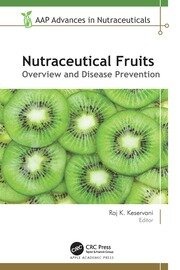
Nutraceutical fruits : Overview and disease prevention
While nutritional supplements have enormous advantages, food ingredients such as fruits and vegetables can play a significant preventative and therapeutic role in our daily lives. Fruits are found to have anti-inflammatory, antibacterial, antifungal, and chemopreventive properties that can boost health, as well as prevent diseases. This new book explores the use of fruits as nutraceuticals for alternative treatment, as well as for disease prevention. It looks at how nutraceutical fruits can be used to prevent and manage a range of diseases that include mental illness, cancer, respiratory and lung diseases, cardiovascular diseases, liver disease, inflammatory bowel diseases, sleep disorders, etc. The book also looks at the roles of nutraceutical fruits in the metabolic syndrome and provides information regarding the safety and toxicity of neutraceutical fruits.

NPY Family of Peptides in Neurobiology, Cardiovascular and Metabolic Disorders : from Genes to Therapeutics
The NPY-family of peptides encompasses several groups of neurotransmitters and hormones, which exert diverse biological and pathological actions that bear on all major vital systems. This book is a unique compilation of the most recent breakthroughs in NPY/PYY neurobiology, cardiovascular and metabolic disorders. The identification of multiple receptors for the members of the NPY and PYY family of peptides provides new opportunities for discovery of specific NPY antagonists and agonists that have vast clinical potential. The recognition of the role of NPY in stimulation of food intake has already resulted in discovery of potent and selective NPY receptor Y-5 antagonists, which are in clinical development for obesity. NPY Y1 receptor antagonists are targeted for cardiovascular indications. Research into the multiple functions of NPY and its receptors in neurological and affective disorders is also actively pursued. The chapters in this book are written by internationally renowned experts with the objective to synthesize leading concepts and data in support for translational medicine.

Non-Vitamin K Antagonist Oral Anticoagulants : A Concise Guide
An essential guide to the medical treatment of thrombosis and presents core principles of anticoagulant therapeutics as well as drug recommendations. Written by recognized experts in the field, this concise, accessible handbook provides a unique and valuable resource in the cardiovascular field, both for those currently in training, and for those already in clinical or research practice.

Noncommunicable diseases
Focuses on cardiovascular disease, diabetes, cancer and chronic respiratory disease and their five shared main risk factors (tobacco use, harmful use of alcohol, unhealthy diet, physical inactivity and air pollution) as defined by the United Nations, this book provides a synopsis of one of the world’s biggest challenges of the 21st century. NCDs prematurely claim the lives of millions of people across the world every year, with untold suffering to hundreds of millions more, trapping many people in poverty and curtailing economic growth and sustainable development. While resources between and within countries largely differ, the key principles of surveillance, prevention and management apply to all countries, as does the need to focus resources on the most cost-effective and affordable interventions and the need for strong political will, sufficient resources, and sustained and broad partnerships. This compendium consists of 59 short and accessible chapters in six sections: (i) describing and measuring the burden and impact of NCDs / (ii) the burden, epidemiology and priority interventions for individual NCDs / (iii) social determinants and risk factors for NCDs and priority interventions / (iv) global policy / (v) cross-cutting issues / and (vi) stakeholder action.

New Technologies in Radiation Oncology
This book provides an overview of recent advances in radiation oncology, many of which have originated from physics and engineering sciences. After an introductory section on basic aspects of 3D medical imaging, the role of 3D imaging in the context of radiotherapy is explored in a series of chapters on the various modern imaging techniques. A further major section addresses 3D treatment planning for conformal radiotherapy, with consideration of both external radiotherapy and brachytherapy. Subsequently the modern techniques of 3D conformal radiotherapy are described, including stereotactic radiotherapy, intensity-modulated radiation therapy, image-guided and adaptive radiotherapy, and radiotherapy with charged particles. More clinically oriented chapters explore the use of brachytherapy in patients with prostate cancer, cardiovascular disorders and breast cancer. The book concludes with a section on quality assurance.

New Frontiers in Regenerative Medicine
Rapid advances in stem cell biology have raised exciting possibilities of replacing damaged or lost tissues and cells by activation of in vitro-expanded stem cells or their progeny. This book examines many of the unresolved problems as well as future applications of regenerative medicine. Areas of focus include the nervous system and hippocampal neurogenesis, along with the functional significance of pro-inflammatory cytokines, and the production of free radicals after brain ischemia; the digestive and integumentary systems, dealing with hepatocyte transplantation, pancreatic regeneration, and skin and hair regeneration; and the cardiovascular system, with repair and remodeling of the lung and heart, and arterial remodeling with bone marrow-derived progenitor cells. In addition to animal experiments, results of research on human tissues and organs are included.

New Frontiers in Lifestyle-Related Diseases
Akiyoshi Hosoyamada, M.D., Ph.D. President, Showa University Tokyo, Japan September 2007 v Preface The leading cause of death in Western countries and some developing countries is atherosclerotic cardiovascular diseases. Among them, acute myocardial infarction is the most common type of fatal disease, caused by the progression of atherosclerosis characterized by accumulation of choles terol in vascular walls. Development of atherosclerosis is greatly enhanced by major risk factors for cardiovascular diseases such as obesity, hyperlip idemia, diabetes (hyperglycemia), and hypertension. Among those, obesity frequently initiates a metabolic change that subsequently induces hyperlip idemia, diabetes, hypertension, and eventually atherosclerotic cardiovascu lar diseases. Because obesity and its related disorders largely depend on lifestyle factors such as high calorie intake and low physical activity, a series of disorders are termed lifestyle-related diseases.

New Frontiers in Angiogenesis
New Frontiers in Angiogenesis starts with a comprehensive overview of the field and continues with topics that have been minimally explored. The topics deal with dynamics of vasculogenesis using imaging techniques, bone marrow-derived endothelial cell precursors as potential therapeutic tools, regulation of post-angiogenic vessel regression, vascular mimicry, design and construction of artificial vessels, bioengineering of angiogenesis, and lymphangiogenesis recapitulating angiogenesis in health and disease states. Each chapter is written by leading experts of the subjects. It is hoped that this volume will challenge all of us interested in the field of angiogenesis and cardiovascular biology, in particular those in academia and industries, to think "outside the box" and explore angiogenesis from a fresh angle. It is hoped that New Frontiers in Angiogenesis is thought provoking and serve as a road map for discovering new findings to help betterments of human health.
Natriuretic Peptides : The Hormones of the Heart
The rapid knowledge in the field of neuro-humoral regulation of cardiovascular pathophysiology is changing the picture of current diagnosis and treatment of cardiac patients. The emerging conceptual revolutionary idea is that heart acts not as a pump, merely, but as a "gland", that is as a regulator of circulatory homeostasis and salt-water balance. Cardiovascular pathophysiology has to be written, indeed, on this basis: this physiology textbook gives an up-to-date description of the complexity and novelty of actual knowledge, with all its potential clinical implications.

Nanomedicine : Innovations, applications, and breakthroughs in the quest for health and medicine's future
Revolutionizing healthcare, by providing innovative solutions to some of the most challenging issues in medicine. This book provides an in-depth overview of nanoscale materials and devices that are advancing diagnostics, therapeutics, and personalized care in medical field. It focuses on nanomedicine’s impact on vaccine efficacy as well as innovative diagnosis and therapy for various type of cancer while addressing concerns about safety and toxicity. It examines how nanotechnology is enhancing drug delivery by precisely targeting medicines to specific cells or tissues, thereby increasing treatment efficacy with reduced side effects. Explores how nanoparticles are advancing medical imaging for earlier and more accurate disease detection, and how nanosensors allow real-time biomarker monitoring for faster and more reliable diagnoses. Additionally, it explores nanomedicine's role in managing cardiovascular diseases, improving bone health through nano-extracellular vesicles, and regenerative medicine, including ongoing clinical trials and ethical considerations.
Multi-slice and Dual-source CT in Cardiac Imaging : Principles - Protocols - Indications - Outlook
Cardiac diseases, and in particular coronary artery disease, are the leading cause of death and morbidity in industrialized countries. The development of non-invasive imaging techniques for the heart and the coronary arteries has been considered a key element in improving patient care. A breakthrough in cardiac imaging using CT occurred in 1998, with the introduction of multi-slice computed tomography (CT). Since then, amazing advances in performance have taken place with scanners that acquire up to 64 slices per rotation. This book discusses the state-of-the-art developments in multi-slice CT for cardiac imaging as well as those that can be anticipated in the future

Multidetector-Row Computed Tomography : Scanning and Contrast Protocols
Multidetector-row computed tomography (MDCT) has advanced the approach to diagnostic assessment of many pathologies and now plays an integral role in imaging of both abdominal and cardiovascular diseases. The possibility to acquire diagnostic images with shorter scan duration, longer scan ranges, and/or thinner sections, MDCT has facilitated the opening of new horizons, such as interventional MDCT and functional imaging in stroke and oncology. In addition, advanced postprocessing techniques now permit high quality volumetric imaging in combination with maximum intensity projections, volume rendering, curved planar reformations and multiplanar reconstructions. This volume gathers contributions by internationally renowned specialists in the field who, through presenting their clinical experience, provide a thorough overview not only of MDCT and its practical applications, but also of workflow management in everyday clinical practice. Focussing on scanning and contrast protocols, the current advantages and disadvantages of non-enhanced vs. enhanced MDCT are discussed, along with insights into likely future developments. The volume represents an up-to-date source of technical and practically-oriented clinical information which should prove of great benefit to all who wish to improve or consolidate their knowledge and expertise in MDCT.

MRI of the Heart and Vessels
In recent years magnetic resonance imaging (MRI) has enriched the technological potential available for the characterization of cardiovascular pathologies, adding substantial advantages to other non-invasive techniques. This technique, which is intrinsically digital and has reduced operator dependency, allows the performance of image analysis in a quantitative and reproducible manner. In virtue of its added diagnostic value and inherent refinements that allow construction of two- and three-dimensional images, MRI is gaining a primary role in the histopathological and physiopathological understanding of a large number of pathologies concerning the heart and vessels. This text is addressed both to MRI operators seeking specific technical information and to clinicians who wish to have a better understanding of the diagnostic and management advantages that MRI can offer.

Mortality and Maldevelopment : Part I : Congenital cardiovascular malformations
The most frequent of them all are the many types of malformations of the cardiovascular system, the heart and its blood vessels.Study of these conditions during the twentieth century took many forms, revolving about examination and analysis of their causes, genetic, nongenetic, and complex. To aid in unraveling the complexities of this causation, various influences on their frequency are considered, among them social conditions, maternal health, birthweight, newborn maturity. And of course the known and possible environmental bases of their occurrence are fully described.
