



Page 1
Page 1
Novel Plant Imaging and Analysis : Water, Elements and Gas, Utilizing Radiation and Radioisotopes
This book is only an introduction to show that radiation and radioisotopes (RI) are premier tools to study living plant physiology which leads to new findings. Who had ever imagined that we could see water in a plant? Who had ever imagined that we could see ions moving toward roots in solution? Who had ever imagined that we could see invisible gas (CO2) fixation and movement in a plant? These studies demonstrated for the first time that water, ions and gas can be visualized in living plants, which could be hardly seen by anyone before. This publication summarizes the results obtained by Nakanishi’s lab in The Univ. of Tokyo, based on her original concept and her original tools or systems. It is useful for professional scientists, plant physiologist, and those studying plant imaging.

Modern Aspects of Electrochemistry ; Vol. 42
MODERN ASPECTS OF ELECTROCHEMISTRY No. 42 Edited by Constantinos Vayenas University of Patras, Greece Topics in Number 42 include: The electrochemistry and electrocatalysis of Ruthenium in regards to the development of electrodes for Polymer Electrolyte Membrane (PEM) fuel cells Breakthroughs in Solid Oxide Fuel Cell (SOFC) anodes and cathodes leading to improved electrocatalysis Electrocatalysis of the electrochemical reduction of CO2 on numerous metals The interfacial phenomena of electrodeposition and codeposition, and the need for new theoretical analyses of the electrode-electrolyte interface Advantages of scanning tunneling microscopy (STM) in understanding the basics of catalysis, electrocatalysis and electrodeposition The role of electrochemistry in emerging technologies including electrodeposition and electroforming at the micro and nano levels, semiconductor and information storage, including magnetic storage devices.

Greenhouse gas emissions - fluxes and processes : Hydroelectric reservoirs and natural environments
In a time when an unquestionable link between anthropogenic emissions of greenhouse gases and climatic changes has finally been acknowledged and * widely documented through IPCC reports, the need for precise estimates of greenhouse gas (GHG) production rates and emissions from natural as well as managed ecosystems has risen to a critical level.

Engineered Bamboo Structures
Bamboo is in the spotlight as a potential building material in the current pursuit of a CO2-neutral society, due to its rapid maturation and excellent mechanical properties. Despite the growing interest in bamboo in academia and society, there is a lack of systematic understanding of the fabrication, design and construction processes using bamboo as a modern industrial material. Describes a new category of structural systems constructed with engineered bamboo. It gives a definition of engineered bamboo (glubam) in an analogy with steel structures and wood structures. Structural systems and components have been designed using glubam; then industrialized production processes of glubam are described.

Energy transition and energy democracy in East Asia
Provides down-to-earth information on what kind of actions are being taken by the Government, Local community, Businesses, Researchers, NGOs on the energy transition in this region. It gives an updated picture of the energy transition in the East Asian countries, where the economic growth, as well as CO2 emission growth, is significant.

Emissions Trading : Institutional Design, Decision Making and Corporate Strategies
Emissions trading challenges the management of companies in an entirely new manner: Not only does it, like other market-based environmental policy instruments, allow for a bigger flexibility in management decisions concerning emission issues. More importantly, it shifts the mode of governance of environmental policy from hierarchy to market. But how is this change reflected in management processes, decisions and organizational structures? The contributions in this book discuss the theoretical implications of different institutional designs of emissions trading schemes, review schemes that have been implemented in the US and Europe, and evaluate the range of investment decisions and corporate strategies which have resulted from the new policy framework.
Mangroves and Halophytes : Restoration and Utilisation
Focusing on Venezuela and Mexico, this edited volume from the International Society of Halophyte Utilisation (ISHU) explores the environmental issues facing South and Central America's coastal ecosystems, and discusses the uses of mangrove species and other halophytes in addressing issues of both coastal pollution and upland soil salinisation. The book draws on expertise from Europe and South America to present a series of case studies that detail Venezuela’s saline ecosystems and examine the economic potential of mangrove restoration and halophyte production. It includes cutting-edge research into the establishment of new mangrove stands which could serve as prototypes for the sustainable use of halophytes, including Chenopodium quinoa and Tamarix aphylla. Moreover, the detailed examples from Venezuela and other Caribbean countries provide useful models for comparison with halophyte utilisation in other parts of the world – especially the Mediterranean region, where much of the earlier research of the ISHU had been conducted.

Managed Ecosystems and CO2 : Case Studies, Processes, and Perspectives
Managed ecosystems cover a large part of the Earth's land surface, provide almost all of our food and most of our wood and fibre, and are increasingly a source of renewable energy. Forecasting the ability of managed ecosystems to continue these vital roles in a globally changing environment is an inter-disciplinary challenge. To elucidate the complex responses of managed systems to elevated [CO2], several free air carbon dioxide enrichment (FACE) facilities were established. These FACE systems allow large areas to be exposed to the elevated [CO2] we expect by the middle of the century. This volume summarizes the main findings from 13 experiments with annual crops, permanent pastures and plantation forests at 11 sites throughout the world during the past ten years. The results significantly alter our perception of how rising [CO2] will directly affect these managed ecosystems, with implications for policy, plant-breeding objectives and adaptation.
Climate Change Impacts for the Conterminous USA : An Integrated Assessment
In this volume, an improved Integrated Assessment methodology is used to analyse climate change impacts on agriculture, water resources, unmanaged ecosystems, irrigation, and land use in the United States and the economic implications of these impacts. This book contains a series of papers documenting the methods, models, analysis and results of this integrated assessment for a wide ranging set of scenarios describing future climate change. Innovations described include the integration of water resource and agricultural modeling and the refinement of an agriculture and land-use economics model to incorporate results from process-level ecosystem models of agriculture, water and natural ecosystem resources. Scenarios selected for this study address a range of uncertainties associated with choice of climate model, presence or absence of a ‘CO2-fertilization effect’, impacts on international trade in agricultural commodities and their consequences for producers and consumers.
City Logistics 3 : Towards sustainable and liveable cities
Presents recent advances in modelling, planning and evaluating city logistics for sustainable and liveable cities based on the application of ICT (Information and Communication Technology) and ITS (Intelligent Transport Systems). It highlights modelling the behaviour of stakeholders who are involved in city logistics as well as planning and managing policy measures of city logistics including cooperative freight transport systems in public-private partnerships. Case studies of implementing and evaluating city logistics measures in terms of economic, social and environmental benefits from major cities around the world are also given.
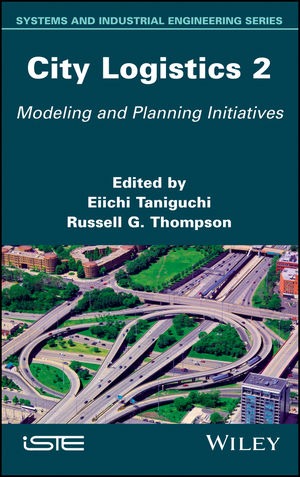
City Logistics 2 : Modeling and Planning Initiatives
Presents recent advances in modelling, planning and evaluating city logistics for sustainable and liveable cities based on the application of ICT (Information and Communication Technology) and ITS (Intelligent Transport Systems). It highlights modelling the behaviour of stakeholders who are involved in city logistics as well as planning and managing policy measures of city logistics including cooperative freight transport systems in public-private partnerships. Case studies of implementing and evaluating city logistics measures in terms of economic, social and environmental benefits from major cities around the world are also given.
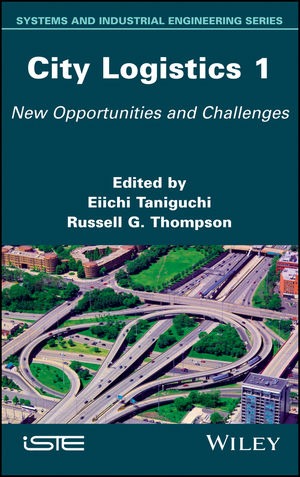
City Logistics 1 : New opportunities and challenges
Presents recent advances in modelling, planning and evaluating city logistics for sustainable and liveable cities based on the application of ICT (Information and Communication Technology) and ITS (Intelligent Transport Systems). It highlights modelling the behaviour of stakeholders who are involved in city logistics as well as planning and managing policy measures of city logistics including cooperative freight transport systems in public-private partnerships. Case studies of implementing and evaluating city logistics measures in terms of economic, social and environmental benefits from major cities around the world are also given.
China's Long-Term Low-Carbon Development Strategies and Pathways : Comprehensive Report
This book introduces a multi-disciplinary and comprehensive research on China's long-term low-carbon emission strategies and pathways. After comprehensively considering China’s own socioeconomic conditions, policy design, energy mix, and other macro-development trends and needs, the research team has proposed suggestions on China’s low-carbon development strategies and pathways until 2050, with required technologies and policies in order to realize the goals of building a great modern socialist country and a beautiful China.
Artificial neural network-based optimized design of reinforced concrete structures
Introduces AI-based Lagrange optimization techniques that can enable more rational engineering decisions for concrete structures while conforming to codes of practice. It shows how objective functions including cost, CO2 emissions, and structural weight of concrete structures are optimized either separately or simultaneously while satisfying constraining design conditions using an ANN-based Lagrange algorithm. Any design target can be adopted as an objective function. Many optimized design examples are verified by both conventional structural calculations and big datasets. Uniquely applies the new powerful tools of AI to concrete structural design and optimization Multi-objective functions of concrete structures optimized either separately or simultaneously Design requirements imposed by codes are automatically satisfied by constraining conditions Heavily illustrated in color with practical design examples

Application of power electronics converters in smart grids and renewable energy systems
Focuses on the applications of Power Electronics Converters in smart grids and renewable energy systems. The topics covered include methods to CO2 emission control, schemes for electric vehicle charging, reliable renewable energy forecasting methods, and various power electronics converters. The converters include the quasi neutral point clamped inverter, MPPT algorithms, the bidirectional DC-DC converter, and the push–pull converter with a fuzzy logic controller.
A History of Atmospheric CO2 and Its Effects on Plants, Animals, and Ecosystems
The authors address the future role of atmospheric CO2 and its likely effects on ecosystems. This book incorporates the advances of various earth science, environmental, and ecological fields into an overall account of global change and the changing dynamics of life on Earth.

101 rules of thumb for low energy architecture
Sets out the essential elements of low-energy architecture in a fresh, intuitive way. Where ever-changing technology and complex legislation can cloud the designer’s thought-process, this book equips you with the fundamentals you need to minimise CO2 emissions, design for low-energy use and work with, not against, the forces of nature.
