



Page 1
Page 1

olution Sets for Net Zero Energy Buildings : Feedback from 30 Buildings Worldwide
Presents a unique study of 30 NZEBs that have been constructed and have had their performance measured for at least 12 months. The study is based upon an international collaborative research initiated by the International Energy Agency. It is the first book to evaluate building strategies in houses, educational buildings and offices that have been demonstrated to work in practice. It examines how the design challenges of climate and building type have been addressed, and to what extent the various design approaches have been successful. This book presents convincing evidence that a careful re-thinking of conventional design norms can achieve a far greater performance benefit than is normally feasible. It identifies 'solution sets' that work at the whole building level and at the individual building design challenge level for each climate and building type. In doing so, the book provides guidance as to how to improve the design by learning from these cases. Unusually for a book of this type it has examples of buildings in what are conventionally labeled 'hot' and 'cold' climates.

Data-driven BIM for Energy Efficient Building Design
Conceptualises the scale and spectrum of Building Information Modelling (BIM) and Artificial Intelligence (AI) approaches in energy efficient building design and to develop its functional solutions with a focus on four crucial aspects of building envelop, building layout, occupant behaviour and heating, ventilation and air-conditioning (HVAC) systems. Drawn from theoretical development on the sustainability, informatics and optimisation paradigms in built environment, the energy efficient building design will be marked through the power of data and BIM-intelligent agents during the design phase.
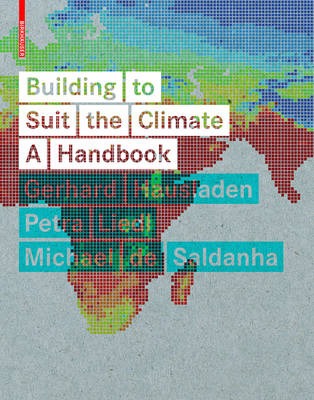
Building to suit the climate : A handbook
Serves as a concrete aid to planning and design. With the planning process as its roadmap, it accompanies the planner from the basic evaluation stage through conception and implementation planning all the way to building operation. The building-related characteristics of the various climatic zones form the basis for the made-to-measure development of integrated building solutions. Well-conceived graphics illustrate planning contexts and facilitate efficient planning decisions and realistic predimensioning. Materials, systems, and technologies are described, and their areas of application are pointed out. Reference parameters, costs, and the presentation of interrelationships equip the planner to make a strategic and well-informed selection.
