



Page 1
Page 1

Web Intelligence Meets Brain Informatics ; 1st WICI International Workshop, WImBI 2006, Beijing, China, December 15-16, 2006, Revised Selected and Invited Papers
the book include: workshop was the first in the field to focus on the interplay between (a) intelligent technologies, especially in the context of WI and (b) studies on human intelligence as explored in neuroscience, cognitive psychology, and brain science instrumentation.The book, as a volume in the Springer LNCS/LNAI state-of-the-art survey, will be a milestone publication, with research visions and blueprints, for com-puter scientists and practitioners at large in this exciting interdisciplinaryarea.

Signal Processing Techniques for Knowledge Extraction and Information Fusion
This state-of-the-art resource brings together the latest findings from the cross-fertilization of signal processing, machine learning and computer science. The emphasis is on demonstrating synergy of different signal processing methods with knowledge extraction and heterogeneous information fusion. Issues related to the processing of signals with low signal-to-noise ratio, solving real-world multi-channel problems, and using adaptive techniques where nonstationarity, uncertainty and complexity play major roles are addressed. Particular methods include Independent Component Analysis, Support Vector Machines, Distributed and Collaborative Adaptive Filtering, Empirical Mode Decomposition, Self Organizing Maps, Fuzzy Logic, Evolutionary Algorithms and several others used frequently in these fields. Also included are both important and novel applications from telecommunications, renewable energy and biomedical engineering.

Novel Trends in Brain Science : Brain Imaging, Learning and Memory, Stress and Fear, and Pain
With the development of neural science, knowledge of the molecules and neurons that comprise the brain has increased exponentially in the past two decades. In Novel Trends in Brain Science, leading neuroscientists from Japan and Taiwan describe the latest and most relevant research in brain science, including state-of-the-art brain-imaging technologies such as fMRI, MR-DTI, TMS, and MEG, and also discuss learning, memory, emotions, and pain. With a wide range of contributors, the book presents valuable insights into functional neuroimaging, white matter tractography, synaptic plasticity, emoti.
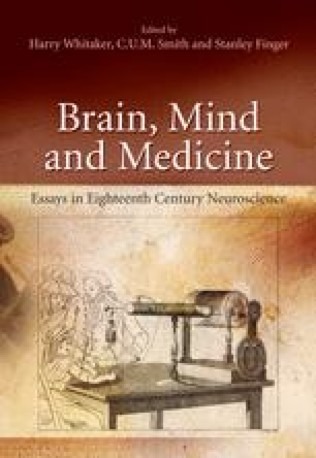
Brain, Mind and Medicine : Essays in Eighteenth-Century Neuroscience
Ideas we associate with the 18th century are clearly seen in work published from the latter decades of the 17th century through the first decades of the 19th century. This is the "long 18th century", a period which exhibits multiple discourses in medicine, brain science and philosophy. The editors have deliberately adopted a "presentist" subtitle, "neuroscience", to emphasize that this collection of essays reflect a range of current thought about 18th century-studies of the nervous system in isolation and in context. There are six sections, each preceded by a short introduction.

Artificial Mind System : Kernel Memory Approach
This book is written from an engineer's perspective of the mind. "Artificial Mind System" exposes the reader to a broad spectrum of interesting areas in general brain science and mind-oriented studies. In this research monograph a picture of the holistic model of an artificial mind system and its behaviour is drawn, as concretely as possible, within a unified context, which could eventually lead to practical realisation in terms of hardware or software. With a view that "the mind is a system always evolving", ideas inspired by many branches of studies related to brain science are integrated within the text, i.e. artificial intelligence, cognitive science / psychology, connectionism, consciousness studies, general neuroscience, linguistics, pattern recognition / data clustering, robotics, and signal processing.
