



Page 1
Page 1

Inorganic and Organometallic Macromolecules : Design and Applications
Polymers containing metals and metal-like atoms are essential materials for the extended opportunities and demands of the 21st century. This book describes the synthesis of some of these polymers and their potential application in many fields such as materials, biomedicine, engineering, communications, and ceramics.

Gesture smart control
Nowadays actions are increasingly being handled in electronic ways, instead of physical interaction. From earlier times biometrics is used in the authentication of a person. It recognizes a person by using a human trait associated with it like eyes (by calculating the distance between the eyes) and using hand gestures, fingerprint detection, face detection etc. Advantages of using these traits for identification are that they uniquely identify a person and cannot be forgotten or lost. These are unique features of a human being which are being used widely to make the human life simpler. Hand gesture recognition system is a powerful tool that supports efficient interaction between the user and the computer.

Food - drug interactions
The effect of drug on a person may be different than expected because that drug interacts with another drug the person is taking (drug-drug interaction), food, beverages, dietary supplements the person is consuming (drug-nutrient/food interaction) or another disease the person has (drug-disease interaction). A drug interaction is a situation in which a substance affects the activity of a drug, i.e. the effects are increased or decreased, or they produce a new effect that neither produces on its own. These interactions may occur out of accidental misuse or due to lack of knowledge about the active ingredients involved in the relevant substances. Regarding food-drug interactions physicians and pharmacists recognize that some foods and drugs, when taken simultaneously, can alter the body's ability to utilize a particular food or drug, or cause serious side effects.

Emergent Properties in Natural and Artificial Dynamical Systems
An important part of the science of complexity is the study of emergent properties arising through dynamical processes in various types of natural and artificial systems. This is the aim of this book, which is the outcome of a discussion meeting within the first European conference on complex systems. It presents multidisciplinary approaches for getting representations of complex systems and using different methods to extract emergent structures. This carefully edited book studies emergent features such as self organization, synchronization, opening on stability and robustness properties. Invariant techniques are presented which can express global emergent properties in dynamical and in temporal evolution systems. This book demonstrates how artificial systems such as a distributed platform can be used for simulation used to search emergent placement during simulation execution.

Design of reinforced concrete residential building in Damascus
Our project consists of a reinforced residential building in the Damascus. It is made of thirteen stories including basement, and we have two water tanks on top of the stairwell. The basement consists two shelters.

Deepfake detection
Recently, various techniques of manipulating the video content have become available to everyone – online, one can find free applications e.g., for face swapping in videos. Such universal accessibility carries a notable risk of flooding online content with false information, affecting not only the greats of this world, but also the whole societies, also the rapid progress in synthetic image generation and manipulation has now come to a point where it raises significant concerns for the implications towards society. It is therefore necessary to develop a verification tool that will help assess the authenticity of the videos posted on the internet. This project describes the approach of using artificial intelligence solutions to detect doctored videos.

Constraint-Based Verification
Constraint-Based Verifcation covers the emerging field in functional verification of electronic designs thats is now commonly referred to by this name. Topics are developed in the context of a wide range of dynamic and static verification approaches including stimulation, emulation and formal methods. The goal is to show how constraints, or assertions, can be used toward automating the generation of testbenches, resulting in a seamless verifcation flow. Topics such as verification coverage, and connection with assertion-based verification are also covered.
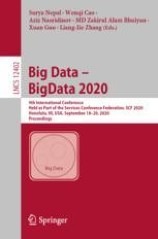
Big Data – BigData 2020; 9th International Conference, Held as Part of the Services Conference Federation, SCF 2020, Honolulu, HI, USA, September 18-20, 2020, Proceedings
Constitutes the proceedings of the 9th International Conference on Big Data, BigData 2020, held as part of SCF 2020, during September 18-20, 2020. The conference was planned to take place in Honolulu, HI, USA and was changed to a virtual format due to the COVID-19 pandemic. The 16 full and 3 short papers presented were carefully reviewed and selected from 52 submissions. The topics covered are Big Data Architecture, Big Data Modeling, Big Data As A Service, Big Data for Vertical Industries (Government, Healthcare, etc.), Big Data Analytics, Big Data Toolkits, Big Data Open Platforms, Economic Analysis, Big Data for Enterprise Transformation, Big Data in Business Performance Management, Big Data for Business Model Innovations and Analytics, Big Data in Enterprise Management Models and Practices, Big Data in Government Management Models and Practices, and Big Data in Smart Planet Solutions.

Becoming a world-class university : The case of King Abdulaziz University
This book written by international experts in the field of educational innovation is a guide for universities to become world-class universities. It contributes to the current international intellectual debate on the future of higher education. It also tells the story of King Abdulaziz University in Jeddah (Saudi Arabia) and its effort to become a world-class university. The book discusses excellence in different aspects such as education, research, community services, strategic planning, knowledge economy and international cooperation.
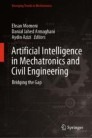
Artificial intelligence in mechatronics and civil engineering : Bridging the gap
Recent studies highlight the application of artificial intelligence, machine learning, and simulation techniques in engineering. This book covers the successful implementation of different intelligent techniques in various areas of engineering focusing on common areas between mechatronics and civil engineering. The power of artificial intelligence and machine learning techniques in solving some examples of real-life problems in engineering is highlighted in this book. The implementation process to design the optimum intelligent models is discussed in this book.
