



Page 1
Page 1

Multimedia Database Retrieval : A Human-Centered Approach
Multimedia Database Retrieval: A Human-Centered Approach presents the latest development in user-centered methods and the state-of-the-art in visual media retrieval. It includes discussion on perceptually inspired non-linear paradigm in user-controlled interactive retrieval (UCIR) systems. It also features a coherent approach which focuses on specific topics within content/concept-based retrievals via audio-visual information modeling of multimedia. Highlights include: * Exploring an adaptive machine that can learn from its environment * Optimizing the learning system by incorporating self-organizing adaptation into the retrieval process * Demonstrating state-of-the-art applications within small, medium, and large databases
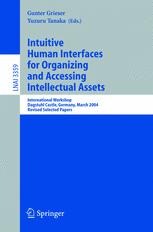
Intuitive Human Interfaces for Organizing and Accessing Intellectual Assets ; International Workshop, Dagstuhl Castle, Germany, March 1-5, 2004, Revised Selected Papers
This book constitutes the thoroughly refereed post-proceedings of the 2004 International Workshop on Intuitive Human Interfaces for Organizing and Accessing Intellectual Assets, held in Dagstuhl Castle, Germany in March 2004. The 17 revised full papers presented together with an introductory overview have gone through two rounds of reviewing and revision. The papers are organized in topical sections on man-machine interface for intuitive knowledge access, intelligent pad and meme media, visualization and design of information access spaces, and semantics and narrative organization and access of knowledge.

Introduction to built asset management
Introduction to Built Asset Management is a systematic introduction to both the technology and management issues central to building maintenance and refurbishment. Covering the entire life cycle of built assets, the textbook reviews the role of framework agreements, describes key performance indicators, discusses recent advancements in the procurement of maintenance activities and more.
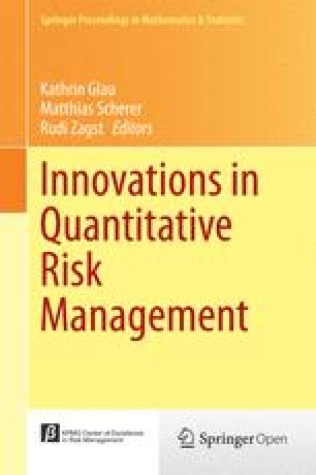
Innovations in Quantitative Risk Management ; TU München, September 2013
The KPMG Center of Excellence in Risk Management conference Risk Management Reloaded and this proceedings volume contribute to bridging the gap between academia –providing methodological advances– and practice –having a firm understanding of the economic conditions in which a given model is used. Discussed fields of application range from asset management, credit risk, and energy to risk management issues in insurance. Methodologically, dependence modeling, multiple-curve interest rate-models, and model risk are addressed. Finally, regulatory developments and possible limits of mathematical modeling are discussed.

High Noon in the Automotive Industry
The book provides valuable information in an understandable style and entertaining form, but also makes clear statements on the tough consequences of global competition for the automotive manufacturers and the supply industry. Recommended reading for everyone in risk and asset management in the financial industry.

Engineering Asset Management ; Proceedings of the First World Congress on Engineering Asset Management (WCEAM) 2006
This text represents state-of-the-art trends and developments in the emerging field of engineering asset management as presented at the First World Congress on Engineering Asset Management (WCEAM) held in Australia in July 2006.

Contributions to Ubiquitous Computing
This book puts the larger vision of ubiquitous computing in the context of today’s mobile and distributed computing systems and presents innovative solutions at all system layers ranging from hardware over vertical and horizontal infrastructure services and novel middleware techniques to various types of application software. Some chapters address core properties of ubiquitous applications including mobility, self-healing and self-organisation of both technical and social-technical systems. Other contributions deal with common facilities like secure e-payment or semantic web techniques and business solutions like wireless asset management or e- maintenance. Distributed systems management with self-monitoring capabilities, Internet congestion control, and novel security solutions coping with denial of service attacks against mobile agent systems and software- and hardware-based data encryption methods are further topics addressed.
Big data and artificial intelligence in digital finance : Increasing personalization and trust in digital finance using big data and AI
This book presents how cutting-edge digital technologies like Machine Learning, Artificial Intelligence (AI), and Blockchain are set to disrupt the financial sector. The book illustrates how recent advances in these technologies facilitate banks, FinTechs, and financial institutions to collect, process, analyze, and fully leverage the very large amounts of data that are nowadays produced and exchanged in the sector. To this end, the book also introduces some of the most popular Big Data, AI and Blockchain applications in the sector, including novel applications in the areas of Know Your Customer (KYC), Personalized Wealth Management and Asset Management, Portfolio Risk Assessment, as well as variety of novel Usage-based Insurance applications based on Internet-of-Things data.
Asset Sales : Their Role in Restructuring and Financing Firms
Examines the corporate asset market and the mechanisms of asset sale transactions. The book then focuses on the theory of finance in asset sales (the efficiency and financing theory) and the extensive empirical literature now available. In light of recent and rapid technological and digital advances, the last section presents new perspectives on analyzing asset sales transactions. Chiefly intended as a primer for PhD students and academics, the book offers a road map of the empirical research landscape and suggests future research directions.
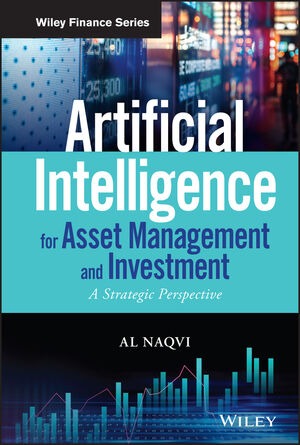
Artificial intelligence for asset management and investment : A strategic perspective
The rise of artificial intelligence is nothing short of a technological revolution. AI is poised to completely transform asset management and investment banking, yet its current application within the financial sector is limited and fragmented. Existing AI implementations tend to solve very narrow business issues, rather than serving as a powerful tech framework for next-generation finance. Artificial Intelligence for Asset Management and Investment provides a strategic viewpoint on how AI can be comprehensively integrated within investment finance, leading to evolved performance in compliance, management, customer service, and beyond.

AIU asset management system (Assettracker)
Assets can be defined as something of value that can be converted into cash, as all institutions and companies own assets and the larger the size of the organization, the greater the need to manage its owned assets. Some companies have resorted to manually tracking their assets by making paper data, but later, with the continuation of this approach, it has been noted that these data are largely lacking in organization and create difficulties in searching and tracking the life cycle of each asset separately. Here comes the role of our project, which is a software project based on automating assets and converting them from traditional methods to digital methods with the aim of obtaining the maximum benefit from assets in the organization by avoiding wasting assets, and issuing detailed reports indicating the decision-making process, in addition to the ability to deal with operations Effectively maintain assets.
