



Page 1
Page 1

Housing Market Dynamics in Africa
Utilizes new data to thoroughly analyze the main factors currently shaping the African housing market. Some of these factors include the supply and demand for housing finance, land tenure security issues, construction cost conundrum, infrastructure provision, and low-cost housing alternatives. Through detailed analysis, the authors investigate the political economy surrounding the continent’s housing market and the constraints that behind-the-scenes policy makers need to address in their attempts to provide affordable housing for the majority in need. With Africa’s urban population growing rapidly, this study highlights how broad demographic shifts and rapid urbanization are placing enormous pressure on the limited infrastructure in many cities and stretching the economic and social fabric of municipalities to their breaking point. But beyond providing a snapshot of the present conditions of the African housing market, the book offers recommendations and actionable measures for policy makers and other stakeholders on how best to provide affordable housing and alleviate Africa’s housing deficit.

Greening the Greyfields : New Models for Regenerating the Middle Suburbs of Low-Density Cities
This book outlines new concepts, development models, governance and implementation processes capable of addressing the challenges of transformative urban regeneration of cities at precinct scale.
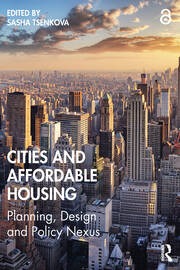
Cities and Affordable Housing : Planning, Design and Policy Nexus
Provides a comparative perspective on housing and planning policies affecting the future of cities, focusing on people- and place-based outcomes using the nexus of planning, design and policy. A rich mosaic of case studies features good practices of city-led strategies for affordable housing provision, as well as individual projects capitalising on partnerships to build mixed-income housing and revitalise neighbourhoods. Twenty chapters provide unique perspectives on diversity of approaches in eight countries and 12 cities in Europe, Canada and the USA.
Affordable housing for smart villages
Initiates a fresh discussion of affordability in rural housing set in the context of the rapidly shifting balance between rural and urban populations. It conceptualises affordability in rural housing along a spectrum that is interlaced with cultural and social values integral to rural livelihoods at both personal and community level. Developed around four intersecting themes: explaining houses and housing in rural settings; exploring affordability in the context of aspirations and vulnerability; rural development agendas involving housing and communities; and construction for resilience in rural communities, the book provides an overview of some of the little understood and sometimes counter-intuitive best practices on rural affordability and affordable housing that have emerged in developing economies over the last thirty years.
