



Page 1
Page 1

Who’s Who in Fluorescence 2008
"Who’s Who in Fluorescence 2008 is a guide to scientists and workers in the academic, industrial and government sectors who employ fluorescence in their work, as well as to companies that are involved in fluorescence. The 232-page invitation-only volume includes the names, addresses, contact details, and professional interests and specialties of more than 400 contributors from more than 35 countries. Specialty keywords, representative publications and author impact measure numbers are included." (Biophotonics International, August, 2008)

The Science of Phototherapy : An Introduction
Phototherapy exemplifies scientific medicine. The major advances have resulted from effective collaborations between basic researchers and clinicians. This book is directed to clinicians and basic researchers who are interested in current and emerging implementations of phototherapy. It can serve as an introductory reference and a textbook for advanced undergraduate and graduate courses in medical physics and biomedical engineering. The emphasis is on the science underlying the various phototherapy procedures, which encompasses aspects of classical and molecular photophysics, biological photochemistry, photobiology and biophotonics. Topics that do not usually appear in other general sources include the theory and applications of tissue optics, Monte Carlo simulation, light dosimetry, and analytical modeling of laser surgery. Many illustrative problems with answers are provided to exemplify the more quantitative aspects of each topic.

Subcellular Proteomics : From Cell Deconstruction to System Reconstruction
This volume summarizes the new developments that made subcellular proteomics a rapidly expanding area. The book represents an unprecedented attempt to reflect state-of-the-art methodology and also to convey both the mode of thinking and the hype of this discipline.

Photon-based Nanoscience and Nanobiotechnology
Light has always played a significant role in the synthesis of materials and formation of small-scale solid structures. The invention of holographic and phase mask projection has enabled engineers to fabricate devices with characteristic features much smaller than the wavelength of the light used for processing. A further reduction of device dimensions has been achieved by implementing the processes that rely strongly on the non-linear effects of light-matter interaction. The intention of this book was to provide the Reader, primarily graduate students and young researchers in materials engineering, bio(chem)physics, medical physics and biophysics, with a set of articles reviewing state-of-the art research and recent advancements in the field of photon-matter interaction for micro/nanomaterials synthesis and manipulation of properties of biological and inorganic materials at the atomic level.

Optics in Our Time
Covers five aspects related to light. The first presents two articles, one on the history of the nature of light, and the other on the scientific achievements of Ibn-Haitham (Alhazen), who is broadly considered the father of modern optics. These are then followed by an article on ultrafast phenomena and the invisible world. The third part includes papers on specific sources of light, the discoveries of which have revolutionized optical technologies in our lifetime. They discuss the nature and the characteristics of lasers, Solid-state lighting based on the Light Emitting Diode (LED) technology, and finally modern electron optics and its relationship to the Muslim golden age in science. The book’s fourth part discusses various applications of optics and light in today's world, including biophotonics, art, optical communication, nanotechnology, the eye as an optical instrument, remote sensing, and optics in medicine. In turn, the last part focuses on quantum optics, a modern field that grew out of the interaction of light and matter.

Optical Waveguide Sensing and Imaging
Explores various aspects of existing and emerging fiber and waveguide optics sensing and imaging technologies including recent advances in nanobiophotonics. The focus is on both fundamental and applied research as well as on applications in civil engineering, biomedical sciences, environment, security and defence. The main goal of the multi-disciplinary team of Editors was to provide an useful reference containing state-of-art overviews covering a variety of complementary topics on the interface of engineering and biomedical sciences.

Nanoscale Photonic Imaging
This book, edited and authored by a team of world-leading researchers, provides a broad overview of advanced photonic methods for nanoscale visualization, as well as describing a range of fascinating in-depth studies.

Excimer Laser Technology
This comprehensive survey on Excimer Lasers investigates the current range of the technology, applications and devices of this commonly used laser source, as well as the future of new technologies, such as F2 laser technology. Additional chapters on optics, devices and laser systems complete this compact handbook. A must read for laser technology students, process application researchers, engineers or anyone interested in excimer laser technology. An effective and understandable introduction to the current and future status of excimer laser technology.

Biophotonics and Coherent Systems in Biology
Biophotonics and Coherent Systems in Biology offers a timely research volume derived from papers submitted at the 3rd International Alexander Gurwitsch Conference. Biophotonics and Coherent Systems in Biology covers the major aspects of modern biophotonics and related biological and biophysical problems of interest to researchers today.Key topics include: Coherency of biophoton emission and its related physical and biological properties , Biological effects of microwaves, Photon emission from living samples, starting from human bodies up to cell cultures, Fundamental role of water in bioenergetics and the influence of electromagnetic fields upon hydrophobic-hydrophilic balance
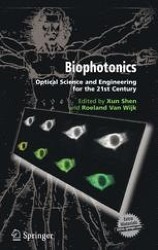
Biophotonics ; Optical science and engineering for the 21st century
Biophotonics: Optical Science and Engineering in the 21st Century serves as an ideal aid to the research and development of these areas integrating light, photonics, and biological systems.Key topics include: Fluctuation Correlation Spectroscopy in Cells: Determination of Molecular Aggregation ,Using GFP and FRET Technologies for Studying Signaling Mechanisms of Apoptosis in a Single Living Cell, Study on Protein-Protein Interaction in Single Living Cells, Functional Optical Coherence Tomography: Simultaneous In Vivo Imaging of Tissue Structure and Physiology, Imaging –Photo- and Sonodynamic Diagnosis of Cancer Mediated by Chemiluminescence Probes, Biophotonic Analysis of Spontaneous Self-Organizing Oxidative Processes in Aqueous Systems, Biophoton Emission and Defense Systems in Plants
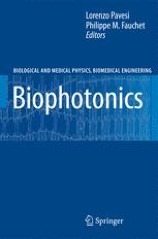
Biophotonics
More profound understanding of the nature of light and light-matter interactions in biology has enabled many applications in the biology and medical fields. So a new discipline is born, namely biophotonics. The aim of this book is to review the current state-of-the-art of the field by means of authoritative chapters written by the world leaders of the respective fields. Biosensors, biochips, optical tomography, optical microsurgery, photodynamics therapy, bioactivation of gene, photobiology of skin, and nanobiophotonics are each introduced and recent advances presented. This book will be useful not only to physicians, biologists, physicists, chemists, materials scientists, and engineers but also to graduate students who are interested in these rapidly developing fields.
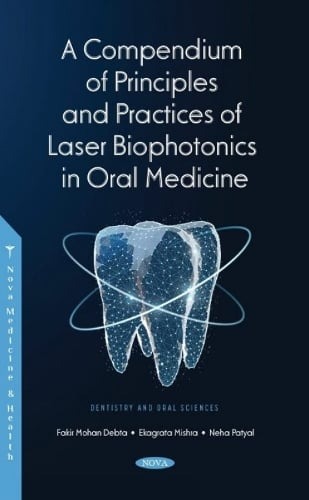
A compendium of principles and practice of laser biophotonics in oral medicine
The application of photonics technologies and principles to medicine and life sciences is known as biophotonics. Laser is one of the most important inventions of the twentieth century in biophotonic technology. This book a concise but comprehensive body of information, written in a simple tone, attempting to cruise the readers' vision through every perspective, to seek objective information on all aspects of the instrument and its uses, fostering a preliminary step towards efficient laser diagnosis and therapy.
