



Page 99
Page 99
Agent-oriented software engineering VI ; 6th International Workshop, AOSE 2005, Utrecht, The Netherlands, July 25, 2005. Revised and Invited Papers
This book represents the thoroughly refereed post-proceedings of the 6th International Workshop on Agent-Oriented Software Engineering, AOSE 2005, held in Utrecht, The Netherlands, in July 2005 as part of AAMAS 2005. The 18 revised full papers were carefully selected from 35 submissions during two rounds of reviewing and improvement. The papers are organized in topical sections on modeling tools, analysis and validation tools, multiagent systems design, implementation tools, and experiences and comparative evaluations.

Agent-oriented software engineering V ; 5th International workshop, AOSE 2004, New York, NY, USA, July 2004, revised selected papers
The explosive growth of application areas such as electronic commerce, ent- prise resource planning and mobile computing has profoundly and irreversibly changed our views on software systems. Nowadays, software is to be based on open architectures that continuously change and evolve to accommodate new components and meet new requirements. Software must also operate on di?- ent platforms, without recompilation, and with minimal assumptions about its operating environment and its users. Furthermore, software must be robust and ¨ autonomous, capable of serving a naive user with a minimum of overhead and interference. Agent concepts hold great promise for responding to the new realities of software systems. They o?er higher-level abstractions and mechanisms which address issues such as knowledge representation and reasoning, communication, coordination, cooperation among heterogeneous and autonomous parties, p- ception, commitments, goals, beliefs, and intentions, all of which need conceptual modelling. On the one hand, the concrete implementation of these concepts can lead to advanced functionalities.

Agent-oriented information systems II ; 6th International bi-conference workshop, AOIS 2004, Riga, Latvia, June 8, 2004 and New York, NY, USA, July 20, 2004, revised selected papers
Information systems have become the backbone of all kinds of organizations - day. In almost every sector – manufacturing, education, health care, government and businesses large and small – information systems are relied upon for - eryday work, communication, information gathering and decision-making. Yet, the in?exibilities in current technologies and methods have also resulted in poor performance, incompatibilities and obstacles to change. As many organizations are reinventing themselves to meet the challenges of global competition and e-commerce, there is increasing pressure to develop and deploy new technologies that are ?exible, robust and responsive to rapid and unexpected change. Agent concepts hold great promise for responding to the new realities of - formation systems. They o?er higher-level abstractions and mechanisms which address issues such as knowledge representation and reasoning, communication, coordination, cooperation among heterogeneous and autonomous parties, p- ception, commitments, goals, beliefs, intentions, etc., all of which need conc- tual modelling. On the one hand, the concrete implementation of these concepts can lead to advanced functionalities.

Agent Technology from a Formal Perspective
The field of agent & multi-agent systems is experiencing tremendous growth. At the same time the field of formal methods is blossoming and has proven its importance in industrial and government applications. The FAABS (Formal Approaches to Agent-Based Systems) workshops, merging the concerns of the two fields, provided a timely and compelling platform on which the growing concerns and requirement of agent-based systems users that systems should be accompanied by behavioral assurances, could be discussed. This book has arisen from the overwhelming response to FAABS ’00, ’02 & ’04 and all chapters are updated or represent new research, and are designed to provide a more in-depth treatment of the topic. Examples of how others have applied formal methods to agent-based systems are included, plus formal method tools & techniques that readers can apply to their own systems.

Aesthetic Surgery of the Facial Mosaic
This authoritative reference book assembles the experience of an international faculty of authors, each of whom has performed several thousand facelifts, i.e. procedures to rejuvenate and harmonize the human face. All procedures in this regard are covered and the text is accompanied by extensive artwork and photographs. The authors share their experience, including tips and tricks, as well as ways to avoid complications and pitfalls. Special emphasis is given to the concept of looking at the face as a mosaic, i.e. treating its individual parts in a harmonic way and maintaining mimic units. Combining different methods.
Advertising management : Concepts, theories, research and trends
Explores the concept of advertising and the different ways advertising is understood and evaluated. It dives deep into planning, designing, and executing advertising campaigns on different mediums. It discusses the theoretical and research parts of advertising by critically examining how over the years various hierarchical models and theories are developed by advertising experts. It examines various models and theories that explain why and how advertising is successful in persuading customers target audiences to buy a product or accept an idea for behavioural change.

Advancing Human Assessment : The Methodological, Psychological and Policy Contributions of ETS
Describes the extensive contributions made toward the advancement of human assessment by scientists from one of the world’s leading research institutions, Educational Testing Service. The book’s four major sections detail research and development in measurement and statistics, education policy analysis and evaluation, scientific psychology, and validity. Many of the developments presented have become de-facto standards in educational and psychological measurement, including in item response theory (IRT), linking and equating, differential item functioning (DIF), and educational surveys like the National Assessment of Educational Progress (NAEP), the Programme of international Student Assessment (PISA), the Progress of International Reading Literacy Study (PIRLS) and the Trends in Mathematics and Science Study (TIMSS). In addition to its comprehensive coverage of contributions to the theory and methodology of educational and psychological measurement and statistics,

Advances on mechanics, design engineering and manufacturing III ; Proceedings of the international joint conference on mechanics, design engineering & advanced manufacturing, JCM 2020, June 2-4, 2020
This open access book gathers contributions presented at the International Joint Conference on Mechanics, Design Engineering and Advanced Manufacturing (JCM 2020), held as a web conference on June 2–4, 2020.

Advances in XML information retrieval ; 3rd International workshop of the Initiative for the evaluation of XML retrieval, INEX 2004, Dagstuhl Castle, Germany, December 6-8, 2004
The ultimate goal of many information access systems (e.g., digital libraries, the Web, intranets) is to provide the right content to their end-users. This content is increasingly a mixture of text, multimedia, and metadata, and is formatted according to the adopted –W3C standard for information repositories, the so-called eXtensible Markup L- guage (XML). Whereas many of today’s information access systems still treat do- ments as single large (text) blocks, XML offers the opportunity to exploit the internal structure of documents in order to allow for more precise access thus providing more specific answers to user requests. Providing effective access to XML-based content is therefore a key issue for the success of these systems. The aim of the INEX campaign (Initiative for the Evaluation of XML Retrieval), which was set up at the beginning of 2002, is to establish infrastructures, XML test suites, and appropriate measurements for evaluating the performance of information retrieval systems that aim at giving effective access to XML content. More precisely, the goal of the INEX initiative is to provide means, in the form of a large XML test collection and appropriate scoring methods, for the evaluation of content-oriented XML retrieval systems.

Advances in web mining and web usage analysis ; 8th International workshop on knowledge discovery on the web, WebKDD 2006 Philadelphia, USA, August 20, 2006 Revised Papers
The discipline of data mining delivers methodologies and tools for the an- ysis of large data volumes and the extraction of comprehensible and non-trivial insights from them. Web mining, a much younger discipline, concentrates on the analysisofdata pertinentto the Web.Web mining methods areappliedonusage data and Web site content; they strive to improve our understanding of how the Web is used, to enhance usability and to promote mutual satisfaction between e-business venues and their potential customers.Many ofthe infancy problems in Web mining have been solvedby now, but the tremendous potential for new and improved uses, as well as misuses, of the Web are leading to new challenges.

Advances in web mining and web usage analysis ; 7th International workshop on knowledge discovery on the web, WEBKDD 2005, Chicago, IL, USA, August 21, 2005, Revised Papers
Thisbookcontainsthepostworkshopproceedingsofthe7thInternationalWo- shop on Knowledge Discovery from the Web, WEBKDD 2005. The WEBKDD workshop series takes place as part of the ACM SIGKDD International Conf- ence on Knowledge Discovery and Data Mining (KDD) since 1999. The discipline of data mining delivers methodologies and tools for the an- ysis of large data volumes and the extraction of comprehensible and non-trivial insights from them. Web mining, a much younger discipline, concentrates on the analysisofdata pertinentto theWeb.Web mining methods areappliedonusage data and Web site content; they strive to improve our understanding of how the Web is used, to enhance usability and to promote mutual satisfaction between e-business venues and their potential customers. In the last years, the interest for the Web as medium for communication, interaction and business has led to new challenges and to intensive, dedicated research. Many of the infancy problems in Web mining have now been solved but the tremendous potential for new and improved uses, as well as misuses, of the Web are leading to new challenges.

Advances in Web Intelligence and Data Mining
The new Web-related research directions include intelligent methods usually associated with the fields of computational intelligence, soft computing, and data mining. This book presents state-of-the-art developments in the area of computationally intelligent methods applied to various aspects and ways of Web exploration and Web mining. Some novel data mining algorithms that can lead to more effective and intelligent Web-based systems are also described. Scientists, engineers, and research students are expected to find many inspiring ideas in this volume.

Advances in web intelligence ; 1st International symposium, ISVC 2005, Lake Tahoe, NV, USA, December 5-7, 2005, proceedings
In recent years the Internet has become a source of data and information of indisputable importance and has immensely gained in acceptance and popularity. The World Wide Web (WWW or Web, for short), frequently named “the nervous system of the infor- tion society,” offers numerous valuable services leaving no doubt about the signi?cance of the Web in our daily activities at work and at home. Consequently, we have a clear aspiration to meet the obvious need for effective use of its potential by making - provements in both the methods and the technology applied. Among the new research directions observable in Web-related applications, intelligent methods from within the broadly perceived topic of soft computing occupy an important place. AWIC, the “Atlantic Web Intelligence Conferences” are intended to be a forum for exchange of new ideas and novel practical solutions in this new and exciting ?eld.

Advances in verification of time Petri Nets and timed automata : A temporal logic approach
This monograph presents a comprehensive introduction to timed automata (TA) and time Petri nets (TPNs) which belong to the most widely used models of real-time systems. Some of the existing methods of translating time Petri nets to timed automata are presented, with a focus on the translations that correspond to the semantics of time Petri nets, associating clocks with various components of the nets. "Advances in Verification of Time Petri Nets and Timed Automata – A Temporal Logic Approach" introduces timed and untimed temporal specification languages and gives model abstraction methods based on state class approaches for TPNs and on partition refinement for TA. Moreover, the monograph presents a recent progress in the development of two model checking methods, based on either exploiting abstract state spaces or on application of SAT-based symbolic techniques.
Advances in Urban Ecology : Integrating Humans and Ecological Processes in Urban Ecosystems
The future of Earth’s ecosystems is increasingly influenced by the pace and patterns of urbanization. One of the greatest challenges for natural and social scientists is to understand how urbanizing regions evolve through the complex interactions between humans and ecological processes. Questions and methods of inquiry specific to our traditional disciplinary domains yield partial views that reflect different epistemologies and understandings of the world. In order to achieve the level of synthesis required to see the urban ecosystem as a whole we must change the way we pose questions and search for answers. Cities are the result of human and ecological processes occurring simultaneously in time and in space and the legacy of the simultaneous processes of the past. Urban ecology is the study of the co-evolution of human-ecological systems. Scholars of both urban systems and ecology must challenge the assumptions and world views within their disciplines and work towards a hybrid theory that builds on multiple world views.

Advances in UAV detection, classification and tracking
Explores the latest techniques and advancements in unmanned aerial vehicle (UAV) detection, classification, and tracking. As UAV technology continues to evolve and become more accessible, there is a growing need for effective methods to detect, identify, and track these devices in various scenarios. This reprint provides a thorough overview of the state-of-the-art approaches for UAV detection, classification, and tracking, covering both theoretical and practical aspects.The reprint begins by introducing the basics of UAVs and their various applications, followed by a detailed overview of the challenges associated with UAV detection, classification, and tracking. The authors then present the latest techniques and algorithms used in the field, including machine-learning-based approaches, computer vision techniques, and sensor fusion techniques. The reprint also covers the challenges of real-world applications, such as dealing with occlusions, sensor noise, and environmental factors.
Advances in Telerobotics
The main purpose of this book is to provide readers with recent advances in the field of Telerobotics. It describes methods, experimental results, applications, and developments, highly relevant for scientists, researchers, and students in Teleoperation. This book is structured in three parts: I. Human System Interfaces, II. Control, and III. Applications. Chapters in part I concentrate on human interface technology which allows a human operator to close the control loop of a remote robot. Topics related to control algorithms - in particular for the case with time delay in the communication network - are the focus in part II, concentrating on bilateral control methods. Part III presents a variety of advanced applications in surgery, space, and other fields relevant to everyday life.

Advances in Structural Engineering - Optimization : Emerging Trends in Structural Optimization
An up-to-date source for computation applications of optimization, prediction via artificial intelligence methods, and evaluation of metaheuristic algorithm with different structural applications. As the current interest of researcher, metaheuristic algorithms are a high interest topic area since advance and non-optimized problems via mathematical methods are challenged by the development of advance and modified algorithms. The artificial intelligence (AI) area is also important in predicting optimum results by skipping long iterative optimization processes. The machine learning used in generation of AI models also needs optimum results of metaheuristic-based approaches.
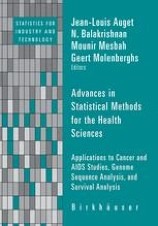
Advances in statistical methods for the health sciences : Applications to cancer and AIDS studies, genome sequence analysis, and survival analysis
This volume, an outgrowth of an "International Conference on Statistical Methods in Health Sciences," covers a wide range of topics pertaining to new statistical methods and novel applications in the health sciences.

Advances in neural networks - ISNN 2005 ; Vol. 3498 ; 2nd International Symposium on Neural Networks, Chongqing, China, May 30 - June 1, 2005, Proceedings, Part III
The three volume set LNCS 3496/3497/3498 constitutes the refereed proceedings of the Second International Symposium on Neural Networks, ISNN 2005, held in Chongqing, China in May/June 2005. The 483 revised papers presented were carefully reviewed and selected from 1.425 submissions. The papers are organized in topical sections on theoretical analysis, model design, learning methods, optimization methods, kernel methods, component analysis, pattern analysis, systems modeling, signal processing, image processing, financial analysis, control systems, robotic systems, telecommunication networks, incidence detection, fault diagnosis, power systems, biomedical applications, industrial applications, and other applications.
