



Page 97
Page 97
Artificial neural networks in Vehicular Pollution Modelling
Artificial neural networks (ANNs), which are parallel computational models, comprising of interconnected adaptive processing units (neurons) have the capability to predict accurately the dispersive behavior of vehicular pollutants under complex environmental conditions. This book aims at describing step-by-step procedure for formulation and development of ANN based VP models considering meteorological and traffic parameters. The model predictions are compared with existing line source deterministic/statistical based models to establish the efficacy of the ANN technique in explaining frequent dispersion complexities in urban areas. The book is very useful for hardcore professionals and researchers working in problems associated with urban air pollution management and control.
Artificial neural networks for the Modelling and Fault Diagnosis of Technical Processes
In this book, a wide spectrum of fault diagnosis techniques have been developed. A major category of fault diagnosis techniques is the model based one, where an analytical model of the plant to be monitored is assumed to be available.
Artificial Market Experiments with the U-Mart System
Economics went through great development in the 20th century. This development, which was based mainly on mathematical methods, is not an appropriate method of analyzing markets that change every hour and every day. In a stock market, prices constantly change depending on speculation. U-Mart, a manmade market, has been proposed in order to study such instantly moving markets. Although the U-Mart system is internationally acclaimed for being at the forefront of market research, its use is by no means limited to a small number of researchers on the fringe. The whole system, including its source code, is open and is distributed without charge, testifying to a philosophy of creating and providing a common testbed for research into financial markets.
Artificial life models in software
Artificial Life Models in Software presents software tools, environments and realities dealing with creation, imitation and analysis of artefactual, virtual and living forms, written by those who personally design and produce software, hardware and art installations in artificial life, simulated complex systems and virtual worlds. This timely volume offers a nearly exhaustive overview and original analysis of major non-profit artificial life software packages. The carefully selected topics include: · simulation of real and imaginary life forms and their evolution · self-organization · emergent behaviours · swarm intelligence · evolutionary robotics · agent-based simulations · adaptive, complex and biologically inspired ecosystems · creative computer art There has long been a need within the academic and research community for an informal introduction and guidance to modern software tools for modelling and simulation of life-like phenomena – Artificial Life Models in Software fills this gap and provides invaluable information to both professional and amateur readers, offering detailed reviews of contemporary software for artificial life.

Artificial intelligence techniques in hydrology and water resources management
The sustainable management of water cycles is crucial in the context of climate change and global warming. It involves managing global, regional, and local water cycles, as well as urban, agricultural, and industrial water cycles, to conserve water resources and their relationships with energy, food, microclimates, biodiversity, ecosystem functioning, and anthropogenic activities. Hydrological modeling is indispensable for achieving this goal, as it is essential for water resources management and the mitigation of natural disasters. In recent decades, the application of artificial intelligence (AI) techniques in hydrology and water resources management has led to notable advances. In the face of hydro-geo-meteorological uncertainty, AI approaches have proven to be powerful tools for accurately modeling complex, nonlinear hydrological processes and effectively utilizing various digital and imaging data sources, such as ground gauges, remote sensing tools, and in situ Internet of Things (IoT) devices.
Artificial intelligence in the financial services industry
Today, the financial services sector is facing a period of rapid disruption and innovation, and artificial intelligence (AI) is at the heart of these changes. Artificial intelligence can be used to gather enormous amounts of data, detect abnormalities, and solve complex problems. Financial institutions are already experimenting extensively with AI strategies to enhance and streamline financial institutions, BSA and AML compliance, CRA requirements, fraud detection, and real estate valuations, all while reducing cost levels. This book looks at how artificial intelligence is affecting the financial services industry.
Artificial intelligence in the design process : The impact on creativity and team collaboration
Discusses how to include artificial intelligence (AI) systems in the early stages of the design process. Today designers need new tools capable of supporting them in dealing with the increasing project's complexity and empowering their performances and capabilities. AI systems appear to be powerful means to enhance designers' creativity. This assumption was tested in a workshop where sixteen participants collaborated with three AI systems throughout the creative phases of research, sketching, and color selection. Results show that designers can access a broader level of variance and inspiration while reducing the risk of fossilization by triggering lateral thinking through AI-generated data. Therefore, AI could significantly impact the creative phases of the design process if applied consciously. Being AI systems intelligent agents, the book treats the Human-AI collaboration as a collaboration between human agents, proposing a set of guidelines helpful to achieving an efficient partnership with the machine.

Artificial intelligence in pharmacy
Artificial intelligence (AI) is a branch of computer science that deals with the problem-solving by the aid of symbolic programming. It has greatly evolved into a science of problem-solving with huge applications in business, health care, and engineering. One of the pivotal applications of AI is the development of the expert system. With the advent of big data and Al, robots are now becoming more trustworthy for doctors, and a large number of institutions are now employing robots along with human supervision to carry out activities that were previously done by humans...
Artificial intelligence in higher education : A practical approach
Highlights the broad field of artificial intelligence applications in education, regarding any type of artificial intelligence that is correlated with education. It discusses learning methodologies, intelligent tutoring systems, intelligent student guidance and assessments, intelligent education chatbots, and artificial tutors and presents the practicality and applicability implications of AI in education. The book offers new and current research along with case studies showing the latest techniques and educational activities. Will find interest with academicians which includes teachers, students of various disciplines, higher education policymakers who believe in transforming the education industry, research scholars who are pursuing their Ph.D. or Post Doc. in the field of Education Technology, Education, and Learning, etc. and those working in the area of Education Technology and Artificial Intelligence such as industry professionals in education management and e-learning companies
Artificial intelligence in education ; 21st International conference, AIED 2020, Ifrane, Morocco, July 6–10, 2020, Proceedings, Part II
This two-volume set LNAI 12163 and 12164 constitutes the refereed proceedings of the 21th International Conference on Artificial Intelligence in Education, AIED 2020, held in Ifrane, Morocco, in July 2020.* The 49 full papers presented together with 66 short, 4 industry & innovation, 4 doctoral consortium, and 4 workshop papers were carefully reviewed and selected from 214 submissions. The conference provides opportunities for the cross-fertilization of approaches, techniques and ideas from the many fields that comprise AIED, including computer science, cognitive and learning sciences, education, game design, psychology, sociology, linguistics as well as many domain-specific areas.
Artificial intelligence in education ; 21st International conference, AIED 2020, Ifrane, Morocco, July 6–10, 2020, Proceedings, Part I
This two-volume set LNAI 12163 and 12164 constitutes the refereed proceedings of the 21th International Conference on Artificial Intelligence in Education, AIED 2020, held in Ifrane, Morocco, in July 2020.* The 49 full papers presented together with 66 short, 4 industry & innovation, 4 doctoral consortium, and 4 workshop papers were carefully reviewed and selected from 214 submissions. The conference provides opportunities for the cross-fertilization of approaches, techniques and ideas from the many fields that comprise AIED, including computer science, cognitive and learning sciences, education, game design, psychology, sociology, linguistics as well as many domain-specific areas.
Artificial intelligence for oral health care : Applications and future prospects
Offers a deeper understanding of the foundational concepts of AI, its practical applications in oral health, and the possibilities that lie ahead. From oral pathology to maxillofacial surgery, prosthodontics to orthodontics, and endodontics to dental education, it presents compelling, evidence-based insights into how AI is changing the landscape of dentistry.
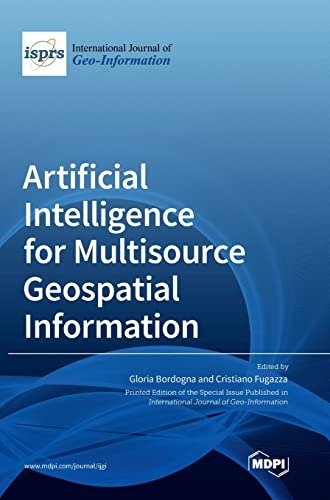
Artificial intelligence for multisource geospatial information
Collects 10 original research contributions published in the Special Issue entitled “Artificial Intelligence for Multisource Geospatial Information” of the ISPRS International Journal of Geo-Information. The focus is on different methods of Geospatial Artificial Intelligence (GeoAI) based on deep learning using different network architectures, clustering, soft computing, and semantic approaches. They are proposed to deal with a variety of Geospatial Big Data (GBD), such as georeferenced texts and photos in social networks, remote sensing images, cartographic maps, multidimensional geo databases, metadata in spatial data infrastructures, and for different tasks, such as for multisource georeferenced text integration and geodata flexible querying, for social sensing by applying sentiment analysis, clustering and geo analysis, for segmentation of roads, clouds and snow, and for detection of small targets and people on the streets.

Artificial intelligence for customer relationship management : Solving customer problems
This book describes a number of applications of Artificial Intelligence in the field of Customer Relationship Management with the focus of solving customer problems. We design a system that tries to understand the customer complaint, his mood, and what can be done to resolve an issue with the product or service. To solve a customer problem efficiently, we maintain a dialogue with the customer so that the problem can be clarified and multiple ways to fix it can be sought. We introduce dialogue management based on discourse analysis: a systematic linguistic way to handle the thought process of the author of the content to be delivered. We analyze user sentiments and personal traits to tailor dialogue management to individual customers. We also design a number of dialogue scenarios for CRM with replies following certain patterns and propose virtual and social dialogues for various modalities of communication with a customer.
Artificial Intelligence for Cloud and Edge Computing
Discusses the future possibilities of AI with cloud computing and edge computing. Aims to conduct analyses, implementation and discussion of many tools (of artificial intelligence, machine learning and deep learning and cloud computing, fog computing, and edge computing including concepts of cyber security) for understanding integration of these technologies. Readers can quickly get an overview of these emerging topics and get many ideas of the future of AI with cloud, edge, and in many other areas. Topics include machine and deep learning techniques for Internet of Things based cloud systems; security, privacy and trust issues in AI based cloud and IoT based cloud systems; AI for smart data storage in cloud-based IoT; blockchain based solutions for AI based cloud and IoT based cloud systems.This book is relevent to researchers, academics, students, and professionals. Presents fusion of cloud computing services and AI technology for bringing a significant change in the technology industry; Includes self-assessment problems for increasing knowledge of real world problems, i.e., how AI and cloud/edge computing can change business for the better; Provides innovative results of integrations of AI in other applications such as healthcare, finance, manufacturing, transportation, agriculture, etc.
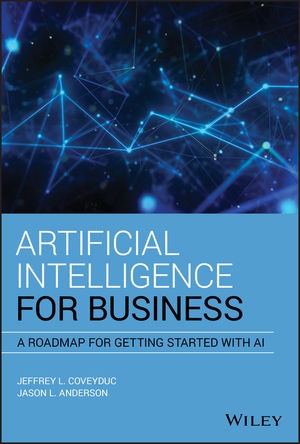
Artificial intelligence for business : A roadmap for getting started with AI
Artificial Intelligence for Business: A Roadmap for Getting Started with AI will provide the reader with an easy to understand roadmap for how to take an organization through the adoption of AI technology. It will first help with the identification of which business problems and opportunities are right for AI and how to prioritize them to maximize the likelihood of success. Specific methodologies are introduced to help with finding critical training data within an organization and how to fill data gaps if they exist.

Artificial intelligence and neural networks ; 14th Turkish Symposium, TAINN 2005, Izmir, Turkey, June 16-17, 2005, Revised Selected Papers
The Turkish Artificial Intelligence and Neural Network Symposium (TAINN) is an annual meeting where scientists present their new ideas and algorithms on artificial intelligence and neural networks with either oral or poster presentation. The TAINN- Turkish Conference on AI and NN Series started in 1992 at Bilkent University in Ankara, envisioned by various researchers in AI and NN then at the Bilkent, Middle East Technical, Bo aziçi and Ege universities as a forum for local researchers to get together and communicate. Since then, TAINN has been held annually around early summer. This year the 14th TAINN conference was organized by the EE and CE departments of the zmir Institute of Technology with an emphasis on international contributions.
Artificial Intelligence and Cybersecurity : Advances and Innovations
Provides advanced system implementation for Smart Cities using artificial intelligence. It addresses the complete functional framework workflow and explores basic and high-level concepts. The book is based on the latest technologies covering major challenges, issues and advances, and discusses intelligent data management and automated systems.

Artery guidebook : Artery - transforming riversides for the future
"Artery" is an initiative on a European scale, funded by the INTERREG IIIB NWE programme, which puts riverside restoration and regeneration at the heart of regional strategies, helping communities across Europe ‘turn back to face the water’. In this book the implemented strategies will be discussed, including public-private-partnership, public participation, awareness programs and regional development strategies. The book functions as a guide to facilitate similar future projects in other regions. The valuable experience and methods of trans-national cooperation should be made available to other developers, regional planners, project managers and politicians.

Argumentative Indicators in Discourse : A Pragma-Dialectical Study
Argumentative Indicators: A Pragma-Dialectical Study identifies and analyses English words and expressions that are crucial for an adequate reconstruction of argumentative discourse. It provides the analyst of argumentative discussions and texts with a systematic set of instruments for giving a well-founded analysis which results in an analytic overview of the elements that are relevant for the evaluation of the argumentation. In the book a systematic connection is made between linguistic insights into the characteristics of argumentative discourse and insights from argumentation theory into the resolution of differences of opinion by means of argumentation.
