



Page 94
Page 94

A new deal for an effective European research policy : The design and impacts of the 7th Framework programme
It underlines an important truth: that science has always advanced most rapidly when it is a collective endeavour, with a strong circulation of knowledge.This book will show how the new Framework Programme was put together and explain why it took the shape it did. It will also set out its potential impacts and the conditions necessary for it to be a success.
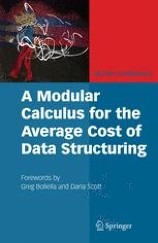
A Modular Calculus for the Average Cost of Data Structuring
This volume, with forewords by Greg Bollella and Dana Scott, presents novel programs based on the new advances in this area, including the first randomness-preserving version of Heapsort. Programs are provided, along with derivations of their average-case time, to illustrate the radically different approach to average-case timing. The automated static timing tool applies the Modular Calculus to extract the average-case running time of programs directly from their MOQA code.
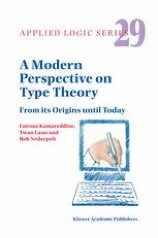
A Modern Perspective on Type Theory : From its Origins until Today
The first part of the book is historical, yet at the same time, places historical systems (like Russell's RTT) in the modern setting. The second part deals with modern type theory as it developed since the 1940s, and with the role of propositions as types (or proofs as terms), but at the same time, places another historical system (the proof checker Automath) in the modern setting. The third part uses this bridging in the first two parts between historical and modern systems to propose new systems that bring more advantages together. This book has much to offer to mathematicians, logicians and to computer scientists in general. It will have considerable influence for many years to come.' - Henk Barendregt
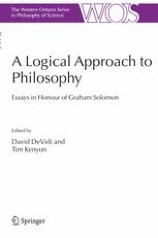
A Logical Approach to Philosophy : Essays in Honour of Graham Solomon
The papers in this collection are united by an approach to philosophy. They illustrate the manifold contributions that logic makes to philosophical progress, both by the application of formal methods to traditional philosophical problems and by opening up new avenues of inquiry as philosophers sort out the implications of new and often surprising technical results. Contributions include new technical results rich with philosophical significance for contemporary metaphysics, attempts to diagnose the philosophical significance of some recent technical results, philosophically motivated proposals for new approaches to negation, investigations in the history and philosophy of logic, and contributions to epistemology and philosophy of science that make essential use of logical techniques and results.
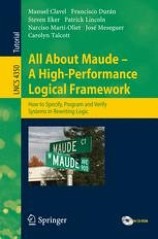
A High-Performance Logical Framework -- All About Maude : How to Specify, Program, and Verify Systems in Rewriting Logic
This book gives a comprehensive account of Maude, a language and system based on rewriting logic. Many examples are used throughout the book to illustrate the main ideas and features of Maude, and its many possible uses. Maude modules are rewrite theories. Computation with such modules is - cient deduction by rewriting. Because of its logical basis and its initial model semantics,aMaude module defines a precise mathematical model.This means that Maude and its formal tool environment can be used in three, mutually reinforcing ways: • as a declarative programming language; • as an executable formal specification language; and • as a formal verification system. Maude’s rewriting logic is simple, yet very expressive. This gives Maude good representational capabilities as a semantic framework to formally represent a wide range of systems, including models of concurrency, distributed al- rithms, network protocols, semantics of programming languages, and models of cell biology. Rewriting logic is also an expressive universal logic,making Maude a fiexible logical framework in which many difierent logics and - ference systems can be represented and mechanized. This makes Maude a useful metatool to build many other tools, including those in its own formal tool environment. Thanks to the logic’s simplicity and the use of advanced semi-compilation techniques, Maude has a high-performance implementation, making it competitive with other declarative programming languages.
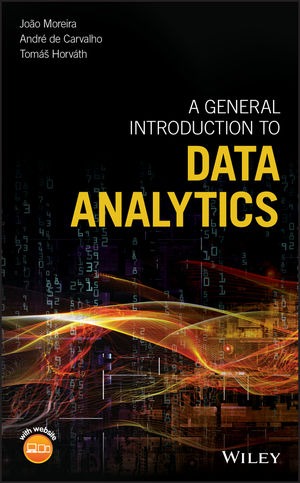
A General introduction to data analytics
A guide to the principles and methods of data analysis that does not require knowledge of statistics or programming. A guide to the reasoning behind data mining techniques. A unique illustrative example that extends throughout all the chapters. Exercises at the end of each chapter and larger projects at the end of each of the text’s two main parts
A First Course in Statistical Inference
Offers a modern and accessible introduction to Statistical Inference, the science of inferring key information from data. Aimed at beginning undergraduate students in mathematics, it presents the concepts underpinning frequentist statistical theory. Written in a conversational and informal style, this concise text concentrates on ideas and concepts, with key theorems stated and proved. Detailed worked examples are included and each chapter ends with a set of exercises, with full solutions given at the back of the book. Examples using R are provided throughout the book, with a brief guide to the software included. Topics covered in the book include: sampling distributions, properties of estimators, confidence intervals, hypothesis testing, ANOVA, and fitting a straight line to paired data.

A Fair Share of Tax : A Fiscal Anthropology of Contemporary Sweden
Takes a taxpayer's perspective to the relations taxation creates between people and their state. Larsen proposes that in order to understand tax compliance and cheating, we have to look beyond law, psychological experiments and surveys to include tax collectors and taxpayers' practices. The text explores the view of taxes seen as citizen’s explicit economic relation to the state and implicit economic relation to all other compatriots. Larsen suggests how to build and increase tax compliance if we take the idea of taxation creating reciprocal relations seriously.

A Course in Derivative Securities : Introduction to Theory and Computation
Aims at a middle ground between the introductory books on derivative securities and those that provide advanced mathematical treatments. It is written for mathematically capable students who have not necessarily had prior exposure to probability theory, stochastic calculus, or computer programming. It provides derivations of pricing and hedging formulas (using the probabilistic change of numeraire technique) for standard options, exchange options, options on forwards and futures, quanto options, exotic options, caps, floors and swaptions, as well as VBA code implementing the formulas. It also contains an introduction to Monte Carlo, binomial models, and finite-difference methods.
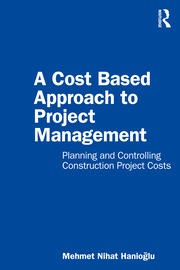
A cost based approach to project management : Planning and controlling construction project costs
Illustrates the principles of project management and the essentials of cost planning and control with easy-to-understand examples from the construction industry. Includes step-by-step details of project planning, cost estimating, and management processes. Offers clear, cost-based methods for defining scope, preparing bids, and planning for contingencies, as well as monitoring progress and determining when to take remedial action. Contains a user-friendly guide to project management acronyms and terminology. Provides sample construction schedules, budgets, and progress report forms
A Concise Introduction to Software Engineering
This text focuses on the essential elements, providing readers with the basic skills and introductory knowledge required to execute a software project successfully.

A Concise Introduction to Mathematical Logic
This book is unique in that it is more concise than most others; the material is treated in a streamlined fashion. This allows the lecturer to select the material for a one-semester course on a topic more easily. These initial chapters cover just the material for an introductory course on mathematical logic combined with the necessary material from set theory. Chapter 3 is partly of a descriptive nature, providing a view towards decision problems, automated theorem proving, non-standard models and related subjects. The other chapters contain material on logic programming for computer scientists, model theory, recursion theory, Gödel's Incompleteness Theorems, and applications of mathematical logic. Philosophical and foundational problems of mathematics are discussed where appropriate.
A Concise Introduction to Languages and Machines
This easy-to-follow text provides an accessible introduction to the key topics of formal languages and abstract machines within Computer Science.

A Computer Scientists Guide to Cell Biology
Provides a succinct treatment of the general concepts of cell biology, furnishing the computer scientist with the tools necessary to read and understand current literature in the field.After a brief introduction to cell biology, the text focuses on the principles behind the most-widely used experimental procedures and mechanisms, relating them to well-understood concepts in computer science. The presentation of the material has been prepared for the reader’s quick grasp of the topic: comments on nomenclature and background notes can be ascertained at a glance, and essential vocabulary is boldfaced throughout the text for easy identification.
A Brief History of Computing
This text provides a comprehensive introduction to the key topics in the history of computing, in an easy-to-follow and concise manner. It covers the significant areas and events in the field.
3D-groundwater modeling with PMWIN : A simulation system for modeling groundwater flow and transport processes
Along with a companion full-version software (PMWIN), this text offers an integrated simulation system. PMWIN comes with a professional graphical user-interface, supported models and programs and several other useful modeling tools. The graphical user-interface allows one to create and simulate models.
3-D Structural Geology : A Practical Guide to Quantitative Surface and Subsurface Map Interpretation
This book provides an overview of techniques for constructing structural interpretations in 2-D, 2½-D and 3-D environments; for interpolating - tween and extrapolating beyond the control points; and for validating the final int- pretation. The underlying philosophy is that structures are three-dimensional solid bodies and that data from throughout the structure, whether in 2-D or 3-D format, should be integrated into an internally consistent 3-D interpretation. It is assumed that most users of this book will do their work on a computer. C- sequently, the book provides quantitative structural methods and techniques that are designed for use with spreadsheets, mapping software, and three-dimensional c- puter-graphics programs. The book is also intended to provide the background for understanding what interpretive software, for example, a computer contouring p- gram, does automatically. Most techniques are presented in both a traditional format appropriate for paper, pencil, and a pocket calculator, and in quantitative format for use with spreadsheets and computer-graphics or computer-aided-design programs.

3D Segmentation for medical images (OsteoVision) = التقطيع ثلاثي الأبعاد للصور الطبية
With the increasing integration of AI across various sectors, artificial intelligence (AI) is already playing a significant role in the healthcare industry, and its use is expected to grow further. AI systems used in image processing and computer vision algorithms have shown a significant ability to perform many operations such as segmentation, classification, and detection. This project presents the application of computer vision algorithms in the field of medical imaging for diagnostic, therapeutic, and interventional purposes. This thesis explores the use of several computer vision algorithms to address different pathologies, specifically brain tumors (glioma) (see Appendix A) and knee osteoarthritis (OA), as well as tracking the progression of knee osteoarthritis using the Kellgren and Lawrence (KL) grading system, a common method for classifying the severity of OA into five grades. To achieve the desired impact, the project employs various techniques, including 3D segmentation for brain tumors, 2D segmentation for knee joints, and multinomial classification for determining the severity of knee OA injuries. The primary aims of the project are to enhance diagnostic accuracy, assist in creating treatment plans, provide an assistive tool for healthcare providers to make more informed decisions, leverage AI's capabilities to detect abnormalities that might escape the human eye, and streamline workflow. To facilitate these goals, the project incorporates a user-friendly UI, a website, and a Flutter-based mobile application, enabling healthcare providers to efficiently integrate these tools into their practice and improve patient care.
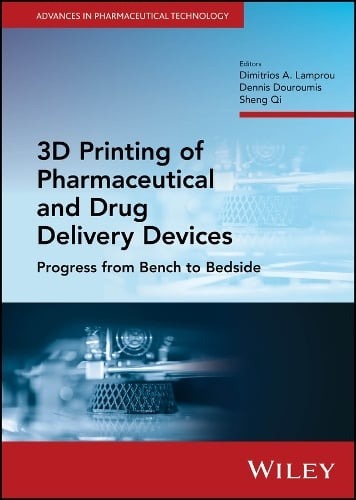
3D printing of pharmaceutical and drug delivery devices progress from bench to bedside
Discover the latest, fast-developing technology to help move towards more cost-effective, small-batch, decentralized manufacturing of personalized systems . 3D printing has revolutionized manufacturing. Its precision and flexibility have enabled the large-scale production of materials and devices too complex for conventional industrial manufacturing. This has been particularly revolutionary in the field of pharmaceutical production, where 3D printing is being integrated into the manufacture of both drugs and drug delivery devices. It has never been more important for industry professionals to understand this form of production.
3D Mesh processing and character animation : with examples using OpenGL, OpenMesh and Assimp
Focusses specifically on topics that are important in three-dimensional modelling, surface design and real-time character animation. It provides an in-depth coverage of data structures and popular methods used in geometry processing, keyframe and inverse kinematics animations and shader based processing of mesh objects. It also introduces two powerful and versatile libraries, OpenMesh and Assimp, and demonstrates their usefulness through implementations of a wide range of algorithms in mesh processing and character animation respectively. This Textbook is written for students at an advanced undergraduate or postgraduate level who are interested in the study and development of graphics algorithms for three-dimensional mesh modeling and analysis, and animations of rigged character models.
