



Page 9
Page 9

Fundamentals of switching theory and logic design : A hands on approach
Switching theory and logic design provide mathematical foundations and tools for digital system design that is an essential part in the research and development in almost all areas of modern technology. The vast complexity of modern digital systems implies that they can only be handled by computer aided design tools that are built on sophisticated mathematical models. Fundamentals of Switching Theory and Logic Design is aimed at providing an accessible introduction to these mathematical techniques that underlie the design tools and that are necessary for understanding their capabilities and limitations.

Fundamentals of Integrated Design for Sustainable Building
Introduces the technologies and processes of sustainable design and shows how to incorporate sustainable concepts at every design stage. This comprehensive primer takes an active learning approach that keeps students engaged. Includes: Expansive knowledge—from history and philosophy to technology and practice Fully updated international codes, like the CAL code, and current legislations Up-to-date global practices, such as the tools used for Life-Cycle Assessment Thorough coverage of critical issues such as climate change, resiliency, health, and net zero energy building Extensive design problems, research exercise, study questions, team projects, and discussion questions that get students truly involved with the material

Fundamentals of electric circuits ; 7th ed.
Presenting circuit analysis in a manner that is easier to understand, this title offers a balance of theory, worked and extended examples, practice problems, and real-world applications, combined with over 468 new or changed homework problems. It also includes over 100 "Design a Problem" exercises integrated into problem sets.

Fundamentals of Architectural Lighting
Light is an inseparable part of architectural design, and is intended to provide students of architecture and interior design with a graphic guideline to the fundamental role lighting plays in this process. While simple light sources may be enough to satisfy practical needs, the design process must expand beyond basic illumination. The challenge for architects and designers is the creation of luminous environments offering visual interest and a sense of well-being, while also meeting basic seeing needs. Technological advances provide opportunities for the lighting designer's creative introduction of light, and the visual and psychological perceptions of the illuminated architectural environment. Fundamentals of Architectural Lighting offers a complete comprehensive guide to the basics of lighting design, equipping students and practitioners with the tools and ideas they need to master a variety of lighting techniques. The book is extensively illustrated with over 250 illustrations to demonstrate basic principles and procedures. It is an excellent resource for anyone interested in the fundamentals of integrated lighting for architectural interior spaces

Fundamentals of analytical toxicology : Clinical and forensic ; 2nd ed.
An integrated introduction to the analysis of drugs, poisons, and other foreign compounds in biological and related specimens. Assuming only basic knowledge of analytical chemistry, this invaluable guide helps trainee analytical toxicologists understand the principles and practical skills involved in detecting, identifying, and measuring a broad range of compounds in various biological samples. Clear, easy-to-read chapters provide detailed information on topics including sample collection and preparation, spectrophotometric and luminescence techniques, liquid and gas-liquid chromatography, and mass spectrometry including hyphenated techniques. Focuses on analytical, statistical, and pharmacokinetic principles / Describes basic methodology, including colour tests and immunoassay and enzyme-based assays / Outlines laboratory operations, such as method validation, quality assessment, staff training, and laboratory accreditation / Follows IUPAC nomenclature for chemical names and recommended International Non-proprietary Name (rINN) for drugs and pesticides / Includes discussion of 'designer drugs' (novel pharmaceutical substances NPS)

Fundamentals of nanoscale film analysis
The book describes the fundamentals of materials characterization from the standpoint of the incident photons or particles which interrogate nanoscale structures. These induced reactions lead to the emission of a variety of detected of particles and photons. It is the energy and intensity of the detected beams that is the basis of the characterization of the materials. The array of experimental techniques used in nanoscale materials analysis covers a wide range of incident particle and detected beam interactions.
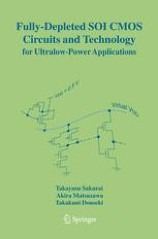
Fully-Depleted SOI CMOS Circuits and Technology for Ultralow-Power Applications
Fully-depleted SOI CMOS Circuits and Technology for Ultralow-Power Applications addresses the problem of reducing the supply voltage of conventional circuits for ultralow-power operation and explains power-efficient MTCMOS circuit design for FD-SOI devices at a supply voltage of 0.5 V. The topics include the minimum required knowledge of the fabrication of SOI substrates; FD-SOI devices and the latest developments in device and process technologies; and ultralow-voltage circuits, such as digital circuits, analog/RF circuits, and DC-DC converters. Each ultra-low-power technique related to devices and circuits is fully explained using figures to help understanding.

Fuel Cells : From Fundamentals to Applications
Fuel Cells: Fundamentals to Applications is a concise source of the basic electrochemical principles and engineering aspects involved in the development and commercialization of fuel cells. It describes the applications and techno-economic assessment of fuel cell technologies along with an in-depth discussion of conventional and novel approaches pursued for generating energy. This book is divided into four parts. Parts I and II explain basic and applied electrochemistry relevant to an understanding of fuel cells. Part III covers engineering and technology aspects and Part IV, applications and economics. The first part covers, in detail, the electrode kinetics and electrocatalysis of charge-transfer reactions, and leading electrochemical technologies with focus on relevance to fuel cells. The second part addresses the governing principles of fuel cells, electrocatalysis of fuel cell reactions and experimental techniques pertinent to fuel cell research and development. The third part is devoted to modeling of fuel cell systems and a thorough discussion of fuels, fuel processing and fuel storage, transmission, and distribution. The final part deals with the status of the fuel cell technologies, their applications and economics.

Frontiers of multifunctional integrated nanosystems ; Proceedings of the NATO ARW on Frontiers of molecular-scale science and technology of nanocarbon, nanosilicon and biopolymer integrated nanosystems,Ilmenau, Germany from 12 to 16 July 2003
Presents exciting new developments of the early 21st century. Significant progress has been made in nanotechnology of building blocks for integrated nanosystems, single and assembled molecules, nanoparticles characterisation, and multifunctional applications of nanosystems. The realisation and the application of novel multifunctional nanosystems in electronics, optics, biomedicine (nano-bioelectronic devices based on DNA and proteins, silicon nanocrystal memory devices, monolithically integrated silicon photonics, nanocapsules, biosensor nanosystems) are described by well known experts. This multi-disciplinary, scientific display of cutting-edge research across the entire spectrum of nanoscience and nanotechnology of inorganic, and organic systems, as well as systems for electronics photonics, and spintronics demonstrates that researching nanocarbon, nanosilicon, biomolecular integrated nanosystems, and developing their new applications, is a complex and exiting topic that will continue to attract scientists and engineers for many years to come.

Frontiers in Planar Lightwave Circuit Technology : Design, Simulation, and Fabrication
This book is the result of the NATO Advanced Research Workshop on Frontiers in Planar Lightwave Circuit Technology, which took place in Ottawa, Canada from September 21-25, 2004. In this volume the reader will find detailed overviews of experimental and theoretical work in high index contrast waveguide systems, micro-optical resonators, nonlinear optics, and advanced optical simulation methods, as well as articles describing emerging applications of integrated optics for medical and biological applications.

Frontiers in Hardware Security and Trust : Theory, design and practice
The footprint and power constraints imposed on internet-of-things end-points, smart sensors, mobile and ad hoc network devices make traditional and software based cryptographic solutions that require a general-purpose processor increasingly unfeasible. The fact that security is not the primary functionality of these devices means that only a small portion of their limited processing power and storage is available for security, driving the need for alternative security solutions. Hardware security - including hardware obfuscation, hardware security primitives, side-channel attacks and so on - is therefore becoming an increasingly active research area in both academia and industry.

From integrated publication and information systems to information and knowledge environments : Essays dedicated to Erich J. Neuhold on the Occasion of His 65th Birthday
This book constitutes a commemorative volume devoted to Erich J. Neuhold on the occasion of his 65th birthday. The 32 invited reviewed papers presented are written by students and colleagues of Erich Neuhold throughout all periods of his scientific career. The papers are organized in the following topical sections: Database management enabling information systems Semantic Web drivers for advanced information management Securing dynamic media content integration From digital libraries to intelligent knowledge environments Visualization – key to external cognition in virtual information environments From human-computer interaction to human-artefact interaction Domains for virtual information and knowledge environments.

FPGA Implementations of Neural Networks
During the 1980s and early 1990s there was signi?cant work in the design and implementation of hardware neurocomputers. Nevertheless, most of these efforts may be judged to have been unsuccessful: at no time have have ha- ware neurocomputers been in wide use. This lack of success may be largely attributed to the fact that earlier work was almost entirely aimed at developing custom neurocomputers, based on ASIC technology, but for such niche - eas this technology was never suf?ciently developed or competitive enough to justify large-scale adoption. On the other hand, gate-arrays of the period m- tioned were never large enough nor fast enough for serious arti?cial-neur- network (ANN) applications.

Foundations of 3D Graphics Programming : Using JOGL and Java3D ; 2nd ed.
This thoroughly updated and enhanced second edition of Foundations of 3D Graphics Programming is an innovative shortcut to graphics theory and programming using JOGL, a new vehicle of 3D graphics programming in Java. This revised edition of the successful, reader-friendly text covers all graphics basics and several advanced topics, as well as some basic concepts in Java programming for those who currently are C/C++ programmers. Specifically, it provides all the core aspects of OpenGL programming in Java using JOGL, along with concisely presented computer graphics theories. In addition, it uses a top-down approach to lead the reader into programming and applications up-front. The content about theory provides a high-level understanding of all basic graphics, and of using JOGL instead of implementing a graphics system. Explanations are integrated with the sample programs, which are specifically designed for learning and accompanying this book.

Formulation of Appropriate Laws : A New Integrated Multidisciplinary Approach and an Application to Electronic Funds Transfer Regulation
This book presents such an approach using the Electronic Funds Transfer (EFT) regulation in Australia as its vehicle of analysis. The two-pronged approach offered in this book can be applied to formulate efficient laws that maximise the social welfare of the country, irrespective of social, political and economic organisations of the country under study. As such, this book makes several distinct contributions to the literature in law as it: . develops a new integrated multi-disciplinary approach using quantitative methods to formulate appropriate laws; . applies recent developments in welfare economics.
Formal Methods for Open Object-Based Distributed Systems ; Vol. 3535 ; 7th IFIP WG 6.1 International Conference, FMOODS 2005, Athens, Greece, June 15-17, 2005, Proceedings
This volume contains the proceedings of FMOODS2005, the 7th IFIPWG6. 1 International Conference on Formal Methods for Open Object-Based Distributed Systems. The conference was held in Athens, Greece on June 15-17, 2005. The eventwasthe seventh meeting ofthis conference series, whichis held roughly every year and a half, with the earlier events held respectively in Paris, Canterbury, Florence, Stanford, Twente, and Paris. The goal of the FMOOD Sseries of conferences is to bring together researchers whose work encompasses three important and related fields: - formal methods; - distributed systems; - object-based technology. Sucha convergenceis representative of recent advances in the field of distributed systems, and provides links between several scientific and technological communities, as represented by the conferences FORTE, CONCUR, and ECOOP. The objective of FMOODS is to provide an integrated forum for the pres- tation of research in the above-mentioned fields, and the exchange of ideas and experiences in the topics concerned with the formal methods support for open object-based distributed systems.

Food lens = فود لينس
Food lens is an innovative application designed to revolutionize dietary management by leveraging advanced image recognition and nutritional analysis. The primary objective of this senior project is to develop a user-friendly tool that identifies various foods through a camera interface and provides detailed nutritional information. This application not only enhances the user's understanding of their dietary intake but also assists in achieving personalized health and fitness goals. The core functionality of Food Lens involves the integration of a robust image recognition system capable of accurately identifying a wide range of foods. Upon identification, the application retrieves comprehensive nutritional data, including calorie content, macronutrient distribution (proteins, fats, carbohydrates), and essential micronutrients (vitamins and minerals). This data is then seamlessly integrated into the user's dietary profile. Food Lens is designed to track the user's daily caloric intake and compare it against personalized recommendations based on age, gender, weight, height, and activity level. By maintaining a dynamic record of consumed foods, the application provides real-time feedback on the user’s nutritional progress. This feature is particularly beneficial for individuals aiming to manage weight, address dietary restrictions, or improve overall health.

Food Engineering : Integrated Approaches
Food Engineering: Integrated Approaches presents an up-to-date review of important food engineering concepts, issues and recent advances in the field. Distinguished food engineers and food scientists from key institutions worldwide have contributed chapters that provide a deep analysis of their particular subjects. At the same time, each topic is framed within the context of a broader more integrated approach, demonstrating its relationship and interconnectedness to other areas. The premise of this work, therefore, is to offer both a comprehensive understanding of food engineering as a whole and a thorough knowledge of individual subjects. This approach appropriately conveys the basic fundamentals, state-of-the-art technology, and applications of the involved disciplines.
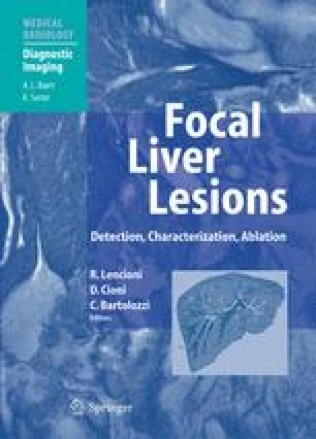
Focal liver lesions : Detection, characterization, ablation
Few fields of medicine have witnessed such impressive progress as the diagnosis and treatment of liver tumors. Advances in imaging technology, the development of novel contrast agents, and the introduction of optimized scanning protocols have greatly facilitated the non-invasive detection and characterization of focal liver lesions. Furthermore, image-guided techniques for percutaneous tumor ablation have become an accepted alternative treatment for patients with inoperable liver cancer. This book provides a comprehensive and up-to-date overview of the role of diagnostic and interventional radiology in respect of liver tumors. The volume moves from background sections on methodology and segmental liver anatomy to the main sections on the diagnosis of benign and malignant liver lesions. An integrated approach, focused on the correlation of ultrasound, CT, and MR imaging findings, is presented. Finally, a full section describes the principles, methods, and results of percutaneous tumor ablation techniques.
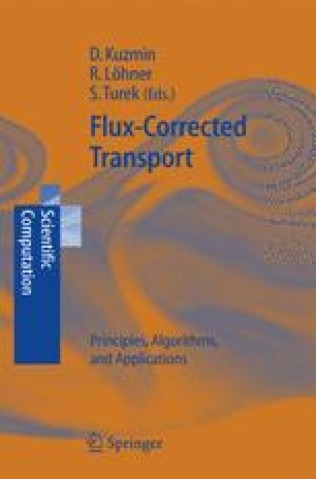
Flux-corrected transport : Principles, algorithms, and applications
Addressing students and researchers as well as CFD practitioners, this book describes the state of the art in the development of high-resolution schemes based on the Flux-Corrected Transport (FCT) paradigm. Intended for readers who have a solid background in Computational Fluid Dynamics, the book begins with historical notes by J.P. Boris and D.L. Book. Review articles that follow describe recent advances in the design of FCT algorithms as well as various algorithmic aspects. The topics addressed in the book and its main highlights include: the derivation and analysis of classical FCT schemes with special emphasis on the underlying physical and mathematical constraints; flux limiting for hyperbolic systems; generalization of FCT to implicit time-stepping and finite element discretizations on unstructured meshes and its role as a subgrid scale model for Monotonically Integrated Large Eddy Simulation (MILES) of turbulent flows. The proposed enhancements of the FCT methodology also comprise the prelimiting and 'failsafe' adjustment of antidiffusive fluxes, the use of characteristic variables, and iterative flux correction. The cause and cure of detrimental clipping/terracing effects are discussed. Many numerical examples are presented for academic test problems and large-scale applications alike.
