



Page 81
Page 81

Introduction to Physics and Chemistry of Combustion : Explosion, Flame, Detonation
Most of the material covered in this book deals with the fundamentals of chemistry and physics of key processes and fundamental mechanisms for various combustion and combustion-related phenomena in gaseous combustible mixture. It provides the reader with basic knowledge of burning processes and mechanisms of reaction wave propagation

Introduction to PHP for Scientists and Engineers : Beyond JavaScript
This text presents key information needed to write your own online science and engineering applications, including reading, creating and manipulating data files stored as text on a server, thereby overcoming the limitations of a client-side language.

Introduction to Permanent Plug and Abandonment of Wells
This book offers a timely guide to challenges and current practices to permanently plug and abandon hydrocarbon wells. With a focus on offshore North Sea, it analyzes the process of plug and abandonment of hydrocarbon wells through the establishment of permanent well barriers.

Introduction to Partial Differential Equations: A Computational Approach
Mathematics is playing an ever more important role in the physical and biological sciences, provoking a blurring of boundaries between scientific disciplines and a resurgence of interest in the modern as well as the cl- sical techniques of applied mathematics. This renewal of interest, both in research and teaching, has led to the establishment of the series: Texts in Applied Mathematics (TAM). The development of new courses is a natural consequence of a high level of excitement on the research frontier as newer techniques, such as numerical and symbolic computer systems, dynamical systems, and chaos mix with and reinforce the traditional methods of applied mathematics. Thus, the purpose of this textbook series is to meet the current and future needs of these advances and encourage the teaching of new courses.

Introduction to Optics
Since the discovery of the laser in 1960 and optical fibers in 1970, optics has undergone dramatic changes that accentuate its multi-disciplinary character. This text covers essential concepts and reports the key developments and progress in current knowledge in the field. Inspired by the style of Richard Feynman, the method of presentation emphasizes "telling" optics, rather than deducing it from fundamental laws, as well as tactfully using mathematical tools so as not to obscure the physical phenomena of interest. For its excellent teaching approach, the book received the Arnulf-Francon Award of the French Optical Society. The concepts are formulated in a way such that the necessary mathematical tools do not hinder comprehension of the phenomena. Global in vision, the book can also be used as a reference. In addition to the traditional aspects of optics, it includes the tools and methods currently used by researchers and engineers, as well as explanation and implications of the most recent developments.

Introduction to Operating System Design and Implementation : The OSP 2 Approach
This book exposes students to many essential features of operating systems while at the same time isolating them from low-level, machine-dependent concerns. With its accompanying software, the book contains enough projects for up to three semesters.
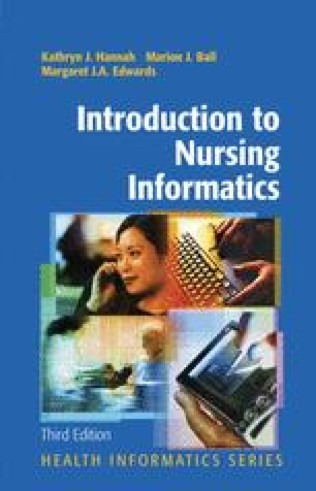
Introduction to Nursing Informatics
In the series, eminent experts, as editors or authors, offer their accounts of innovations in health informatics. Increasingly, these accounts go beyond hardware and software toaddresstheroleofinformationinin?uencingthetransformationofheal- caredeliverysystemsaroundtheworld.Theseriesalsowillincreasinglyfocus on “peopleware” and the organizational, behavioral, and societal changes that accompany the diffusion of information technology in health services environments.

Introduction to Numerical Methods in Differential Equations
This is a textbook for upper division undergraduates and beginning graduate students. Its objective is that students learn to derive, test and analyze numerical methods for solving differential equations, and this includes both ordinary and partial differential equations. In this sense the book is constructive rather than theoretical, with the intention that the students learn to solve differential equations numerically and understand the mathematical and computational issues that arise when this is done. An essential component of this is the exercises, which develop both the analytical and computational aspects of the material. The importance of the subject of the book is that most laws of physics involve differential equations, as do the modern theories on financial assets.

Introduction to Modern Time Series Analysis
This excellent textbook presents an introduction to the time series analysis. It provides a good source of information for graduate and master students in economics and statistics. It is a well-written and easy to read book, illustrated by 56 good examples. Also, many important references are listed at the end of each chapter.This book presents to beginners a readable and easily accessible introduction to modern developments in time series econometrics and financial time series with an emphasis on basic concepts and practical applications. The book is a textbook consisting of seven chapters the greatest merit of this textbook is that it enables readers to grasp the basic framework of time-series econometrics without relying on extensive reading

Introduction to Modern Number Theory: Fundamental Problems, Ideas and Theories
"Introduction to Modern Number Theory" surveys from a unified point of view both the modern state and the trends of continuing development of various branches of number theory. Motivated by elementary problems, the central ideas of modern theories are exposed. Some topics covered include non-Abelian generalizations of class field theory, recursive computability and Diophantine equations, zeta- and L-functions. This substantially revised and expanded new edition contains several new sections, such as Wiles' proof of Fermat's Last Theorem, and relevant techniques coming from a synthesis of various theories. Moreover, the authors have added a part dedicated to arithmetical cohomology and noncommutative geometry, a report on point counts on varieties with many rational points, the recent polynomial time algorithm for primality testing, and some others subjects.

Introduction to Mathematical Systems Theory : Linear Systems, Identification and Control
This book provides an introduction to the theory of linear systems and control for students in business mathematics, econometrics, computer science, and engineering. The focus is on discrete time systems, which are the most relevant in business applications, as opposed to continuous time systems, requiring less mathematical preliminaries. The subjects treated are among the central topics of deterministic linear system theory: controllability, observability, realization theory, stability and stabilization by feedback, LQ-optimal control theory. Kalman filtering and LQC-control of stochastic systems are also discussed, as are modeling, time series analysis and model specification, along with model validation.

Introduction to Mathematical Methods in Bioinformatics
This book looks at the mathematical foundations of the models currently in use. This book is unique in the sense that it looks at the mathematical foundations of the models, which are crucial for correct interpretation of the outputs of the models.

Introduction to Logic and Theory of Knowledge : Lectures 1906/07
This course on logic and theory of knowledge fell exactly midway between the publication of the Logical Investigations in 1900-01 and Ideas I in 1913. It constitutes a summation and consolidation of Husserl’s logico-scientific, epistemological, and epistemo-phenomenological investigations of the preceding years and an important step in the journey from the descriptivo-psychological elucidation of pure logic in the Logical Investigations to the transcendental phenomenology of the absolute consciousness of the objective correlates constituting themselves in its acts in Ideas I. In this course Husserl began developing his transcendental phenomenology as the genuine realization of what had only been realized in fragmentary form in the Logical Investigations.

Introduction to Lie Algebras
This book provides an elementary introduction to Lie algebras. It starts with basic concepts. A section on low-dimensional Lie algebras provides readers with experience of some useful examples. This is followed by a discussion of solvable Lie algebras and a strategy towards a classification of finite-dimensional complex Lie algebras. The next chapters cover Engel's theorem, Lie's theorem and Cartan's criteria and introduce some representation theory. The root-space decomposition of a semisimple Lie algebra is discussed, and the classical Lie algebras studied in detail. The authors also classify root systems, and give an outline of Serre's construction of complex semisimple Lie algebras. An overview of further directions then concludes the book and shows the high degree to which Lie algebras influence present-day mathematics.The only prerequisite is some linear algebra and an appendix summarizes the main facts that are needed. The treatment is kept as simple as possible with no attempt at full generality.

Introduction to Ion Beam Biotechnology
It presents treatment of modern ion beam biotechnology and with respect to applications of ion beam bombardment of living cellular material in the hybrid field of ion beam physics and biology.Key Topics include: – Ion beam formation – Ion implantation fundamentals – Interaction between energetic ions and biological organisms – Reaction processes of ion implanted biological small molecules – Damage and repair of ion-bombarded DNA – Cell damage due to ion bombardment – Biological effects of ion implantation – Fundamentals of ion-bombardment-induced genetic variation – Ion beam mutation breeding of crops – Ion beam mutation breeding of microbes – Ion beam induced gene transfer – Ion beam induced synthesis of organic molecules – Single-ion bombardment mutation of cells
Introduction to Intelligent Construction Technology of Transportation Infrastructure
Expounds on the related technologies of intelligent transportation infrastructure construction. Based on the essential characteristics of intelligent construction, "perception, analysis, decision-making, and execution," the basic structure of intelligent construction technology (ICT) is established. With the integration of engineering construction technologies, the analyses of the essence of intelligent algorithms and the feasibility of Artificial Intelligence (AI) are provided. The book introduces the essential characteristics of Big Data and the Internet of Things and their relationship with engineering construction. On this basis, the feasibility and implementation plan of intelligent technology applications in design, construction, and maintenance are analyzed and demonstrated with engineering examples.
Introduction to Geometric Computing
The geometric ideas in computer science, mathematics, engineering, and physics have considerable overlap and students in each of these disciplines will eventually encounter geometric computing problems. The topic is traditionally taught in mathematics departments via geometry courses, and in computer science through computer graphics modules. This text isolates the fundamental topics affecting these disciplines and lies at the intersection of classical geometry and modern computing.

Introduction to Genetic Algorithms
This book is designed to provide an in-depth knowledge on the basic operational features and characteristics of Genetic Algorithms. The various operators and techniques given in the book are pertinent to carry out Genetic Algorithm Research Projects. The book also explores the different types are Genetic Algorithms available with their importance. Implementation of Genetic Algorithm concept has been performed using the universal language C/C++ and the discussion also extends to Genetic Algorithm MATLAB Toolbox. Few Genetic Algorithm problems are programmed using MATLAB and the simulated results are given for the ready reference of the reader. The applications of Genetic Algorithms in Machine learning, Mechanical Engineering, Electrical Engineering, Civil Engineering, Data Mining, Image Processing, and VLSI are dealt to make the readers understand where the concept can be applied.
Introduction to Fuzzy Logic using MATLAB
Fuzzy Logic, at present is a hot topic, among academicians as well various programmers. This book is provided to give a broad, in-depth overview of the field of Fuzzy Logic. The basic principles of Fuzzy Logic are discussed in detail with various solved examples. The different approaches and solutions to the problems given in the book are well balanced and pertinent to the Fuzzy Logic research projects. The applications of Fuzzy Logic are also dealt to make the readers understand the concept of Fuzzy Logic. The solutions to the problems are programmed using MATLAB 6.0 and the simulated results are given. The MATLAB Fuzzy Logic toolbox is provided for easy reference.

Introduction to food chemistry
Bridges this gap in the relevant literature, as it employs the latest pedagogical theories in textbook writing to present the subject to students with broad range of cognitive skills. This book presents specific learning objectives for each chapter and is self-contained so students will not need to search for essential information outside the textbook. This new edition has been expanded to include chapters on sweeteners, glass transition, amino acids, proteins for major food commodities and food additives. All of the original chapters have been updated and expanded to include new research and technologies.
