



Page 8
Page 8
Biological nitrogen fixation, sustainable agriculture and the environment ; Proceedings of the 14th International nitrogen fixation congress
Covers aspects of fundamental and applied nitrogen-fixation research, from biochemistry and chemistry through genetics, regulation and physiology to agricultural practice and environmental impact. This work describes progress on studies of potential catalysts for nitrogen fixation; how the N2-fixing process is regulated in living cells; and more.
Bioactive Marine Natural Products
Bioactive Marine Natural Products is the first book available that covers all aspects of bioactive marine natural products. It fills the void in the literature for bioactive marine natural products. The book covers various aspects of marine natural products and it is hoped that all the major classes of bioactive compounds are included. Different classes of marine organisms and the separation and isolation techniques are discussed. The chemistry and biology of marine toxins, peptides, alkaloids, nucleosides and prostanoids are discussed in detail. Biological, toxicological and clinical evaluations are also dealt with to ensure that the book may be adopted at any stage by any practicing organic chemist or biologist, working in academia or in R&D divisions of pharmaceutical companies. Each chapter in the book includes an abstract to highlight the major points discussed in the text and concluding remarks are given. References to books, monographs, review articles and original papers are provided at the end of each chapter.
Bioactive components of milk
Of all food products dairy foods have the most potential concerning functional foods. Therefore, there is a tremendous amount of interest in value-added milk products and the identification of components in food which have health benefits. Bioactive Components of Milk provides an overview of these derived components and their diverse activities including: the stimulation of beneficial microflora, alerting the immune system to the presence of potential pathogens and allergens, binding and eliminating toxins, etc. The book is divided into four parts. The first part focuses on bioactive milk lipid components, which very widely among mammalian species. The second part describes different aspects of biological active colostrums and milk proteins and their derivatives, with special concern on species specific effects. The third part reviews the production of recombinant human proteins in the milk of livestock animals - including ethical issues - and the aims of altering milk composition for the benefit of both the animals themselves and the consumers. The final part focuses on the influence of ruminants nutrition on the biological activity of milk.

Between Psychology and Philosophy : East-West Themes and Beyond
This book discusses a variety of important but unprecedented ways in which psychology can be useful to philosophy. The early chapters illustrate this theme via comparisons between Chinese and Western philosophy.
Barile's clinical toxicology : Principles and mechanisms ; 3rd ed.
Examines the complex interactions associated with clinical toxicological events as a result of therapeutic drug administration or chemical exposure. Special emphasis is placed on signs and symptoms of diseases and pathology caused by toxins and clinical drugs. Includes the source, pharmacological and toxicological mechanism of action, detection and identification in body fluids, and treatment of exposure. An overview of protocols for managing various toxic ingestions, and the antidotes and treatments associated with their pathology, are discussed. In addition, effect of toxins on a limited number of body systems and drug-induced adverse drug reactions are also covered
Bacterial virulence factors and Rho GTPases
The authors of this volume present the synthesis on how the various host cellular Rho GTPases activities are manipulated by bacteria to fulfill their virulence.
Associative and endophytic nitrogen-fixing bacteria and cyanobacterial associations
Associative and Endophytic Nitrogen-fixing Bacteria and Cyanobacterial Associations This book is part of the seven-volume series that was launched a few years ago with the ambitious objectives of reviewing the field of nitrogen fixation from its earliest beginnings through the millennium change and of consolidating the relevant information - from fundamental to agricultural and environmental aspects – all in one place. Volume 5 covers the biology of bacteria that associate with n- leguminous plants. The subject matter includes a wide range of associations; it covers the bacterial species that associate either with the surface or within the tissues of grasses (often referred as plant growth-promoting rhizobacteria) and also the symbiotic associations that cyanobacteria form with fungi, algae, and both lower and higher plants. This volume does not deal with the Frankia-actinorhizal plant associations, which is the topic of Volume 6
Arzneimittel, giftstoffe, kunststoffe, farbstoffe, pestizide = Pharmaceuticals, toxins, plastics, dyes, pesticides
Spells out which methods in which cases produce the most comprehensive results. Beschreibt alle modernen Spektroskopiemethoden in Theorie und Praxis. Behandelt die schnelle und effektive Identifikation von Giftstoffen. Enthält zahlreiche Absorptions- und Massenspektren aus der Zentralkartei der Bayer AG.
Artificial intelligence and security ; 6th International Conference, ICAIS 2020, Hohhot, China, July 17–20, 2020, Proceedings, Part III
The 3-volume set CCIS 1252 until CCIS 1254 constitutes the refereed proceedings of the 6th International Conference on Artificial Intelligence and Security, ICAIS 2020, which was held in Hohhot, China, in July 2020. The conference was formerly called “International Conference on Cloud Computing and Security” with the acronym ICCCS.
Artificial intelligence and security ; 6th International Conference, ICAIS 2020, Hohhot, China, July 17–20, 2020, Proceedings, Part II
This two-volume set LNCS 12239-12240 constitutes the refereed proceedings of the 6th International Conference on Artificial Intelligence and Security, ICAIS 2020, which was held in Hohhot, China, in July 2020. The conference was formerly called “International Conference on Cloud Computing and Security” with the acronym ICCCS. The total of 142 full papers presented in this two-volume proceedings was carefully reviewed and selected from 1064 submissions. The papers were organized in topical sections as follows: Part I: Artificial intelligence and internet of things. Part II: Internet of things, information security, big data and cloud computing, and information processing.
Artificial Intelligence and Security ; 6th International Conference, ICAIS 2020, Hohhot, China, July 17–20, 2020, Proceedings, Part II
The 3-volume set CCIS 1252 until CCIS 1254 constitutes the refereed proceedings of the 6th International Conference on Artificial Intelligence and Security, ICAIS 2020, which was held in Hohhot, China, in July 2020. The conference was formerly called “International Conference on Cloud Computing and Security” with the acronym ICCCS.
Artificial intelligence and security ; 6th International Conference, ICAIS 2020, Hohhot, China, July 17–20, 2020, Proceedings, Part I
This two-volume set LNCS 12239-12240 constitutes the refereed proceedings of the 6th International Conference on Artificial Intelligence and Security, ICAIS 2020, which was held in Hohhot, China, in July 2020. The conference was formerly called “International Conference on Cloud Computing and Security” with the acronym ICCCS. The total of 142 full papers presented in this two-volume proceedings was carefully reviewed and selected from 1064 submissions. The papers were organized in topical sections as follows: Part I: Artificial intelligence and internet of things. Part II: Internet of things, information security, big data and cloud computing, and information processing.
Artificial intelligence and security ; 6th International Conference, ICAIS 2020, Hohhot, China, July 17–20, 2020, Proceedings, Part I
The 3-volume set CCIS 1252 until CCIS 1254 constitutes the refereed proceedings of the 6th International Conference on Artificial Intelligence and Security, ICAIS 2020, which was held in Hohhot, China, in July 2020. The conference was formerly called “International Conference on Cloud Computing and Security” with the acronym ICCCS.
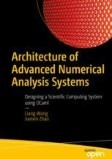
Architecture of advanced numerical analysis systems: designing a scientific computing system using ocaml
Applies the functional OCaml programming language to numerical or computational weighted data science, engineering, and scientific applications. This book is based on the authors' first-hand experience building and maintaining Owl, an OCaml-based numerical computing library. You'll first learn the various components in a modern numerical computation library. Then, you will learn how these components are designed and built up and how to optimize their performance. After reading and using this book, you'll have the knowledge required to design and build real-world complex systems that effectively leverage the advantages of the OCaml functional programming language.

Appraisal and repair of of building structures
This book is a practical guide to the detection and remedy of faults in claddings and fixings on buildings. It sets out the problems involved in common cladding systems for buildings, and relates these problems to all the materials used: stone, masonry, concrete and glass-reinforced composites.
Applications of Specification and Design Languages for SoCs : Selected papers from FDL 2005
This book provides detailed insights into recent works dealing with a large spectrum of issues in system-on-chip design, namely: assertion-based design, mapping on network-on-chip architectures, use of C/C++/SystemC design methodologies, hardware/software integration, mixing heterogeneous models of computation, analog/mixed-signal/mixed-technology system design and verification, UML/XML-based synthesis of analog and mixed-signal systems, UML to VHDL mapping, UML-based performance modeling, model transformation and formal verification, real-time system models, and Model Driven Architecture.
Antiviral drug discovery and development
Summarizes antiviral drug design and discovery approaches Provides the latest update in the field of antiviral therapeutics Includes antiviral research of coronaviruses

Antibody-drug conjugates and cellular metabolic dynamics
Summarizes the related research achievements in Antibody-drug conjugates (ADCs) and their cell metabolism kinetics. The book has three main parts. The first part describes the basic theory of ADCs, including the basic concept and structure of ADCs, and the relationship between the targets of ADCs and their specific functions. The second part mainly introduces the endocytosis and intracellular metabolism of ADCs, including the relationship between endocytosis and ADC activity, the endocytosis and intracellular transport of ADCs, the distribution and metabolism of ADC in vivo. Then it discusses the new formats and research technology of ADCs, including the application of miniaturized antibodies in ADC synthesis, novel carriers for ADC design, the technology and application of site-specific conjugation, and approaches for analyzing the drug: antibody ratio (DAR), the study of pharmacokinetics of ADCs.
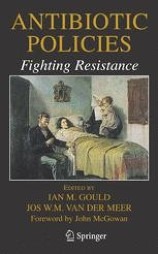
Antibiotic Policies : Fighting Resistance
This book addresses many of the key issues taxing our society and hospitals in an era of epidemic resistance and shortage of new antibiotics. Written by internationally renowned experts in the field, this volume will provide practical advice and inform control strategies for the most urgent of problems related to antibiotic resistance epidemic for years to come. Antibiotic Policies: Fighting Resistance is an ideal volume for health professionals with an interest in this field.
Algal Toxins : Nature, Occurrence, Effect and Detection
This volume contains the lectures and seminars given at the NATO Advanced Study Institute on “Sensor Systems for Biological Threads: The Algal Toxins Case”, held in Pisa, Italy in October, 2007. Algae can form heavy growths in ponds, lakes, reservoirs and sl- moving rivers throughout the world; algae can house toxins which are - ually released into water when the cells rupture or die. Hundreds of toxins have been identified so far. Detection methods, including rapid screening, have been developed to help us learning more about them, especially to find out which toxins are a real threat for people and what conditions encourage their production and accumulation. Early detection of algal toxins is an - portant aspect for public safety and natural environment, and significant efforts are underway to develop effective and reliable tools that can be used for this purpose.
