



Page 8
Page 8

Microstructuring of Glasses
As microstructured glass becomes increasingly important for microsystems technology, the main application fields include micro-fluidic systems, micro-analysis systems, sensors, micro-actuators and implants. And, because glass has quite distinct properties from silicon, PMMA and metals, applications exist where only glass devices meet the requirements. The main advantages of glass derive from its amorphous nature, the precondition for its - theoretically - direction-independent geometric structurability. Microstructuring of Glasses deals with the amorphous state, various glass compositions and their properties, the interactions between glasses and the electromagnetic waves used to modify it.

Microstructured Polymer Optical Fibres
Microstructured Polymer Optical Fibres describes the optical properties of microstructured fibres, how they are made and modelled, and outlines some potential applications. These applications include areas where polymer fibres are already used, such as high-data rate transmission for Fibre-to-the Home or within cars, as well as completely new areas such as the photonic bandgap transmission of "difficult" wavelengths. Emphasising a conceptual understanding of the underlying physics, Microstructured Polymer Optical Fibres is clearly written, and includes numerous illustrations. It provides an excellent overview of the latest developments in the field, making them accessible to industry, technical and research audiences.
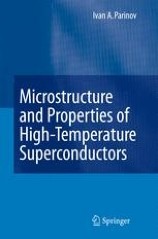
Microstructure and Properties of High-Temperature Superconductors
The main features of high-temperature superconductors (HTSC) that define their properties are intrinsic brittleness of oxide cuprates, the layered anisotropic structure and the supershort coherence length. Taking into account these features, this treatise presents research into HTSC microstructure and properties, and also explores the possibilities of optimization of the preparation techniques and superconducting compositions.

Microscopy of Semiconducting Materials ; Proceedings of the 14th Conference, April 11-14, 2005, Oxford, UK
This is a long-established international biennial conference series, organised in conjunction with the Royal Microscopical Society, Oxford, the Institute of Physics, London and the Materials Research Society, USA. The 14th conference in the series focused on the most recent advances in the study of the structural and electronic properties of semiconducting materials by the application of transmission and scanning electron microscopy. The latest developments in the use of other important microcharacterisation techniques were also covered and included the latest work using scanning probe microscopy and also X-ray topography and diffraction. Developments in materials science and technology covering the complete range of elemental and compound semiconductors are described in this volume.

Microscale and Nanoscale Heat Transfer
Constitutes a particularly complete and original collection of ideas, models, numerical methods and experimental tools which will prove invaluable in the study of microscale and nanoscale heat transfer. It should be of interest to research scientists and thermal engineers who wish to carry out theoretical research or metrology in this field, but also to physicists concerned with the problems of heat transfer, or teachers requiring a solid foundation for an undergraduate university course in this area.

Micrometeorology
This book focuses on atmospheric processes which directly effect human environments within the lowest 100-1000 meters of the atmosphere over regions of only a few kilometers in extent. The book is the English translation of the second edition of the German book "Applied Meteorology – Micrometeorological Methods".

Micrometeorites and the Mysteries of Our Origins
This book relates an attempt to decrypt the still-obscure first billion years of history of the young Earth, during a cataclysmic period during which our planet was heavily bombarded by bodies ranging in size from that of Mars to 0.1 mm sized tiny micrometeorites. It was thus found that micrometeorites played an essential role in the formation of the post-lunar atmosphere. They also provided a surprisingly large diversity of reactions in the organic prebiotic chemistry required for the birth of life on our blue planet. The author presents a wide-ranging review of the type of knowledge required to decrypt this history, which provides extensive background information from astronomy, planetary dynamics, planetology, astrobiology and earth sciences. This book will appeal to both the scientist and the general reader. It will be a source of material for lectures, and possibly new investigations, in these fields.

Micromechanics of Heterogeneous Materials
The micromechanics of random structure heterogeneous materials is a burgeoning multidisciplinary research area which overlaps the scientific branches of materials science, mechanical engineering, applied mathematics, technical physics, geophysics, and biology. Micromechanics of Heterogeneous Materials features rigorous theoretical methods of applied mathematics and statistical physics in materials science of microheterogeneous media. The prediction of the behavior of heterogeneous materials by the use of properties of constituents and their microstructures is a central issue of micromechanics. This book is the first in micromechanics to provide a useful and effective demonstration of the systematic and fundamental research of the microstructure of the wide class of heterogeneous materials of natural and synthetic nature.

Micromechanical Photonics
The purpose of this book is to give the engineering student and the practical engineer a systematic introduction to optical MEMS (Micro electro mechanical systems) and micromechanical photonics through not only theoretical and experimental results, but also by describing various products and their fields of application. After an overview on optical MEMS and micromechanical photonics, the book describes extremely-short-external-cavity laser diodes tunable laser diodes, a resonant sensor and an integrated optical head. It then addresses optical tweezers, the new technology employed to manipulate various types of objects in a variety of research and industrial fields. Coverage progresses through topics on the design and fabrication of an optical rotor and evaluation of mixing performances of micro-liquids for future fluidic applications. In the final chapter, the fundamentals and applications of the near field are described for the future development of micromechanical photonics, as well as near-field features, theoretical analyses, experimental analyses and applications mainly related to optical recording.

Micro-Macro-interaction : In Structured media and Particle Systems
This book presents the development of new methods in this interdisciplinary field of macro- micro-interactions of different engineering branches like mechanical and process engineering, applied mathematics, theoretical, and computational physics. In particular, solids with microstructures and particle systems are considered.

Microlithography/Molecular Imprinting
The series presents critical reviews of the present and future trends in polymer and biopolymer science including chemistry, physical chemistry, physics and material science. It is addressed to all scientists at universities and in industry who wish to keep abreast of advances in the topics covered.Molecular recognition is central to how biological systems work. The molecular imprinting technique is a valuable polymerisation method for preparing synthetic materials able to mimic the molecular recognition phenomena present in living systems. A molecule that acts as a template is associated with functional monomers to form a complex by means of covalent linkages or noncovalent interactions. A polymerisation-crosslinking reaction is then performed around this complex. Upon removal of the template species, functionalised cavities, that have memorized the special features and bonding preferences of the template, are left inside the polymer network.

Microearthquake Seismology and Seismotectonics of South Asia
This volume comprehensively deals with plate tectonics and seismic waves in general and earthquake monitoring by permanent and temporary networks for active fault mapping, aftershock, swarm and induced seismicity investigations in interplate collision and subduction zones and in intraplate shield region.

Micro- and opto-electronic materials and Structures : Physics, mechanics, design, reliability, packaging ; Vol. I : Materials physics - materials mechanics ; Vol. II : Physical design - reliability and packaging
Micro- and Opto-Electronic Materials and Structures: Physics, Mechanics, Design, Reliability, Packaging is the first comprehensive reference to collect and present the most, up-to-date, in-depth, practical and easy-to-use information on the physics, mechanics, reliability and packaging of micro- and opto-electronic materials, assemblies, structures and systems. The chapters in these two volumes contain summaries of the state-of-the-art and present new information on recently developed important methods or devices. Furthermore, practical recommendations are offered on how to successfully apply current knowledge and recently developed technology to design, manufacture and operate viable, reliable and cost-effective electronic components or photonic devices. The emphasis is on the science and engineering of electronic and photonic packaging, on physical design problems, challenges and solutions.

Micro- and Macro-Properties of Solids : Thermal, Mechanical and Dielectric Properties
Each of the eight chapters treats an important aspect of solid state physics, comprising a complete review of the particular field. Typically, a chapter starts with basic information about a property of a solid and the related experimental techniques. This is followed by a global overview which brings together all important contributions by different research workers in the field. This overview is comprehensive and covers essential literature over the past 60 years. Each chapter concludes with a detailed discussion of the contributions made by the chapter authors and their associates, in some cases spanning the last 45 years. In addition, Micro- and Macro-Properties of Solids provides data on new materials such as rare-earth metals, semiconductors, ferroelectrics, mixed-valence compounds, superionic conductors, optical and optoelectronic materials and biomaterials.

Metodi Matematici della Fisica = Mathematical Methods of Physics
This text draws its origin from my old notes, prepared for the course of Mathematical Methods of Physics and gradually arranged, refined and updated over the course of many years of teaching. The aim has always been to provide as simple and direct a presentation as possible of the mathematical methods relevant to Physics: Fourier series, Hilbert spaces, linear operators, functions of complex variables, Fourier and Laplace transforms, distributions. In addition to these basic topics, a brief introduction to the first notions of group theory, Lie algebras and symmetries in view of their applications to Physics is presented in the Appendix.
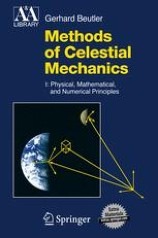
Methods of Celestial Mechanics: Vol. I: Physical, Mathematical, and Numerical Principles
G. Beutler's Methods of Celestial Mechanics is a coherent textbook for students in physics, mathematics and engineering as well as an excellent reference for practitioners. This Volume I gives a thorough treatment of celestial mechanics and presents all the necessary mathematical details that a professional would need. After a brief review of the history of celestial mechanics, the equations of motion (Newtonian and relativistic versions) are developed for planetary systems (N-body-problem), for artificial Earth satellites, and for extended bodies (which includes the problem of Earth and lunar rotation). Perturbation theory is outlined in an elementary way from generally known mathematical principles without making use of the advanced tools of analytical mechanics. The variational equations associated with orbital motion - of fundamental importance for parameter estimation (e.g., orbit determination), numerical error propagation, and stability considerations - are introduced and their properties discussed in considerable detail. Numerical methods, especially for orbit determination and orbit improvement, are discussed in considerable depth. The algorithms may be easily applied to objects of the planetary system and to Earth satellites and space debris.

Methods of Celestial Mechanics ; Vol. II : Application to Planetary System, Geodynamics and Satellite Geodesy
G. Beutler's Methods of Celestial Mechanics is a coherent textbook for students as well as an excellent reference for practitioners. Volume II is devoted to the applications and to the presentation of the program system CelestialMechanics. Three major areas of applications are covered: (1) Orbital and rotational motion of extended celestial bodies. The properties of the Earth-Moon system are developed from the simplest case (rigid bodies) to more general cases, including the rotation of an elastic Earth, the rotation of an Earth partly covered by oceans and surrounded by an atmosphere, and the rotation of an Earth composed of a liquid core and a rigid shell (Poincaré model). (2) Artificial Earth Satellites. The oblateness perturbation acting on a satellite and the exploitation of its properties in practice is discussed using simulation methods (CelestialMechanics) and (simplified) first order perturbation methods. The perturbations due to the higher-order terms of the Earth's gravitational potential and resonant perturbations are considered thereafter. Special attention is paid to satellites of the Global Navigation Satellite Systems and to geostationary satellites. The characteristics of and models for the two most important non-gravitational forces, atmospheric drag and radiation pressure, are presented as well as the most relevant forces acting on high- and low-orbiting satellites. (3) Evolution of the Planetary System. The outer planetary system consisting of the planets Jupiter to Pluto is studied over long time intervals using simulation methods and spectral analysis (CelestialMechanics). The properties of the inner systems, in particular of the Earth's orbit, are made visible by integrating the entire system over long time intervals relevant for climate change. The distribution of minor planets and their orbital properties, regular orbits, and chaotic orbits are easily generated and analyzed using CelestialMechanics. The volume concludes with the discussion of important mathematical tools of the program system and of the principles of spectral analysis.

Methods in Nonlinear Analysis
Nonlinear analysis has developed rapidly in the last three decades. Theories, techniques and results in many different branches of mathematics have been combined in solving nonlinear problems. This book collects and reorganizes up-to-date materials scattered throughout the literature from the methodology point of view, and presents them in a systematic way. It contains the basic theories and methods with many interesting problems in partial and ordinary differential equations, differential geometry and mathematical physics as applications.There are five chapters that cover linearization, fixed-point theorems based on compactness and convexity, topological degree theory, minimization and topological variational methods. Each chapter combines abstract, classical and applied analysis. Particular topics included are bifurcation, perturbation, gluing technique, transversality, Nash–Moser technique, Ky Fan's inequality and Nash equilibrium in game theory, setvalued mappings and differential equations with discontinuous nonlinear terms, multiple solutions in partial differential equations, direct method, quasiconvexity and relaxation, Young measure, compensation compactness method and Hardy space, concentration compactness and best constants, Ekeland variational principle, infinite-dimensional Morse theory, minimax method, index theory with group action, and Conley index theory.

Methods in Modern Biophysics
Incorporating recent dramatic advances, this textbook presents a fresh and timely introduction to modern biophysical methods. An array of new, faster and higher-power biophysical methods now enables scientists to examine the mysteries of life at a molecular level. This innovative text surveys and explains the ten key biophysical methods, including those related to biophysical nanotechnology, scanning probe microscopy, X-ray crystallography, ion mobility spectrometry, mass spectrometry, proteomics, and protein folding and structure. Incorporating much information previously unavailable in tutorial form, Nölting employs worked examples and 267 illustrations to fully detail the techniques and their underlying mechanisms.

Méthodes mathématiques en chimie quantique : Une introduction = Mathematical methods in quantum chemistry : An introduction
This book presents the mathematical foundations of several models of quantum chemistry. It is intended for graduate students in mathematics (and possibly also for scientists from physics or chemistry interested in understanding the formal underpinnings of their models), and introduces techniques and methods from several mathematical fields, in particular variational techniques, nonlinear analysis, spectral theory and partial differential equations theory.
