



Page 8
Page 8

Decision-Making in Engineering Design : Theory and Practice
We use our brains when we create plans and designs. The resulting plans and designs take physical form, however, what we thought about, the alternatives we tried, and the constraints we recognized while we were making these plans and designs are usually not written anywhere. Therefore, those who only get to see the results, e.g. the final text and drawings, do not learn what led the designer to reach such conclusions and as a consequence never understand the real design. This description of decision processes will provide the means for the development of new manufacturing systems and production activities in the future because it helps us gain a real understanding of the how the mind processes we go through when making decisions affect the decisions that we make.

Cyanobacterial Harmful Algal Blooms : State of the Science and Research Needs
Humans can be exposed to cyanobacterial toxins by drinking water that contains the toxins, swimming in water that contains high concentrations of cyanobacterial cells, or breathing air that contains cyanobacterial cells or toxins (while watering a lawn with contaminated water, for example). Health effects associated with exposure to high concentrations of cyanobacterial toxins include: - stomach and intestinal illness; -trouble breathing; - allergic responses; - skin irritation; - liver damage; and neurotoxic reactions, such as tingling fingers and toes. Scientists are exploring the human health effects associated with long-term exposure to low levels of cyanobacterial toxins. Some studies have suggested that such exposure could be associated with chronic illnesses, such as liver cancer and digestive-system cancer. This monograph contains the proceedings of the International Symposium on Cyanobacterial Harmful Algal Blooms held in Research Triangle Park, NC, September 6-10, 2005.

Cured II - LENT Cancer Survivorship Research and Education : Late Effects on Normal Tissues
Multimodal treatment lies at the heart of the improvement in cancer cure rates. However, the more aggressive the treatment delivery in terms of dose, time and volume for radiation and chemotherapy, the more adverse effects in normal tissues can be anticipated. Against this background, a major paradigm shift has taken place in that there is a new focus on cancer survivorship. Put another way, there has been a realization that prolongation of life must be accompanied by maintenance of the quality of life: the life worth saving must be worth living.

Creative Environments : Issues of Creativity Support for the Knowledge Civilization Age
This book contains four parts. The first part presents a further development of models of knowledge creation presented already in Creative Space, in particular the Triple Helix of normal academic knowledge creation and a new, integrated model of normal academic and organizational knowledge creation, called Nanatsudaki (seven waterfalls) Model. The second part presents computational intelligence tools for knowledge acquisition by machine learning and data mining, for debating, brainstorming, for roadmapping and for integrated support of academic creativity. The third part presents the use of statistics for creativity support, virtual laboratories, gaming and role playing for creativity support, methods of knowledge representation and multiple criteria aggregation, distance and electronic learning. The last part addresses knowledge management and philosophical

Creative Character Design for Games and Animation
Takes you through all the basic steps of character design for games and animation, from brainstorming and references to the development phase and final render. It covers a range of styles such as cartoon, stylized and semi-realistic, and explains how to differentiate between them and use them effectively. Using a step-by-step approach for each stage of the process, this book guides you through the process of creating a new character from scratch. It contains a wealth of design tips and tricks as well as checklists and worksheets for you to use in your own projects.

Creatine and Creatine Kinase in Health and Disease
In this book, emphasis is placed on the intricate interplay between creatine and creatine kinase function on one hand, and proper brain function, neurodegenerative disease and/or neuroprotection on the other hand. The book also elaborates on the recently identified inborn errors of creatine biosynthesis and transport, the so-called cerebral creatine deficiency syndromes.

Coordination : Neural, Behavioral and Social Dynamics
One of the most striking features of Coordination Dynamics is its interdisciplinary character. The problems we are trying to solve in this field range from behavioral phenomena of interlimb coordination and coordination between stimuli and movements (perception-action tasks) through neural activation patterns that can be observed during these tasks to clinical applications and social behavior. It is not surprising that close collaboration among scientists from different fields as psychology, kinesiology, neurology and even physics are imperative to deal with the enormous difficulties we are facing when we try to understand a system as complex as the human brain.

Contemporary Bioethics : Islamic Perspective
This book discusses the common principles of morality and ethics derived from divinely endowed intuitive reason through the creation of al-fitr' a (nature) and human intellect (al-‘aql). Biomedical topics are presented and ethical issues related to topics such as genetic testing, assisted reproduction and organ transplantation are discussed. Whereas these natural sources are God’s special gifts to human beings, God’s revelation as given to the prophets is the supernatural source of divine guidance through which human communities have been guided at all times through history. The second part of the book concentrates on the objectives of Islamic religious practice – the maqa' sid – which include: Preservation of Faith, Preservation of Life, Preservation of Mind (intellect and reason), Preservation of Progeny (al-nasl) and Preservation of Property. Lastly, the third part of the book discusses selected topical issues, including abortion, assisted reproduction devices, genetics, organ transplantation, brain death and end-of-life aspects.

Conscious in a Vegetative State? A Critique of the PVS Concept
This book traces the origins of prevailing perceptions about PVS and submits these to critical examination. In doing this it comes to the conclusion that inadequate attention has been paid to acknowledging what is not known about affected individuals and that assumptions have consistently come to be traded as facts. Re-examination of the basis of the PVS and the adoption of a more scientific approach is long overdue and is owed to the community at large which has generally been provided by many medical practitioners with a 'dumbed-down' account of the condition.

Computational Mind : A Complex Dynamics Perspective
Computational Mind: A Complex Dynamics Perspective is a graduate–level monographic textbook in the field of Computational Intelligence. It presents a modern dynamical theory of the computational mind, combining cognitive psychology, artificial and computational intelligence, and chaos theory with quantum consciousness and computation. The book introduces to human and computational mind, comparing and contrasting main themes of cognitive psychology, artificial and computational intelligence. It presents brain/mind dynamics from the chaos theory perspective, including sections on chaos in human EEG, basics of nonlinear dynamics and chaos, techniques of chaos control, synchronization in chaotic systems and complexity in humanoid robots. This book presents modern theory of quantum computational mind, including sections on Dirac–Feynman quantum dynamics, quantum consciousness, and quantum computation using Josephson junctions. The book is designed as a one–semester course for computer scientists, engineers, physicists and applied mathematicians, both in industry and academia. It includes a strong bibliography on the subject and detailed index.

Computational Maps in the Visual Cortex
For more than 30 years, the visual cortex has been the source of new theories and ideas about how the brain processes information. Understanding the computations in the visual cortex is therefore an important step toward a general theory of computational brain theory

Cognitive Computing in Human Cognition : Perspectives and Applications
This edited book designs the Cognitive Computing in Human Cognition to analyze to improve the efficiency of decision making by cognitive intelligence. The book is also intended to attract the audience who work in brain computing, deep learning, transportation, and solar cell energy. Due to this in the recent era, smart methods with human touch called as human cognition is adopted by many researchers in the field of information technology with the Cognitive Computing.

Mathematical modeling of the human brain : From magnetic resonance images to finite element simulation
This book bridges common tools in medical imaging and neuroscience with the numerical solution of brain modelling PDEs. The connection between these areas is established through the use of two existing tools, FreeSurfer and FEniCS, and one novel tool, the SVM-Tk, developed for this book. The reader will learn the basics of magnetic resonance imaging and quickly proceed to generating their first FEniCS brain meshes from T1-weighted images.

Mathematical Modeling of Biological Systems ; Vol. II : Epidemiology, Evolution and Ecology,Immunology, Neural Systems and the Brain, and Innovative Mathematical Methods
This two-volume, interdisciplinary work is a unified presentation of a broad range of state-of-the-art topics in the rapidly growing field of mathematical modeling in the biological sciences. Highlighted throughout both works are mathematical and computational approaches to examine central problems in the life sciences, ranging from the organizational principles of individual cells to the dynamics of large populations.

Mammalian Subventricular Zones : Their Roles in Brain Development, Cell Replacement, and Disease
This text provides a comprehensive summary of research and findings that have lead to the current understanding of the subventricular zones. It provides an overview of the roles of subventricular zones in normal development and in disease and a foundation from which current and future studies can be evaluated.
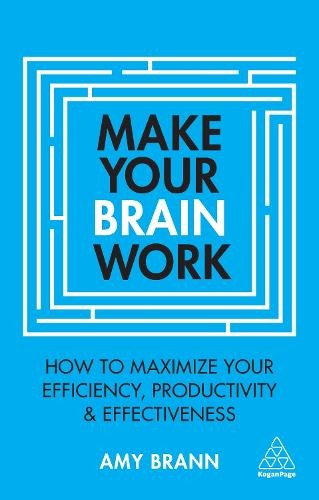
Make Your Brain Work: How to Maximize Your Efficiency, Productivity and Effectiveness
This entertaining book will help you reduce the stress and overwhelm of poor time management, and help get you to that next professional level. Including brand-new content on developing resilience and creativity, and managing your work-life balance, now it's even easier to Make Your Brain Work!

Magnetic Resonance Tomography
Provides a comprehensive overview of both the physics and the clinical applications of MRI, including practical guidelines for imaging. The authors define the importance of MRI in the diagnosis of several disease groups in comparison or combination with other methods.
Magnetic Resonance Imaging in Ischemic Stroke
The imaging of stroke has undergone significant changes owing to the rapid progress in imaging technology. This volume, comprising three parts, is designed to provide a comprehensive summary of the current role of MR imaging in patients with ischemic stroke. The first part outlines the clinical presentations of stroke and discusses the diagnostic efficacy and therapeutic impact of MR imaging. The second and third parts form the core of the volume, and are based on a novel approach in that the topic is presented from two very different viewpoints. Part 2 provides a detailed presentation of the distinguishing features of stroke from the radiologist's perspective. By contrast, part 3 addresses the needs of the clinician, documenting specific stroke syndromes and their correlates on MR imaging. The overall aim has been to create a well-illustrated volume with broad appeal that links pathology, radiology and stroke medicine in an informative manner.
Machine learning for brain disorders
Organized into five parts. Part One presents the fundamentals of ML. Part Two looks at the main types of data used to characterize brain disorders, including clinical assessments, neuroimaging, electro- and magnetoencephalography, genetics and omics data, electronic health records, mobile devices, connected objects and sensors. Part Three covers the core methodologies of ML in brain disorders and the latest techniques used to study them. Part Four is dedicated to validation and datasets, and Part Five discusses applications of ML to various neurological and psychiatric disorders.
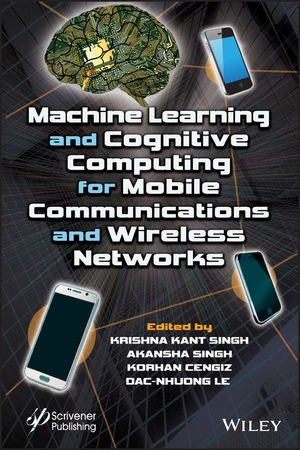
Machine Learning and Cognitive Computing for Mobile Communications and Wireless Networks
Communication and network technology has witnessed recent rapid development and numerous information services and applications have been developed globally. These technologies have high impact on society and the way people are leading their lives. The advancement in technology has undoubtedly improved the quality of service and user experience yet a lot needs to be still done. Some areas that still need improvement include seamless wide-area coverage, high-capacity hot-spots, low-power massive-connections, low-latency and high-reliability and so on. Thus, it is highly desirable to develop smart technologies for communication to improve the overall services and management of wireless communication. Machine learning and cognitive computing have converged to give some groundbreaking solutions for smart machines. With these two technologies coming together, the machines can acquire the ability to reason similar to the human brain. The research area of machine learning and cognitive computing cover many fields like psychology, biology, signal processing, physics, information theory, mathematics, and statistics that can be used effectively for topology management. Therefore, the utilization of machine learning techniques like data analytics and cognitive power will lead to better performance of communication and wireless systems.
