



Page 8
Page 8
Biotechnology for Fuels and Chemicals : The Twenty-Ninth Symposium
In Biotechnology for Fuels and Chemicals: The Twenty-Ninth Symposium, leading US and international researchers from academia, industry, and government exchange cutting-edge technical information and update current trends in the development and application of biotechnology for sustainable production of fuels and chemicals. This symposium emphasizes advances in biotechnology to produce high-volume, low-price products from renewable resources, while improving the environment. The major areas of interest include advanced feedstock production and processing, enzymatic and microbial biocatalysis, bioprocess research and development, opportunities in biorefineries, and commercialization of biobased products. International and domestic progress on producing liquid biofuels, especially ethanol and biodiesel, is highlighted, and related topics, including bioseparations and optimal integration of biochemical and thermochemical conversion technologies, are featured.
Biotechnology for fuels and chemicals : The Twenty-Eighth symposium
In Biotechnology for Fuels and Chemicals: The Twenty-Eighth Symposium, leading US and international researchers from academia, industry, and government exchange cutting-edge technical information and update current trends in the development and application of biotechnology for sustainable production of fuels and chemicals. This symposium emphasizes advances in biotechnology to produce high-volume, low-price products from renewable resources, while improving the environment. The major areas of interest include advanced feedstock production and processing, enzymatic and microbial biocatalysis, bioprocess research and development, opportunities in biorefineries, and commercialization of biobased products.
Biotechnology and sustainable agriculture 2006 and beyond ; Proceedings of the 11th IAPTC&B Congress, August 13-18, 2006 Beijing, China
Biotechnology and Sustainable Agriculture 2006 and Beyond is a collection of papers presented at the XIth international congress of the International Association of Plant Tissue Culture & Biotechnology (IAPTC&B). It continues the long tradition of the IAPTC&B to publish the proceedings of its quadrennial congresses. It provides an up-to-date report of the most significant advances in plant tissue culture and biotechnology as presented by leading international scientists.
Biotechnologies for plant mutation breeding : Protocols
This book offers 19 detailed protocols on the use of induced mutations in crop breeding and functional genomics studies, which cover topics including chemical and physical mutagenesis, phenotypic screening methods, traditional TILLING and TILLING by sequencing, doubled haploidy, targeted genome editing, and low-cost methods for the molecular characterization of mutant plants that are suitable for laboratories in developing countries. The collection of protocols equips users with the techniques they need in order to start a program on mutation breeding or functional genomics using both forward and reverse-genetic approaches. Methods are provided for seed and vegetatively propagated crops (e.g. banana, barley, cassava, jatropha, rice) and can be adapted for use in other species.
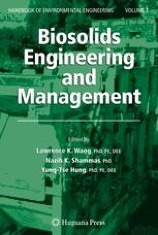
Biosolids engineering and management
Biosolids Engineering and Management, is a collection of methods of practical design, calculation and numerical examples that illustrate how organized, analytical reasoning can lead to the discovery of clear, direct solutions, especially in the areas of biosolids management, treatment, disposal and beneficial use. The book’s including sludge and biosolids transport, pumping and storage, sludge conversion to biosolids, chlorination, stabilization, regulatory requirements, costs, agricultural land application, landfill, ocean disposal, combustion, incineration and sludge treatment process selection.
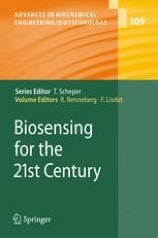
Biosensing for the 21st Century
Covers trends in modern biotechnology All aspects of this interdisciplinary technology, where knowledge, methods and expertise are required from chemistry, biochemistry, microbiology, genetics, chemical engineering and computer science, are treated
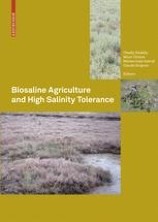
Biosaline Agriculture and High Salinity Tolerance
this book reviews the current state of knowledge in biosaline agriculture and high salinity tolerance in plants. It mainly focuses on the biotic approach to economically utilize the stress-prone areas by growing resistant plants.This volume comprises three sections: physiology and biochemistry, ecology, and molecular biology. Thus, a systematic approach has been adopted to uncover plant responses to various ecological factors at physiological and molecular levels.
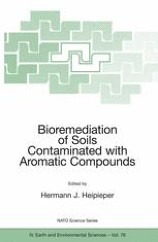
Bioremediation of Soils Contaminated with Aromatic Compounds
Environmental biotechnology, which was in its infancy in the early 80's, has evolved thanks to the revolution brought about by molecular biology. Multiple successes in the biological cleanup of civil and industrial wastewater and of hydrocarbon soil pollution, demonstrate the vast power of clean technologies. In addition, the buildup of information on the activities of microorganisms as catalysts in all sorts of natural, industrial and animal environments has flourished. There is a continuing realization of the critical role of microbial processes in biological, industrial and geological systems. Since environmental biotechnology has matured, it is ready to tackle bigger challenges: the scaling up of many bioremediation systems still in progress, the search for novel biocatalysts for industrial applications, the continuing effort against common human life-threatening processes such as antibiotic resistance, the accumulation of hormone-mimicking substances (endocrine disrupters), the deposition of air-borne pesticides in the environment and, the degradation of recalcitrant contaminants. These endeavors will help prevent the contamination of food chains, protect human life and allow for human activity and economic development that do not compromise environmental sustainabijity.
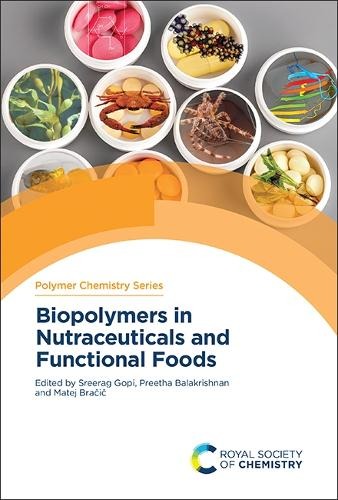
Biopolymers in nutraceuticals and functional foods
Comprehensive book covers new applications of biopolymers in the research and development of industrial scale nutraceutical and functional food grade products.
Biophotonics and Coherent Systems in Biology
Biophotonics and Coherent Systems in Biology offers a timely research volume derived from papers submitted at the 3rd International Alexander Gurwitsch Conference. Biophotonics and Coherent Systems in Biology covers the major aspects of modern biophotonics and related biological and biophysical problems of interest to researchers today.Key topics include: Coherency of biophoton emission and its related physical and biological properties , Biological effects of microwaves, Photon emission from living samples, starting from human bodies up to cell cultures, Fundamental role of water in bioenergetics and the influence of electromagnetic fields upon hydrophobic-hydrophilic balance
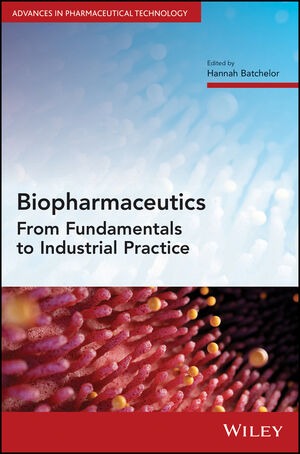
Biopharmaceutics : From fundamentals to industrial practice
Beginning with an expansive introduction to the basics of biopharmaceutics and the context that underpins the field, the included resources go on to discuss how biopharmaceutics are integrated into product development within the pharmaceutical industry. Explorations of how the regulatory aspects of biopharmaceutics function, as well as the impact of physiology and anatomy on the rate and extent of drug absorption, follow.
Biopharmaceutical manufacturing progress, trends and challenges
Source of the latest innovative research and technical development in biomanufacturing systems. It is organised into 2 parts: 1) Manufacturing of recombinant therapeutic proteins (e.g. therapeutic antibodies, biosimilars/biogenerics) and 2) Manufacturing aspects of cell and gene therapy. Each with selected chapters on the following topics for both up- and downstream, such as: Advanced process strategies, especially continuous manufacturing, Advanced culture techniques, especially single-use systems, Process transfer, scale-up/scale-down models, Processing advances/Manufacturing productivity/efficiency, Model-assisted process understanding and development/Digital Twins, Process controls and analytics, Quality control, Quality by design, Facility design and full-scale commercial systems, manufacturing technology innovation.
Biopharmaceutical drug design and development
Biopharmaceutical Drug Design and Development, Second Edition, updates the widely successful first edition, published in 1999. This new, expanded edition investigates the dozens of new biopharmaceutical drugs that have become available since the publication of the first edition. Among the drugs discussed are ones in the categories of monoclonal antibodies for in-vivo use, cytokines, growth factors, enzymes, immunomodulators, thrombolytics, and immonotherapies including vaccines. Additionally, the volume examines new and emerging technologies, such as bioinformatics, DNA microarrays, transgenics, therapeutic gene delivery, stem cells, nucleic acid-based therapeutics, and macromolecular drug delivery. Authors also study pharmacogenetics in the clinic and changes in biologic drug approval at the FDA. Biopharmaceutical Drug Design and Development, Second Edition, is a worthy sequel in the discussion on the dynamic, exciting field of biotechnology.
Bionanotechnology : Proteins to Nanodevices
Bionanotechnology is the key integrative technology of the 21st century and aims to use the knowledge, gathered from the natural construction of cellular systems, for the advancement of science and engineering. Investigating the topology and communication processes of cell parts can lead to invention of novel biological devices with exciting applications. Though microscale to nanoscale research offers an excellent space for the development of futuristic technologies, a number of challenges must be overcome. Due to paucity of a dedicated literature on the protein based nanodevices we bring you this monograph that combines collective research works of scientists probing into this fascinating universe of bionanotechnology. The monograph has been written with an aim of surveying engineering design principles of biomolecular nanodevices, prototype nanodevices based on redox proteins, bacteriorhodopsins and natural fibers, and touching upon the future developments in the field.
Biomining
Biomining is the biotechnology that uses microorganisms to recover metals, in particular copper and gold, from ores and concentrates. Having developed from a very simple operational (in terms of both engineering and biology) process, biomining has developed into a multifaceted technology, to the extent that many of the largest industrial stirred tanks and heaps throughout the world are employed for bioprocessing minerals. This book has a strong applied approach and describes emerging and established industrial processes, as well as the underlying theory of the process, and the biology of the microorganisms involved. Chapters have been written by personnel from leading biomining companies, consultants and internationally recognized researchers and academics
BioMEMS and biomedical nanotechnology ; Vol. III : Therapeutic Micro/Nanotechnology
The human body is composed of structures organized in a hierarchical fashion: from biomolecules assembled into polymers, to multimeric assemblies such as cellular or-ganelles, to individual cells, to tissues, to organ systems working together in health and disease- each dominated by a characteristic length scale. Decades of science and engineer-ing are now converging to provide tools that enable the orderly manipulation of biological systems at previously inaccessible, though critically important, length scales (<100 mi-crons). Thus, the approaches described in this volume provide a snapshot of how micro-and nanotechnologies can enable the investigation, prevention, and treatment of human disease.The volume is divided into three parts. The first part, Cell-based therapeutics; cov- ers the merger of cells with micro- and anosystems for applications in regenerative medicine spanning the development of novel nanobiomaterials.
BioMEMS and Biomedical Nanotechnology : Vol. I: Biological and Biomedical Nanotechnology
Abe Lee has been working on micro/ and nanotechnology for biomedical and biotech applications since 1992. His recent research focuses on the development of integrated micro and nano fluidic chip processors for the following applications: point-of-care diagnostics, "smart" nanomedicine for early detection and treatment, stem cell biology and therapeutics, the synthesis of novel and pure materials, and biosensors to detect environmental and terrorism threats. Jim Lee's research interest includes BioMEMS/NEMS, and polymer micro/nanotechnology. In the last 4 years, he has over 20 refereed journal publications, 2 book chapters, and 5 patents in these areas. He is now leading an NSF Nanoscale Science and Engineering Center for Affordable Nanoengineering of Polymer Biomedical Devices at OSU.
BioMEMS
Here, a new discipline evolved which focuses on microsystems for living systems called "BIOMEMS". In this review at a glance the exciting field of bio-microsystems, from their beginnings to indicators of future successes are presented. It will also show that a broad penetration of micro and nano technologies into biology and medicine will be mandatory for future scientific and new product development progress in life science.
Biomedical Visualisation ; Vol.9
This edited book explores the use of technology to enable us to visualise the life sciences in a more meaningful and engaging way. It will enable those interested in visualisation techniques to gain a better understanding of the applications that can be used in visualisation, imaging and analysis, education, engagement and training. The reader will also be able to learn about the use of visualisation techniques and technologies for the historical and forensic settings.In this volume, there are chapters which examine forensic and historical visualisation techniques and digital reconstruction, ultrasound, virtual learning resources and patient utilised software and hardware. The use of HoloLens as a disruptive technology is discussed as well as historical items as a feature in a modern medical curriculum. It concludes with a fascinating chapter on pulse extraction from facial videos.
Biomedical applications and toxicity of nanomaterials
Covers the recent trends on the biological applications of nanomaterials, methods for their preparation, and techniques for their characterization. Further, the book examines the fundamentals of nanotoxicity, methods to assess the toxicity of engineered nanomaterials, approaches to reduce toxicity during synthesis. It also provides an overview of the state of the art in the application of Artificial intelligence-based methodologies for evaluation of toxicity of drugs and nanoparticles. The book further discusses nanocarrier design, routes of various nanoparticle administration, nano based drug delivery systems, and the toxicity challenges associated with each drug delivery method. It presents the latest advances in the interaction of nanoparticles with the cellular environment and assess nanotoxicity of these engineered nanoparticles. The book also explores the comparative and mechanistic genotoxicity assessment of the nanomaterials. This book is useful source of information for industrial practitioners, policy makers, and other professionals in the fields of toxicology, medicine, pharmacology, food, and drugs.
